Call Us Today To Schedule An Inspection At (757) 960-3231

Crawl Space Moisture in Hampton Roads: What Actually Works (and What Doesn’t)
Most crawl space moisture problems in coastal Virginia are caused by air, not the ground. Here’s what that means for your home.
Crawl Space Moisture in Hampton Roads: What the Research Actually Shows
When I started working in crawl spaces across Hampton Roads, the standard approach was simple: seal everything up, attach the vapor barrier to the walls, and the moisture problem goes away. That was the accepted method for a long time.
It turns out that approach wasn’t wrong—it was just incomplete. Over the past two decades, building science research has clarified what actually drives moisture in crawl spaces and what actually fixes it.
What we do today is based on that research and what we see every day in coastal Virginia crawl spaces—not on what’s traditionally been sold as the “best system.”
What the Research Established
Early field studies by organizations like Advanced Energy showed that vented crawl spaces perform poorly in humid climates like ours. Bringing in outside air does not dry the space—it introduces moisture.
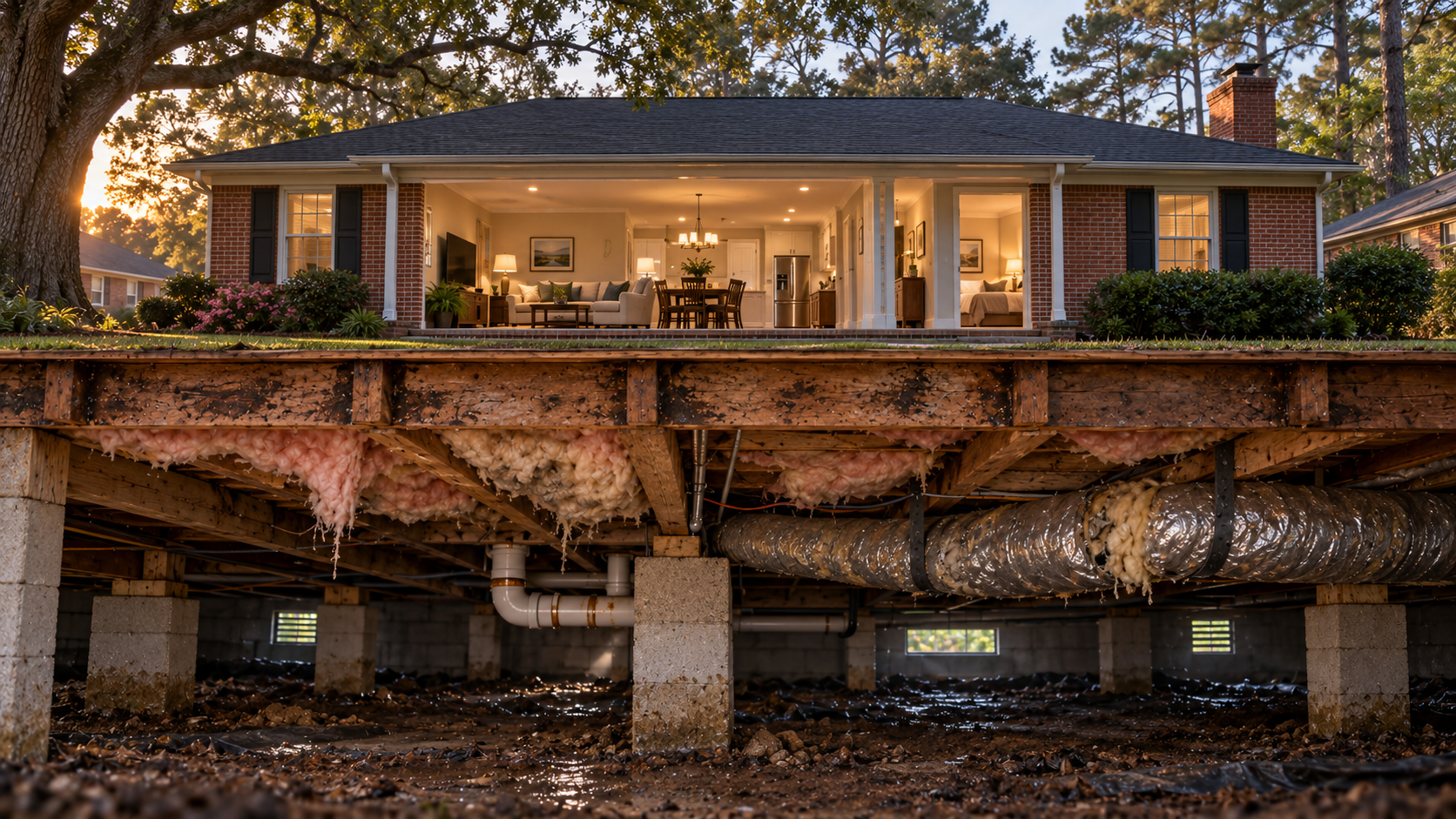
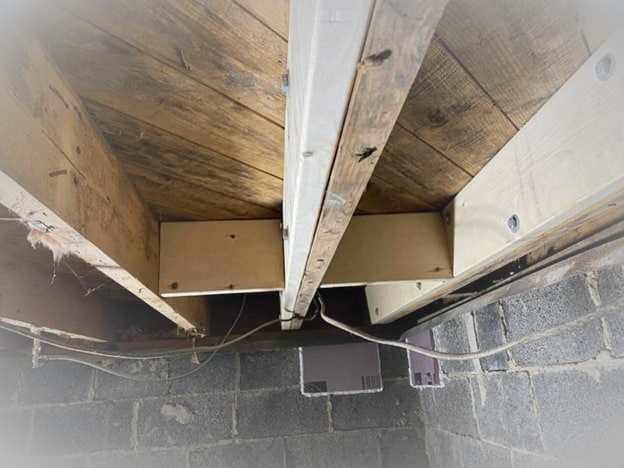
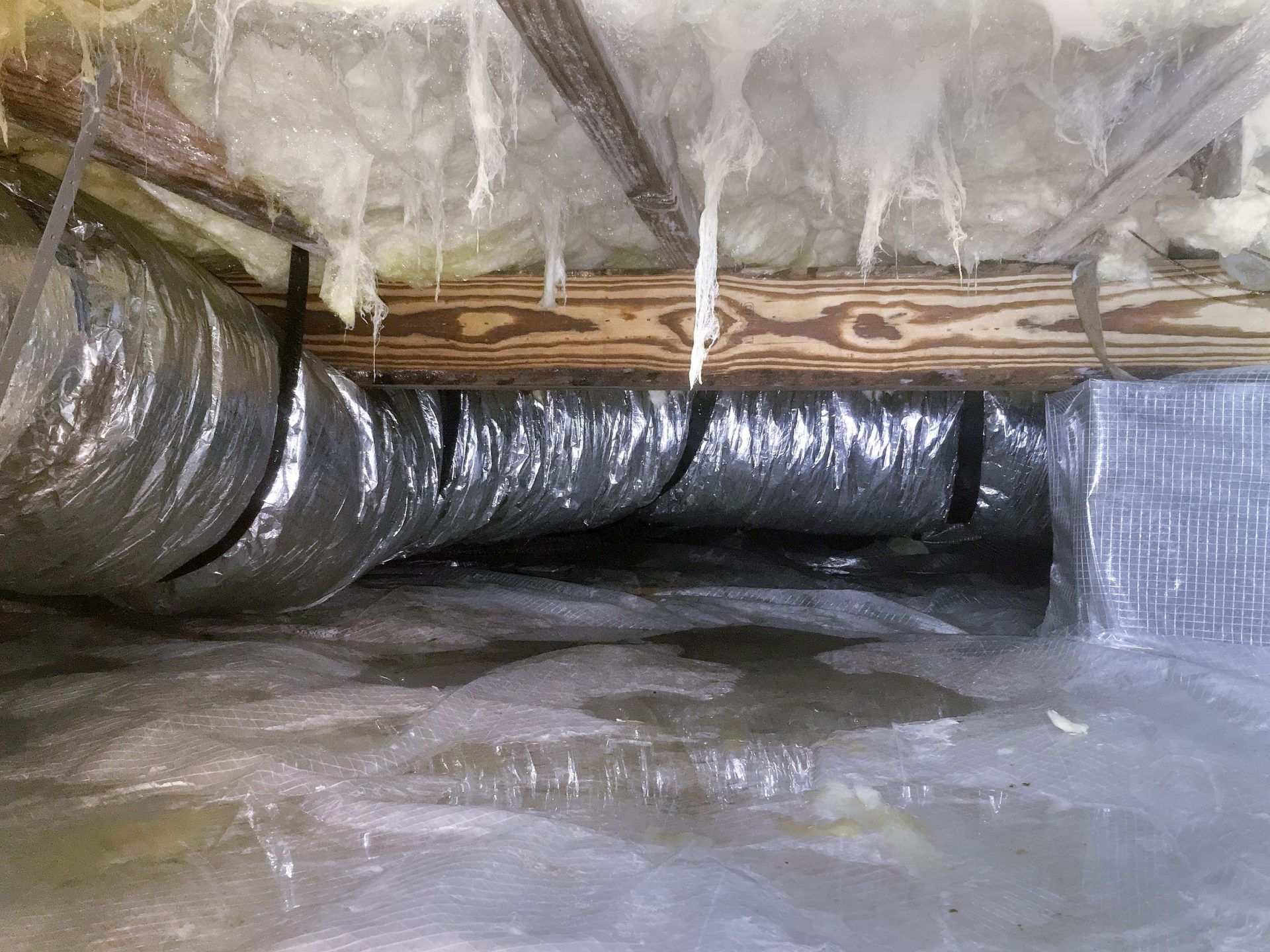
When vents are left open, hot, humid air enters the crawl space and condenses on cooler surfaces like framing, ductwork, and the ground. That’s what drives elevated humidity, mold growth, and structural deterioration.
Closing the crawl space and controlling the environment works. That part is not up for debate.
What Actually Causes Moisture Problems
What the follow-on research clarified is just as important.
In our climate, the primary moisture source is not the ground—it’s outside air entering the crawl space. When that air is sealed out and humidity is actively controlled, conditions stabilize.
Ground vapor does contribute moisture, but it is a secondary source. Managing it is important, but it is not what solves the problem by itself.
That changes how the system should be designed.
What That Means for Vapor Barriers
If ground moisture is not the primary driver, then the vapor barrier is not the primary solution.
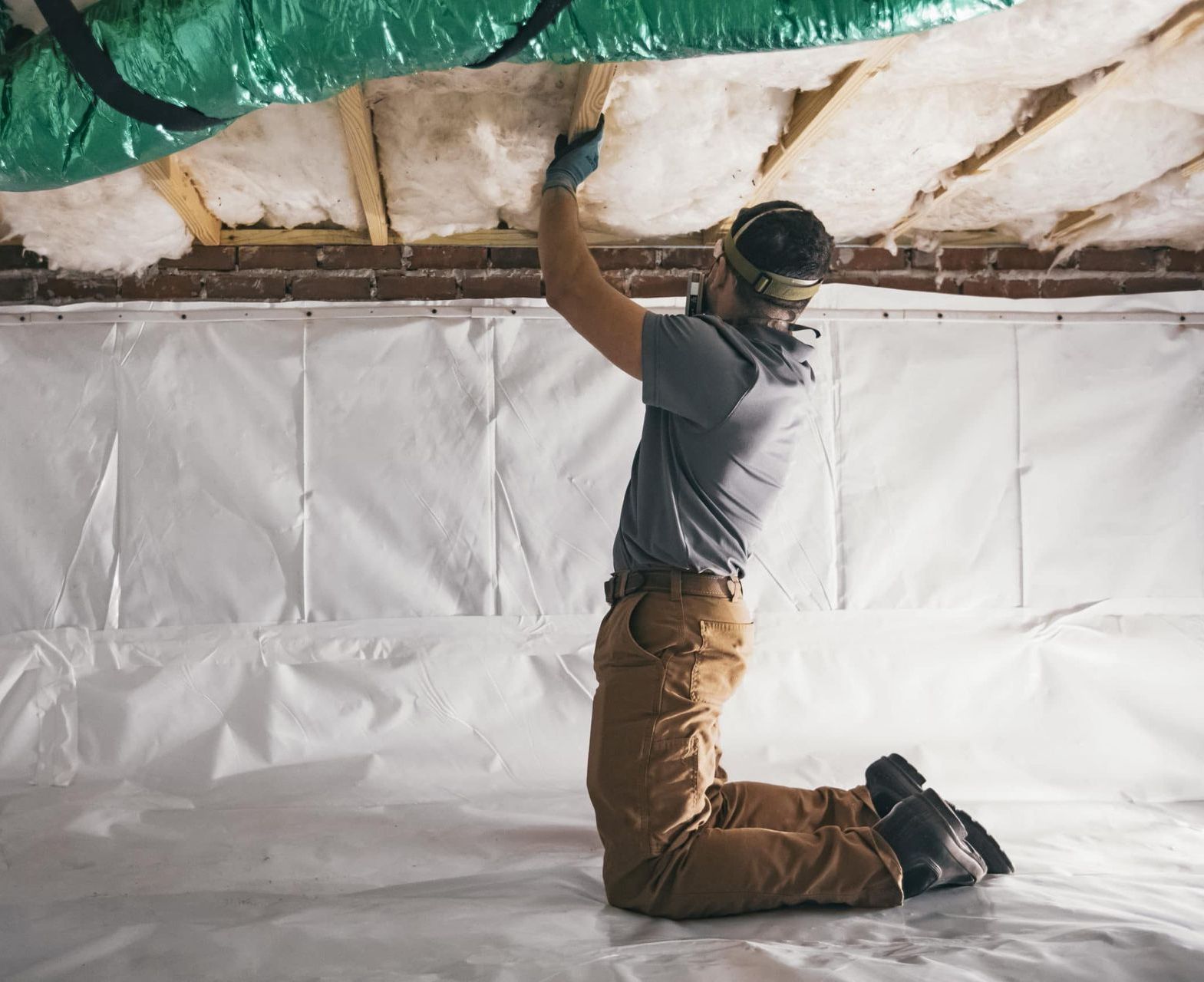
A ground vapor barrier is important. It reduces evaporation, keeps the space cleaner, and supports humidity control. But sealing that barrier all the way up the foundation wall is not what makes the system work.
In Hampton Roads, sealing plastic to the wall can create problems instead of solving them.
We routinely see conditions where groundwater enters along the base of the foundation or where moisture intrusion develops over time. When a liner is sealed to the wall, that activity is hidden behind the plastic.
The crawl space may look clean, but the problem is still there—just out of sight.
Why Visibility Matters in This Area
Coastal Virginia has specific conditions that matter:
- High humidity for much of the year
- Flat topography and shallow water tables
- Frequent groundwater intrusion during heavy rain
- Consistent termite pressure
In this environment, it is important to be able to see what is happening under the home.
If water begins entering along the foundation, it needs to be visible so it can be addressed. If there is termite activity or localized moisture, it needs to be detectable.
Covering those conditions does not eliminate them.
The Right Order to Fix a Crawl Space
Based on both research and field experience, moisture control works best when handled in the right order: First, stop outside air from entering. This means sealing vents, access doors, and penetrations.
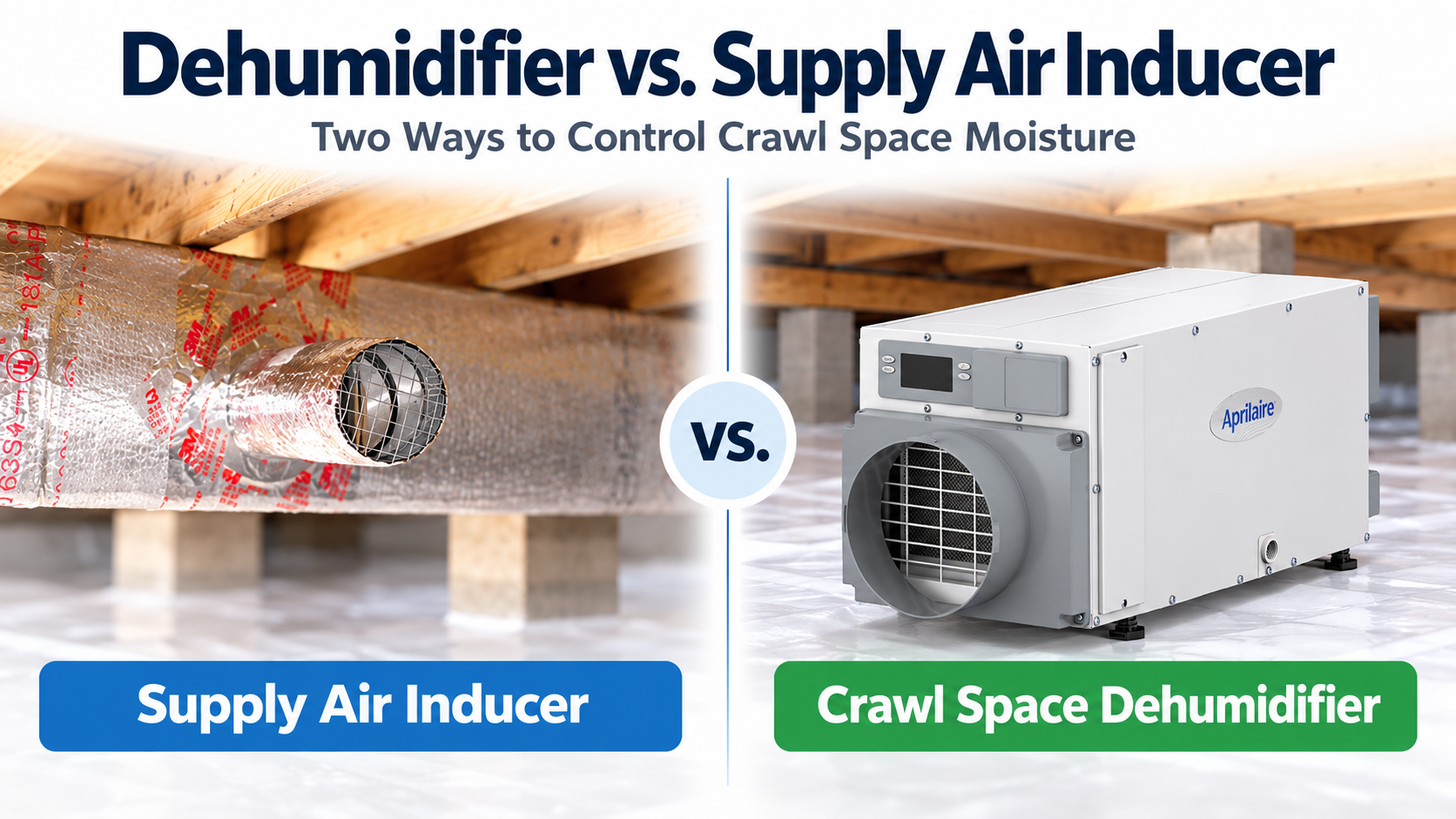
Second, control humidity. A properly sized dehumidifier keeps relative humidity at safe levels and prevents condensation.
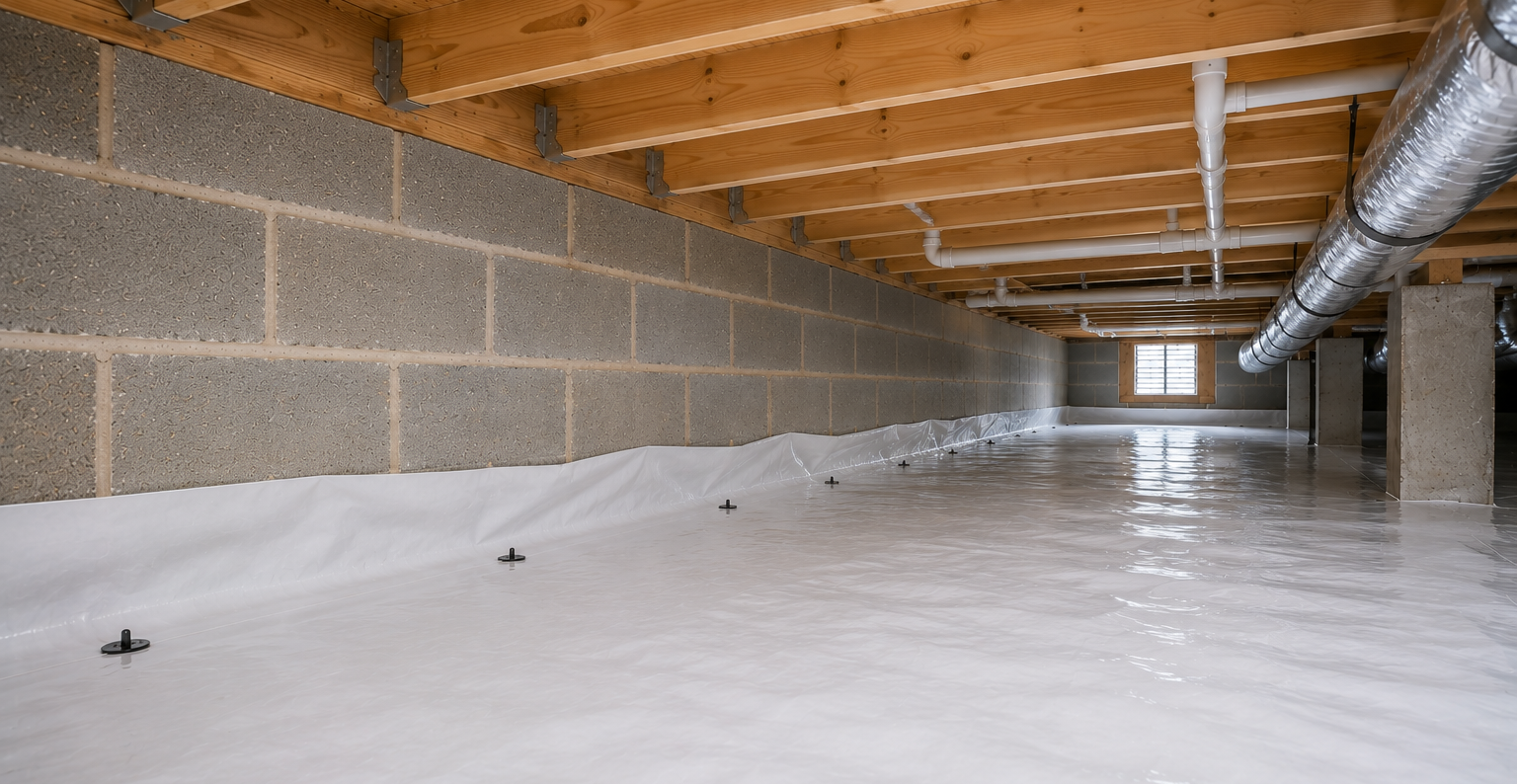
Third, manage ground moisture. A properly installed vapor barrier reduces evaporation and keeps the space clean and serviceable.
When these steps are done correctly, crawl space conditions stabilize without needing to seal the entire foundation wall with plastic.
What About Standing Water or Groundwater
If water is actively entering a crawl space, that is a drainage issue—not a vapor barrier issue.
Sealing a liner over groundwater intrusion does not stop the water. It just changes where it collects.
The correct approach is to address the source:
- Improve exterior drainage and grading
- Extend downspouts away from the home
- Install drainage systems or sump pumps where needed
Once water is properly managed, the crawl space can be controlled effectively.
What We Aim For
The goal is not to install the most expensive system. The goal is to create a crawl space that is:
- Dry and stable
- Structurally sound
- Inspectable and serviceable
- Durable over time
In many Hampton Roads homes, that can be achieved without sealing plastic to the walls.
The Bottom Line
The research is clear on one point: vented crawl spaces do not work in humid climates. Controlling the environment does.
What is less often discussed is how to do that in a way that actually matches the conditions we see in coastal Virginia.
In this area, moisture control needs to be based on how water and humidity actually behave—not on a one-size-fits-all system.
If you’re dealing with moisture, odor, or structural concerns in your crawl space, the first step is understanding what’s actually happening under the home. From there, the right solution becomes much clearer.
Schedule a crawl space inspection →
Serving
Suffolk, Chesapeake, Virginia Beach, Norfolk, Portsmouth, Newport News, Hampton, Poquoson, Yorktown, Smithfield, Isle of Wight, Franklin, Southampton County, Gloucester, Mathews, Williamsburg, and James City County
Latest Crawl Space Articles