
Hampton Roads Crawl Space Journal
Expert field notes on crawl space moisture, structure, and building performance from 25 years beneath coastal Virginia homes
Watch The Full Video
Crawl Space Standing Water in Hampton Roads: Why Drainage Has to Come Before Encapsulation
By Robbie McCarty | Patriot Crawl Space Repairs | Structural Repairs
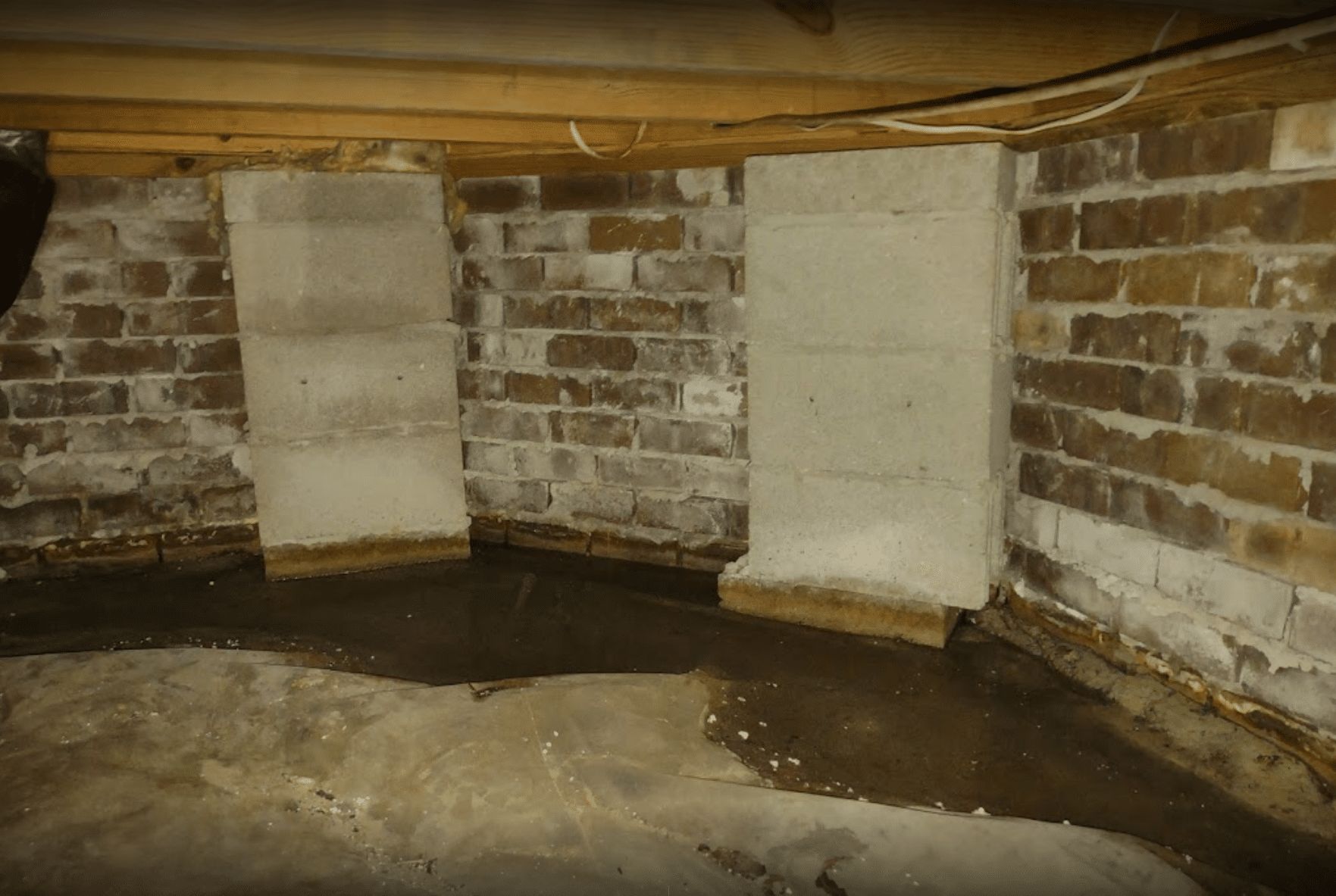
Standing water is the most important thing to evaluate in a Hampton Roads crawl space — and it's routinely overlooked. Companies pushing encapsulation as a fix-all for moisture problems skip this step regularly, and homeowners end up with an expensive system installed over an active water problem. Here's why that happens and what the right approach looks like in coastal Virginia.
Why Encapsulation Doesn't Solve Standing Water
This is a fundamental misunderstanding that costs homeowners significant money to correct. Encapsulation — sealing the crawl space vents, installing a vapor barrier, and adding a dehumidifier — is a humidity control system. It is not a water management system.
When a fully sealed liner is installed in a crawl space that later develops standing water, the water gets trapped beneath the liner. Mold establishes itself on the underside of that liner where it's invisible and inaccessible. By the time it's discovered the liner has to come out entirely to address what's become a significant biohazard beneath the home.
The liner didn't cause the water problem. But it turned a drainage problem into a much more expensive remediation problem by sealing it in.
The Specific Challenge in Coastal Virginia
This is where Hampton Roads crawl spaces behave differently than almost anywhere else in the country. Water table fluctuation in this region is dramatic. A crawl space that appears completely dry during an inspection in late summer or during a drought year can have active standing water intrusion during a wet spring or a particularly rainy season.
The problem is that nobody — not the inspector, not the contractor, not the homeowner — always knows which situation they're in at the time of inspection. You're looking at a snapshot of conditions that can change significantly throughout the year and across different weather cycles.
In mountain or hill regions this is less of an issue. Topography makes water behavior more predictable — you can generally see which direction water flows and whether a crawl space is at meaningful risk. In flat low-lying coastal Virginia that predictability largely doesn't exist. The water table moves, drainage patterns shift with development and weather, and a crawl space that performed fine for years can start experiencing groundwater intrusion as conditions change.
What We Do When We're Not Sure
When we inspect a crawl space and see clear evidence of standing water or active groundwater intrusion — water staining on the foundation walls, efflorescence, sediment lines, saturated soil — we recommend drainage solutions before any encapsulation work. An interior perimeter drain and sump pump is installed first to evacuate water that enters the space. That addresses the actual problem.
When conditions are ambiguous — no current standing water but coastal location, low elevation, clay soils, or a history that suggests potential groundwater risk — we don't fully encapsulate with a sealed wall-to-wall liner. Instead we install a pin vapor barrier with sealed vents and a dehumidifier. That system controls humidity, which is the primary moisture driver in most crawl spaces, while keeping the foundation wall and floor connection visible and accessible.
If groundwater becomes an issue down the road, the pin liner can be pulled back. A drain and sump pump can be installed without tearing out an expensive fully bonded system. The crawl space remains adaptable to changing conditions rather than locked into a system that requires a perfect environment to perform correctly.
Why Inspectability Is a Long-Term Asset
A crawl space system that can be inspected and modified is more valuable over the life of a home than one that looks pristine on installation day but can't accommodate future changes. Conditions beneath homes in Hampton Roads evolve. Development upstream changes drainage patterns. Weather cycles shift. Plumbing ages and occasionally fails.
A crawl space you can see into, pull back a liner to inspect, and access for future repairs is a crawl space that can be managed long term. A fully sealed system that hides what's happening beneath it is a liability if conditions change in ways that weren't anticipated at installation.
The Right Sequence for Coastal Virginia Crawl Spaces
- Evaluate for standing water and groundwater risk before specifying any encapsulation system
- If water is present or risk is significant, install drainage first
- If conditions are ambiguous, use a pin liner system that preserves inspectability and adaptability
- Control humidity through vent sealing and a dehumidifier regardless of which liner approach is used
- Revisit drainage if conditions change over time
That sequence protects the investment in moisture control by making sure the system is appropriate for the actual conditions beneath the home — not just the conditions visible on inspection day.
The Bottom Line
Standing water and encapsulation are not compatible. Installing a sealed liner system in a coastal Virginia crawl space without fully understanding groundwater risk is a gamble that regularly produces expensive consequences. Drainage has to be evaluated first, addressed if needed, and planned for even when it isn't immediately present.
If you want an honest assessment of your crawl space's water and moisture conditions before any work is recommended, I'll come out and take a look personally.
Proudly serving homeowners throughout Hampton Roads including Newport News, Yorktown, Poquoson, Hampton, Norfolk, Virginia Beach, Chesapeake, Suffolk, Williamsburg, Gloucester, and surrounding areas.
About The Author
Robbie McCarty is the owner of Patriot Crawl Space Repairs and a Virginia Class A Residential Building Contractor (DPOR #2705176108) and MICRO Certified Mold Remediation contractor with over 25 years of crawl space repair experience throughout Hampton Roads and coastal Virginia. He has personally evaluated and repaired thousands of crawl spaces beneath homes in Suffolk, Chesapeake, Virginia Beach, Norfolk, Newport News, Williamsburg, and surrounding communities.
