
Call Us Today To Schedule An Inspection At (757) 960-3231

Watch The Full Video
Crawl Space Steel Support Jacks: When They Work and When They Don't
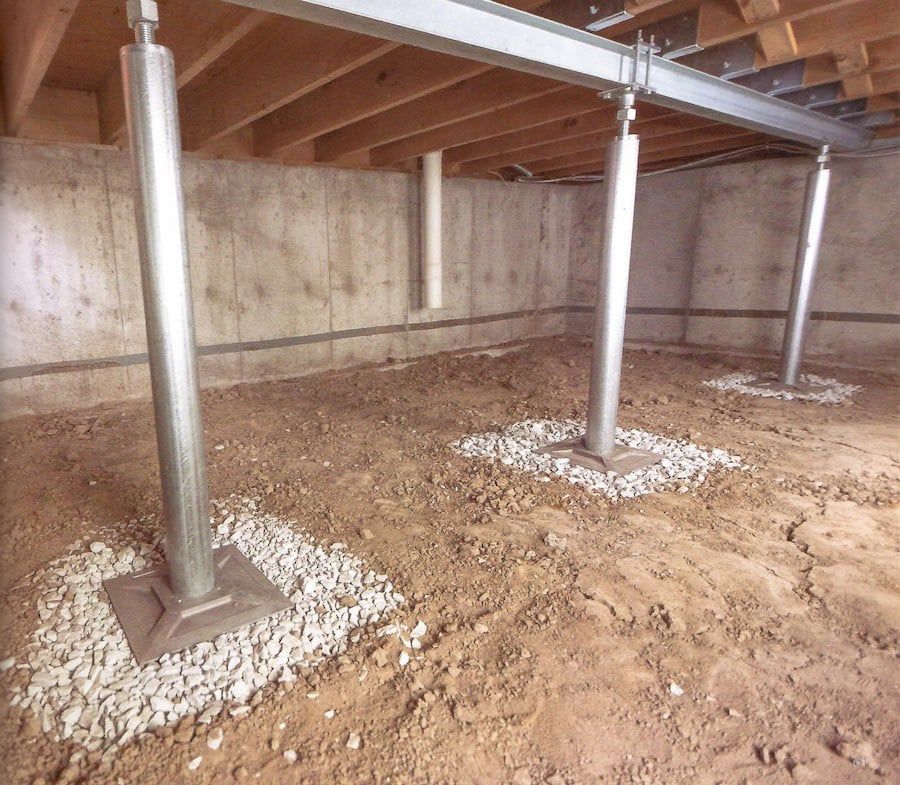
Steel support jacks are one of the most overprescribed repairs in Hampton Roads crawl spaces. I want to be straightforward about that because it affects a lot of homeowners who end up spending money on something that doesn't actually fix their problem.
What's Actually Happening With Sagging Floors
Most sagging floors in this region are a moisture problem, not a support problem. Over time, elevated humidity and moisture exposure cause floor joists and girder beams to deflect and bow downward. The wood has lost its structural integrity — it's deformed from long-term moisture exposure.
The correct repair for that condition is carpentry. Sistering the joists, repairing or replacing the affected framing, and restoring a level, structurally sound floor system. That's what fixes a moisture-damaged sagging floor.
What doesn't fix it is trying to jack bowed wood back into position. Steel jacks can't straighten deformed framing. The wood is bent — pushing against it from below doesn't restore its structural integrity, it just puts pressure on compromised material. It's not the right tool for that job, and in my experience it's also more expensive than just doing the carpentry correctly.
When Steel Jacks Are Actually The Right Answer
There are situations where steel jacks and beams are exactly the right solution. The key is that they're being used to provide a load bearing point — not to correct damaged wood.
The three situations where we use them regularly:
Inadequate original support under load bearing walls. Some homes were simply not built with sufficient support beneath heavy load bearing walls. In those cases a properly installed steel jack — set on a large footer, driven 12 or more inches into the ground — provides the structural support that should have been there from the start.
Tight access areas where full sistering isn't possible. Under bathrooms with significant plumbing penetrations or other areas where you can't get full length boards into position, a steel jack can provide an intermediate bearing point that allows partial carpentry repairs to be completed effectively.
Girder spans that need an intermediate support point. If an existing girder beam was built with a span that's a little long, adding a jack at mid-span to reduce deflection is a legitimate and effective repair.
The Bottom Line
Steel jacks are a good tool when the job calls for adding a load bearing point. They're a waste of money when they're being sold as a fix for moisture-damaged framing. If someone is recommending jacks as the primary repair for your sagging floors without talking about the condition of the wood itself, that's worth a second opinion.
If you're dealing with sagging floors or crawl space structural concerns in Hampton Roads, we're happy to take a look and give you a straight answer on what's actually going on beneath your home.
Proudly serving homeowners throughout Hampton Roads including Newport News, Yorktown, Poquoson, Hampton, Norfolk, Virginia Beach, Chesapeake, Suffolk, Williamsburg, Gloucester, and surrounding areas.
About The Author
Robbie McCarty is the owner of Patriot Crawl Space Repairs and a Virginia Class A Residential Building Contractor (DPOR #2705176108) and MICRO Certified Mold Remediation contractor with over 25 years of crawl space repair experience throughout Hampton Roads and coastal Virginia. He has personally evaluated and repaired thousands of crawl spaces beneath homes in Suffolk, Chesapeake, Virginia Beach, Norfolk, Newport News, Williamsburg, and surrounding communities.
Latest Crawl Space Articles