
Hampton Roads Crawl Space Journal
Expert field notes on crawl space moisture, structure, and building performance from 25 years beneath coastal Virginia homes
Watch The Full Video
Crawl Space Structural Floor Repairs: What's Actually Involved and How We Approach Them
By Robbie McCarty | Patriot Crawl Space Repairs | Structural Repairs
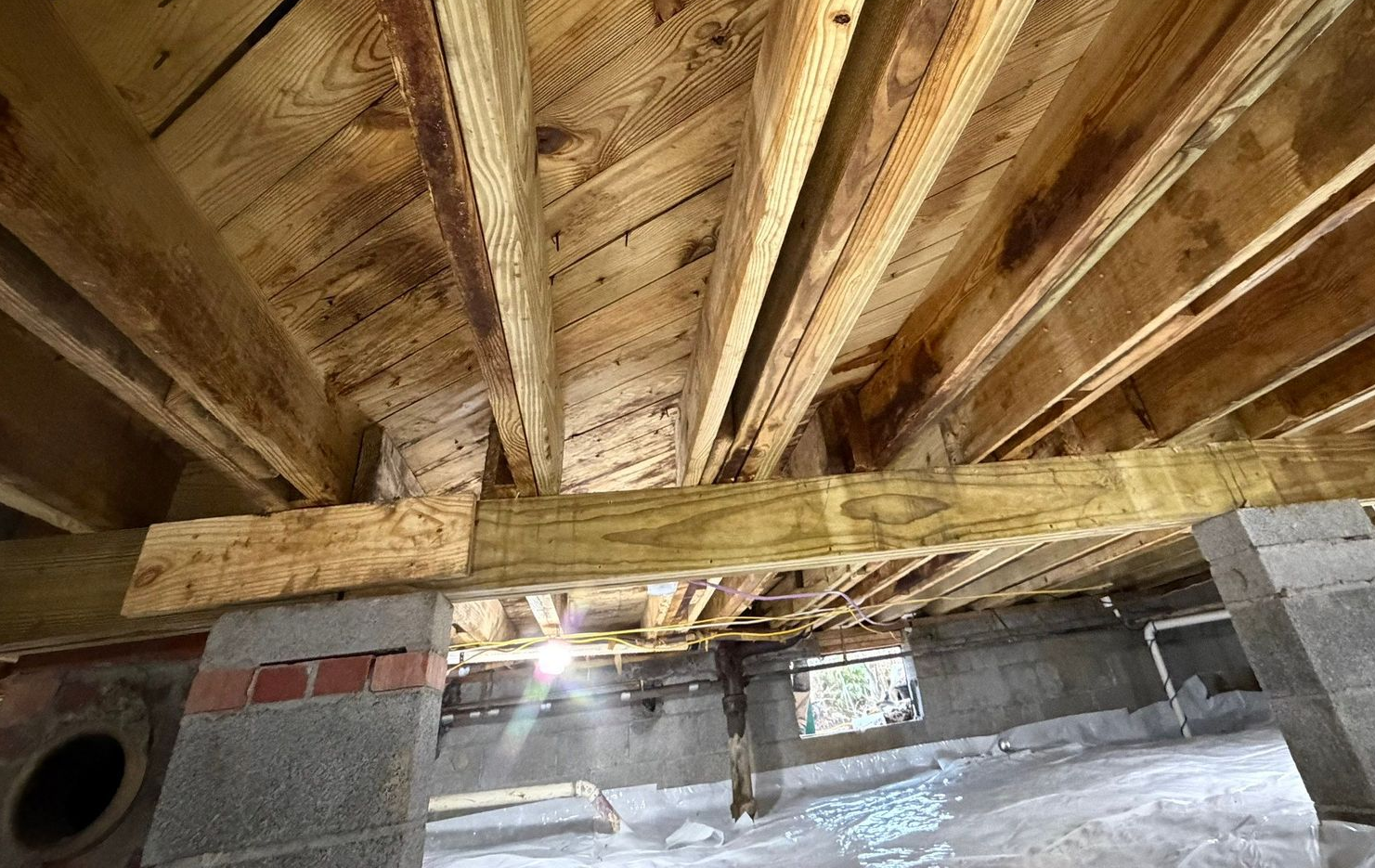
When homeowners call us about sagging floors or soft spots, the word "foundation" comes up almost immediately. It's understandable — a floor that moves feels serious. But in the vast majority of cases what we find beneath the home isn't a foundation problem. It's a wood problem, and wood problems are fixable.
What Structural Floor Repairs Actually Cover
Structural floor repairs involve the wood framing members that support the floors and walls of your home. That includes:
- Floor joists
- Girder beams
- Sill plates
- Band boards
- Subfloor sheathing
These are the components that do the actual work of holding your home up from the crawl space. When they're compromised the floors above them show it — sagging, soft spots, bounciness underfoot, and eventually visible movement.
What Causes the Damage
Moisture is the driver almost every time. When a crawl space carries elevated humidity over years, mold and fungus establish themselves on the wood framing. That biological growth gradually breaks down the wood fiber — weakening joists, causing beams to deflect, and in more advanced cases rotting framing members to the point where they've lost meaningful structural capacity.
This is why moisture control isn't optional when we're doing structural repairs. If the moisture source isn't corrected first, the new framing is just starting the same clock over again.
How We Repair It
The specific repair depends on what we find, but the most common approaches are:
Sistering floor joists. Running new full-length framing members alongside damaged joists to restore structural capacity and level the floor system. This is the most common repair we perform and when done correctly it's a permanent solution.
Replacing girder beams. When a primary carrying beam has deteriorated beyond what sistering can address, full replacement is the right call. This is more involved work but straightforward for an experienced crew.
Replacing sill plates. The sill plate sits directly on the foundation wall and is one of the first places moisture damage shows up. Replacement requires temporarily supporting the structure above it — not complicated work but it has to be done right.
Subfloor support and repair. Minor subfloor damage can often be addressed from below without pulling up finish flooring. We evaluate each situation individually to determine the least invasive effective approach.
Why This Work Is a Specialty
Structural carpentry in a crawl space is genuinely hard work. You're in a confined space, often with limited clearance, working overhead on framing that may be in poor condition. It requires experienced hands and a solid understanding of how loads transfer through the framing system.
We use direct Class A technicians with significant structural repair experience — not general labor. For complex repairs we have our structural engineer review the plan before work begins to confirm our approach aligns with structural engineering best practices. And when a repair rises to the level of a major structural modification we pull a building permit. That's not optional — it's how responsible structural work gets done.
Why the Plan Matters as Much as the Repair
A structural repair is only as good as the diagnosis that preceded it. That's why I personally evaluate every crawl space before we devise a repair plan. As the owner of a smaller company I'm not handing that assessment off to a salesperson running a commission-based pitch — I'm looking at the framing conditions myself and telling you what I actually see.
That approach matters most on structural work where the consequences of a wrong call show up in the floor above your head.
The Bottom Line
Sagging floors and soft spots are worth taking seriously but they're not a reason to panic. In Hampton Roads homes they're almost always a moisture and wood problem with a real solution. The key is diagnosing it correctly, correcting the moisture source, and performing the carpentry repair to a standard that holds up long term.
If you're seeing signs of floor movement or just want to know what's actually going on beneath your home, I'll come out personally and give you a straight assessment.
Proudly serving homeowners throughout Hampton Roads including Newport News, Yorktown, Poquoson, Hampton, Norfolk, Virginia Beach, Chesapeake, Suffolk, Williamsburg, Gloucester, and surrounding areas.
About The Author
Robbie McCarty is the owner of Patriot Crawl Space Repairs and a Virginia Class A Residential Building Contractor (DPOR #2705176108) and MICRO Certified Mold Remediation contractor with over 25 years of crawl space repair experience throughout Hampton Roads and coastal Virginia. He has personally evaluated and repaired thousands of crawl spaces beneath homes in Suffolk, Chesapeake, Virginia Beach, Norfolk, Newport News, Williamsburg, and surrounding communities.
