

Hampton Roads Crawl Space Journal
Expert field notes on crawl space moisture, structure, and building performance from 25 years beneath coastal Virginia homes
Watch The Full Video
Why Crawl Space Encapsulations Fail in Hampton Roads
By Robbie McCarty | Patriot Crawl Space Repairs | Structural Repairs
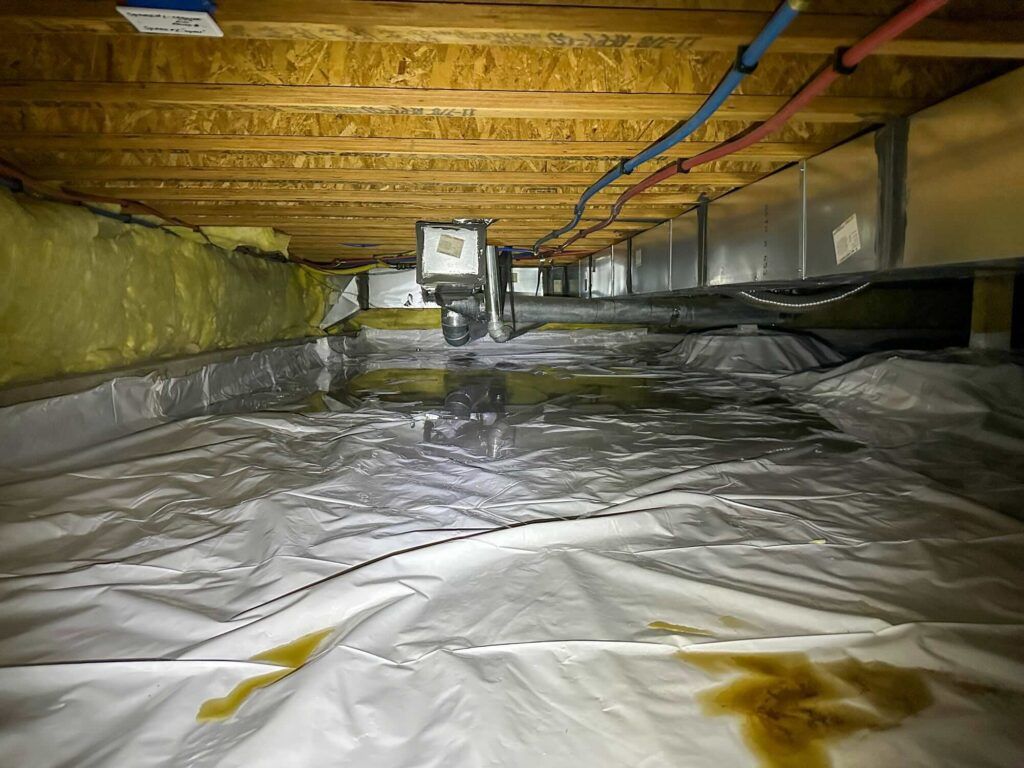
A crawl space encapsulation that fails is worse than no encapsulation at all. You've spent significant money on a system that looks right, feels right, and then a year later the smell is back — or worse. We see this regularly in Hampton Roads and the cause is almost always the same: the company prioritized selling a product over correcting the actual problems beneath the home.
Here's exactly how it happens and what a correct installation actually requires.
The Core Problem: Selling a Liner Instead of Solving a Problem
When a commissioned inspector from a crawl space sales company gets under your home their objective is to sell an encapsulation package. They're not asking whether that package is appropriate for the specific conditions beneath your home. They're not asking what else needs to be addressed before a liner goes down. They're working toward a close.
That sales orientation produces a predictable failure pattern. The liner goes in. The dehumidifier goes in. The vents get sealed. Everything looks clean and white and new. And then the conditions that were present before the installation — conditions the company never addressed because addressing them wasn't part of the package — keep doing damage beneath that beautiful liner.
What Gets Left Behind
The two most common things we find left unaddressed beneath a failed encapsulation:
Existing mold contamination on framing, insulation, and ductwork. A liner installed over active mold contamination doesn't remediate the mold — it seals it in. The framing above the liner is still contaminated. The insulation is still contaminated. If the ductwork is 40 or 50 years old and covered in mold that ductwork is still pushing contaminated air through the home every time the HVAC runs. The encapsulation didn't fix the air quality problem — it locked the source of it into a sealed environment.
Unaddressed groundwater intrusion. This is the failure that produces the most dramatic results. A fully sealed liner installed in a crawl space with an active or seasonal groundwater problem traps water beneath the liner. Mold establishes itself on the underside of that liner where nobody can see it. A year later the homeowner pulls back a corner of their beautiful new encapsulation and finds a mold-covered wet surface that has to be completely removed and replaced.
In coastal Virginia water tables fluctuate significantly throughout the year. A crawl space that looks dry during a summer inspection can have active groundwater intrusion during a wet spring. A company that doesn't account for that possibility — and installs a fully sealed liner without drainage — is setting up a failure that's only a matter of time.
The Correct Sequence
Encapsulation is the last step — not the first. Here's what has to happen before any liner goes down:
Step one: evaluate and remove contamination. If mold is present on framing surfaces it needs to be physically removed. Contaminated insulation comes out. Old moldy flex ductwork gets replaced. You cannot encapsulate around contamination and expect a clean environment on the other side. The space has to be clean before it gets sealed.
Step two: address groundwater if present or likely. If there are signs of water intrusion — staining, efflorescence, sediment lines, saturated soil — a drain and sump pump goes in before any liner. If exterior grading is sending water toward the foundation that gets corrected. If conditions are ambiguous given coastal Virginia's groundwater behavior we use a pin liner rather than a fully sealed system so the space remains inspectable and adaptable.
Step three: address the moisture sources. Seal the vents to cut off the primary source of humid outdoor air. Install a properly sized dehumidifier to manage the remaining moisture load mechanically. These two steps are what actually control humidity — the liner on the ground is not doing that work.
Step four: install the liner. Now the liner goes down. It covers the ground, provides a clean surface, and adds a layer of separation between the soil and the crawl space environment. At this point it's doing its actual job — not covering up problems that are going to resurface in twelve months.
Why Many Companies Can't Do It Right Even If They Want To
Part of the reason encapsulations get installed incorrectly is that the company selling the package doesn't perform the work that should come before it. They don't do certified mold remediation. They don't do drainage system installation. They don't do structural repairs. Their scope is a liner, a dehumidifier, and sealed vents — and that's what you get regardless of what the crawl space actually needs.
A contractor who performs moisture control, mold remediation, drainage installation, and structural repairs under one roof evaluates a crawl space differently because they can actually address everything they find. They're not limited to the one package on the price sheet.
The Bottom Line
The plastic on the ground is the least important part of a crawl space encapsulation. If everything else is addressed correctly the liner is a finishing step. If everything else isn't addressed the liner is a cover — and eventually what's underneath it comes back.
If you have an encapsulation that isn't performing or you're evaluating encapsulation proposals and want a straight assessment of what your crawl space actually needs, I'll come out personally and take a look.
Proudly serving homeowners throughout Hampton Roads including Newport News, Yorktown, Poquoson, Hampton, Norfolk, Virginia Beach, Chesapeake, Suffolk, Williamsburg, Gloucester, and surrounding areas.
About The Author
Robbie McCarty is the owner of Patriot Crawl Space Repairs and a Virginia Class A Residential Building Contractor (DPOR #2705176108) and MICRO Certified Mold Remediation contractor with over 25 years of crawl space repair experience throughout Hampton Roads and coastal Virginia. He has personally evaluated and repaired thousands of crawl spaces beneath homes in Suffolk, Chesapeake, Virginia Beach, Norfolk, Newport News, Williamsburg, and surrounding communities.
