
Hampton Roads Crawl Space Journal
Expert field notes on crawl space moisture, structure, and building performance from 25 years beneath coastal Virginia homes
Watch The Full Video
Crawl Space Encapsulation in Hampton Roads: What It Actually Is and Why Coastal Virginia Is Different
By Robbie McCarty | Patriot Crawl Space Repairs | Structural Repairs
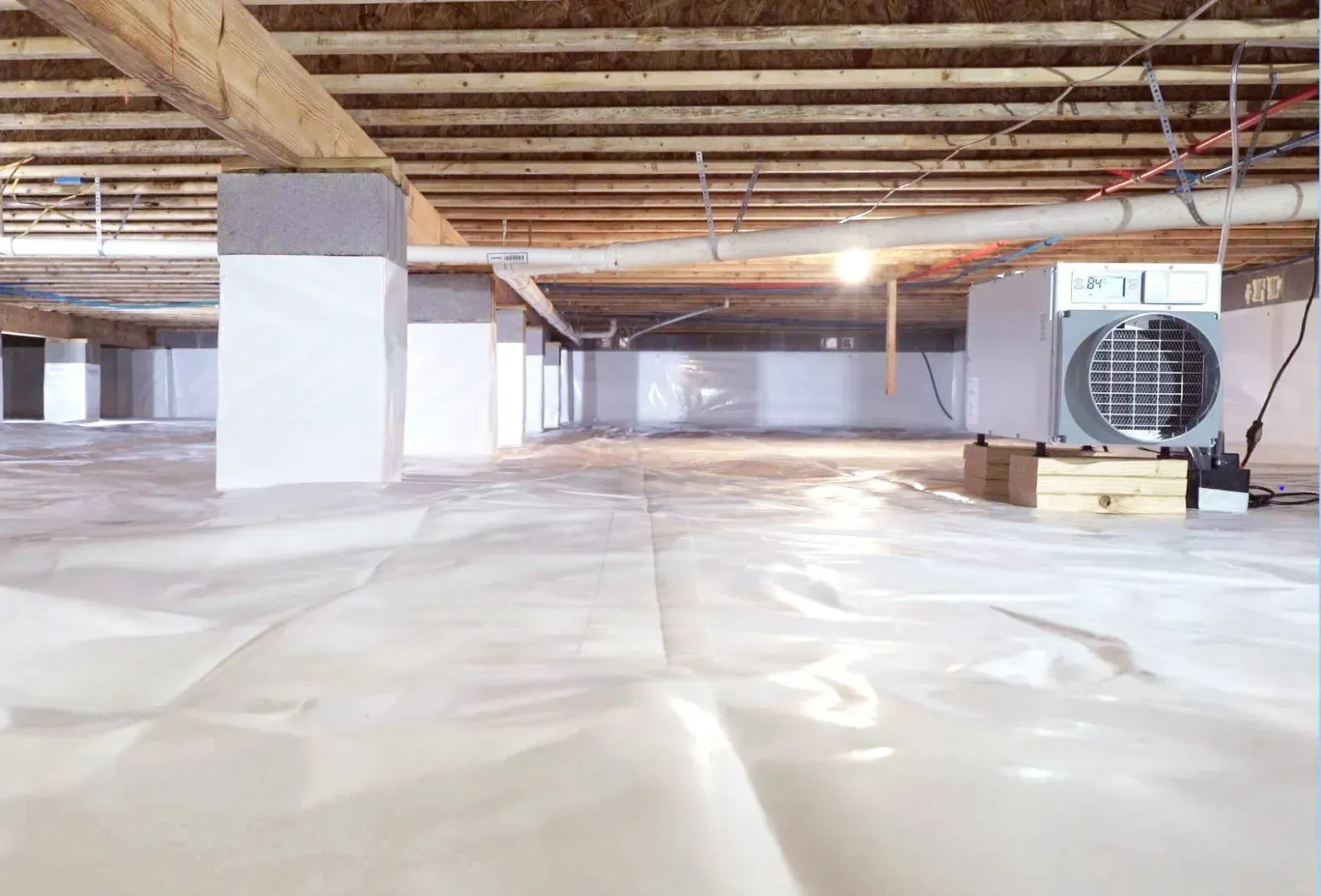
Crawl space encapsulation has developed a mixed reputation in Hampton Roads over the years — and for good reason. It gets packaged and sold by large crawl space companies as a one-size-fits-all system regardless of what's actually going on beneath the home. In coastal Virginia that approach creates real problems, and homeowners end up paying to fix expensive mistakes that were avoidable from the start.
Here's what encapsulation actually is, what does the real work, and why it needs to be designed differently in this region.
What Encapsulation Actually Means
Encapsulation is not a white liner on your crawl space floor and walls. That's how it gets sold, but the liner is not what's controlling your humidity problem.
What encapsulation actually means is keeping outside humid air out of the crawl space and replacing passive outside air ventilation with mechanical ventilation — primarily a dehumidifier. Sealing the crawl space vents cuts off the summer humidity source. The dehumidifier manages the remaining moisture load. That combination is what actually keeps a crawl space dry.
The white vapor barrier looks good in photos and gives companies a visual product to sell. But the air sealing and the dehumidifier are doing the heavy lifting. Understanding that distinction matters a lot when you're evaluating what you actually need beneath your home.
Why the Fully Sealed Liner Creates Problems in Coastal Virginia
Hampton Roads water tables fluctuate significantly throughout the year. A crawl space that looks dry during inspection in a drier season may experience groundwater intrusion during wet periods — and that behavior can change over time as drainage conditions, surrounding development, and weather patterns shift.
When a fully sealed liner is installed wall-to-wall and floor-to-foundation-wall in that environment, groundwater that finds its way in has nowhere to go. Mold develops on the underside of the liner where nobody can see it. By the time it's discovered the entire liner system has to come out — an expensive correction that was entirely preventable.
Beyond the mold risk, a fully sealed liner eliminates inspectability. You can no longer see what's happening at the foundation wall and floor connection. Any future water intrusion, termite issue, plumbing issue, or structural concern is hidden behind an expensive system that has to be partially demolished to investigate.
What We Recommend for Coastal Virginia Crawl Spaces
For most Hampton Roads crawl spaces we recommend a pinned liner system with sealed vents and a dehumidifier. Here's why that approach works better in this region:
A pinned liner controls humidity without sealing off inspection access. The liner covers the crawl space floor and manages ground moisture vapor — which is its actual job. It can be pulled back to inspect the foundation wall and floor connection at any time. If groundwater conditions turn out to be more significant than initially apparent, you're not ripping out a fully bonded sealed system to address it.
Sealed vents cut off the primary humidity source. Outside air in Hampton Roads summers carries enormous moisture load. Sealing the vents eliminates that source and is one of the highest-impact changes you can make to crawl space performance.
A dehumidifier manages the remaining moisture load mechanically. This is where the real humidity control happens. Sized and positioned correctly for the crawl space, a dehumidifier maintains conditions that prevent mold growth and protect the framing system long term.
Groundwater Is a Separate Problem
One thing encapsulation doesn't fix is groundwater intrusion. If your crawl space has bulk water coming in from the ground or through foundation walls, that needs to be addressed through exterior grading corrections or an interior drainage system and sump pump — not covered over with a liner.
A liner laid over an active groundwater problem doesn't solve anything. It just makes the problem invisible until it's significantly worse. Proper diagnosis before any encapsulation work is the only way to avoid that outcome.
What Else Gets Added Depending on Conditions
Encapsulation is the moisture control foundation. Depending on what we find beneath the home when we get there, a complete repair may also involve:
- Interior drainage and sump pump installation for groundwater management
- Mold remediation if fungal growth is present on framing
- Structural wood repairs if moisture damage has affected joists or beams
- Insulation removal and replacement if existing insulation has been compromised
- Exterior grading corrections if surface water is contributing to crawl space moisture
None of those are automatic add-ons. They're condition-specific recommendations based on what's actually happening beneath the home.
The Bottom Line
Crawl space encapsulation done correctly is an effective long-term moisture management strategy. Done as a cookie-cutter package without accounting for coastal Virginia groundwater conditions, it creates expensive problems that take years to surface.
The liner isn't the product. The dry crawl space is the product — and getting there requires understanding what's actually driving moisture beneath your specific home.
If you want a straight assessment of what your crawl space actually needs, I'll come out personally and take a look.
Proudly serving homeowners throughout Hampton Roads including Newport News, Yorktown, Poquoson, Hampton, Norfolk, Virginia Beach, Chesapeake, Suffolk, Williamsburg, Gloucester, and surrounding areas.
About The Author
Robbie McCarty is the owner of Patriot Crawl Space Repairs and a Virginia Class A Residential Building Contractor (DPOR #2705176108) and MICRO Certified Mold Remediation contractor with over 25 years of crawl space repair experience throughout Hampton Roads and coastal Virginia. He has personally evaluated and repaired thousands of crawl spaces beneath homes in Suffolk, Chesapeake, Virginia Beach, Norfolk, Newport News, Williamsburg, and surrounding communities.
