
Hampton Roads Crawl Space Journal
Expert field notes on crawl space moisture, structure, and building performance from 25 years beneath coastal Virginia homes
Watch The Full Video
Crawl Space Moisture in Hampton Roads: Where It Really Comes From and How to Fix It
By Robbie McCarty | Patriot Crawl Space Repairs | Structural Repairs
Crawl space moisture is one of the most misunderstood topics in home maintenance — and the misconceptions are expensive. Homeowners spend money on the wrong solutions because they're working from an inaccurate picture of how moisture actually behaves beneath their home. Here's what's really happening beneath Hampton Roads houses and what actually controls it.
Misconception One: Crawl Space Moisture Comes From the Ground
This is the most common assumption and it's largely wrong. In Hampton Roads, approximately 95% of crawl space moisture enters through the foundation vents as humid outdoor air — primarily during the hot summer months.
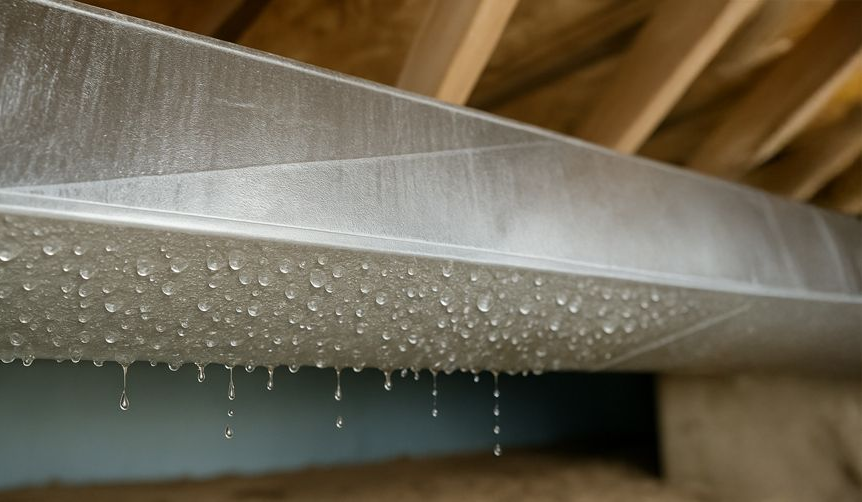
Here's the process: warm humid air from outside flows through the foundation vents into the cooler crawl space environment. When that warm humid air contacts cool surfaces — the floor, insulation, ductwork, pipes — condensation occurs. The air releases its moisture load directly onto those surfaces.
If you have a vented crawl space in coastal Virginia, your crawl space essentially becomes a rainforest during summer. The humidity isn't rising up through the ground — it's walking in through the vents every time outdoor air moves through the foundation.
There's an important implication here for vapor barriers. Because the moisture is entering as air and condensing above the ground, it's also condensing above the vapor barrier. The vapor barrier isn't stopping the problem — it's just sitting below it. In that context the barrier is functioning more as a vapor retainer than a vapor barrier, keeping ground moisture from adding to the problem but doing nothing about the primary moisture source entering through the vents.
Ground moisture can be a contributing factor, and in some crawl spaces groundwater is a significant issue that needs to be addressed directly. But it isn't what's causing mold growth, wood rot, and insulation deterioration in most Hampton Roads crawl spaces. Humid air through the vents is.
Misconception Two: The Vapor Barrier Controls the Moisture
This is where a lot of homeowners and frankly a lot of contractors get it wrong. The vapor barrier is one of the least important components in a crawl space moisture control system.
It has a role — it covers the ground, provides a clean surface, and gives the dehumidifier a sanitary surface to sit on. If groundwater is present it provides an extra layer of separation. But it doesn't control humidity. It never did and it can't.
Humidity is an air problem. The solution to an air problem is controlling the air — not laying plastic on the ground.
What Actually Controls Crawl Space Moisture
Sealing the foundation vents. This is the single highest-impact action you can take for a vented crawl space in Hampton Roads. Close the pathway through which 95% of the moisture is entering and you've addressed the primary source. Sealed vents stop warm humid outdoor air from flowing freely into the crawl space environment.
Installing a dehumidifier. Once the vents are sealed the crawl space becomes a semi-conditioned space. A properly sized dehumidifier manages the remaining moisture load mechanically — maintaining relative humidity at levels that prevent mold growth and protect the framing system. This is the mechanical control that makes the system work.
Addressing groundwater separately if present. If your crawl space has bulk water intrusion — water coming in through the foundation walls or accumulating on the floor — that's a drainage problem and needs a drainage solution. An interior perimeter drain and sump pump evacuates water that enters the space. Exterior grading and downspout corrections reduce how much water reaches the foundation in the first place. The vapor barrier and dehumidifier aren't substitutes for drainage when groundwater is present.
Why This Matters for How You Spend Your Money
If you're evaluating crawl space repair proposals and someone is leading with an upgraded vapor barrier as the primary moisture solution, that's a signal the diagnosis may not be right. The barrier is not doing the moisture control work — the vent sealing and dehumidifier are.
A crawl space moisture system should be evaluated based on whether it actually closes off the primary moisture entry point and manages the air in the space. Everything else is secondary.
The Bottom Line
Crawl space moisture in Hampton Roads is primarily an air problem, not a ground problem. Solve it by sealing the vents and conditioning the air with a dehumidifier. Address groundwater separately if it's present. Don't expect a vapor barrier to do work it was never designed to do.
If you want to know exactly what's driving moisture beneath your home and what it actually takes to control it, I'll come out and take a look personally.
Proudly serving homeowners throughout Hampton Roads including Newport News, Yorktown, Poquoson, Hampton, Norfolk, Virginia Beach, Chesapeake, Suffolk, Williamsburg, Gloucester, and surrounding areas.
About The Author
Robbie McCarty is the owner of Patriot Crawl Space Repairs and a Virginia Class A Residential Building Contractor (DPOR #2705176108) and MICRO Certified Mold Remediation contractor with over 25 years of crawl space repair experience throughout Hampton Roads and coastal Virginia. He has personally evaluated and repaired thousands of crawl spaces beneath homes in Suffolk, Chesapeake, Virginia Beach, Norfolk, Newport News, Williamsburg, and surrounding communities.
