What Does Full Encapsulation Mean?
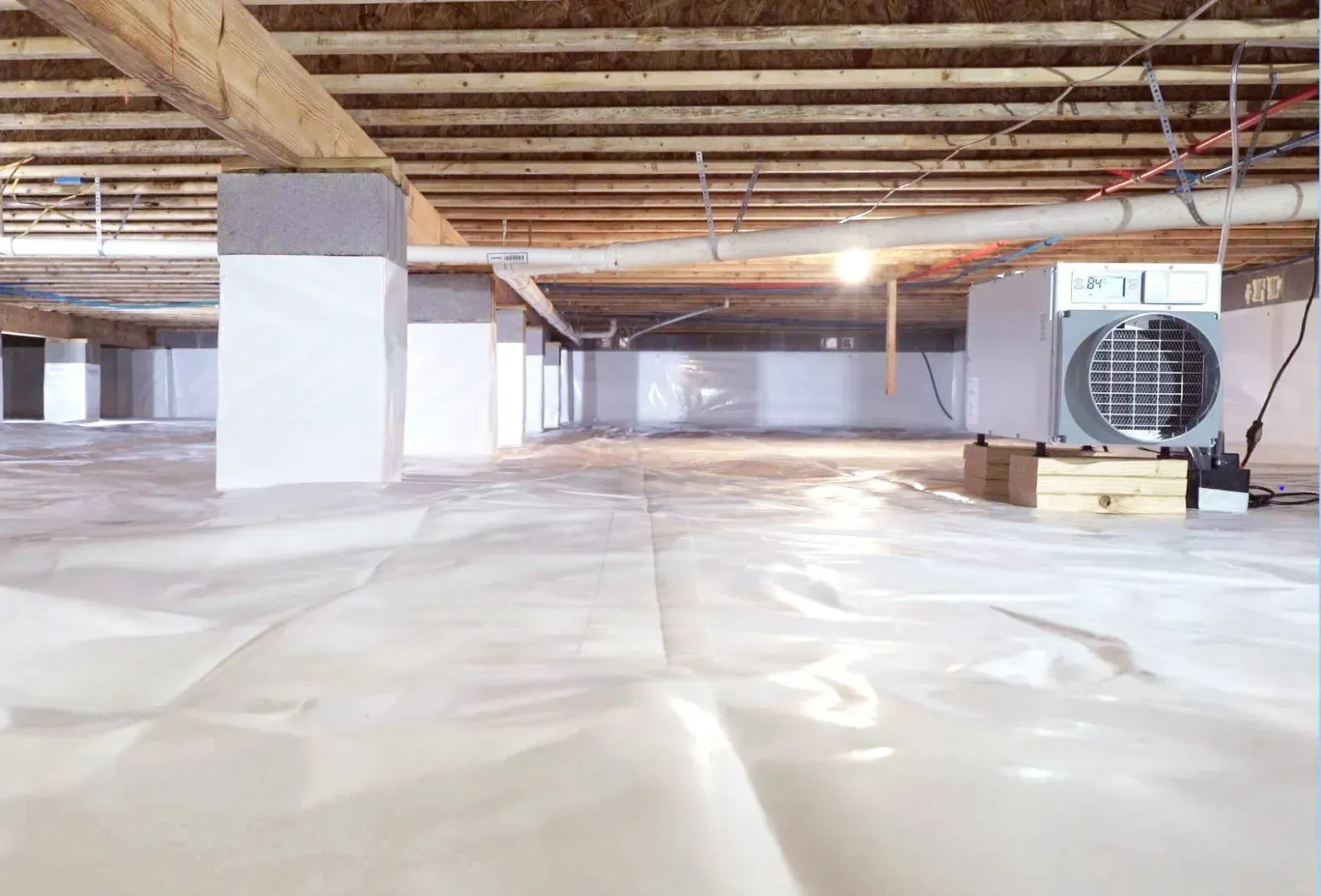
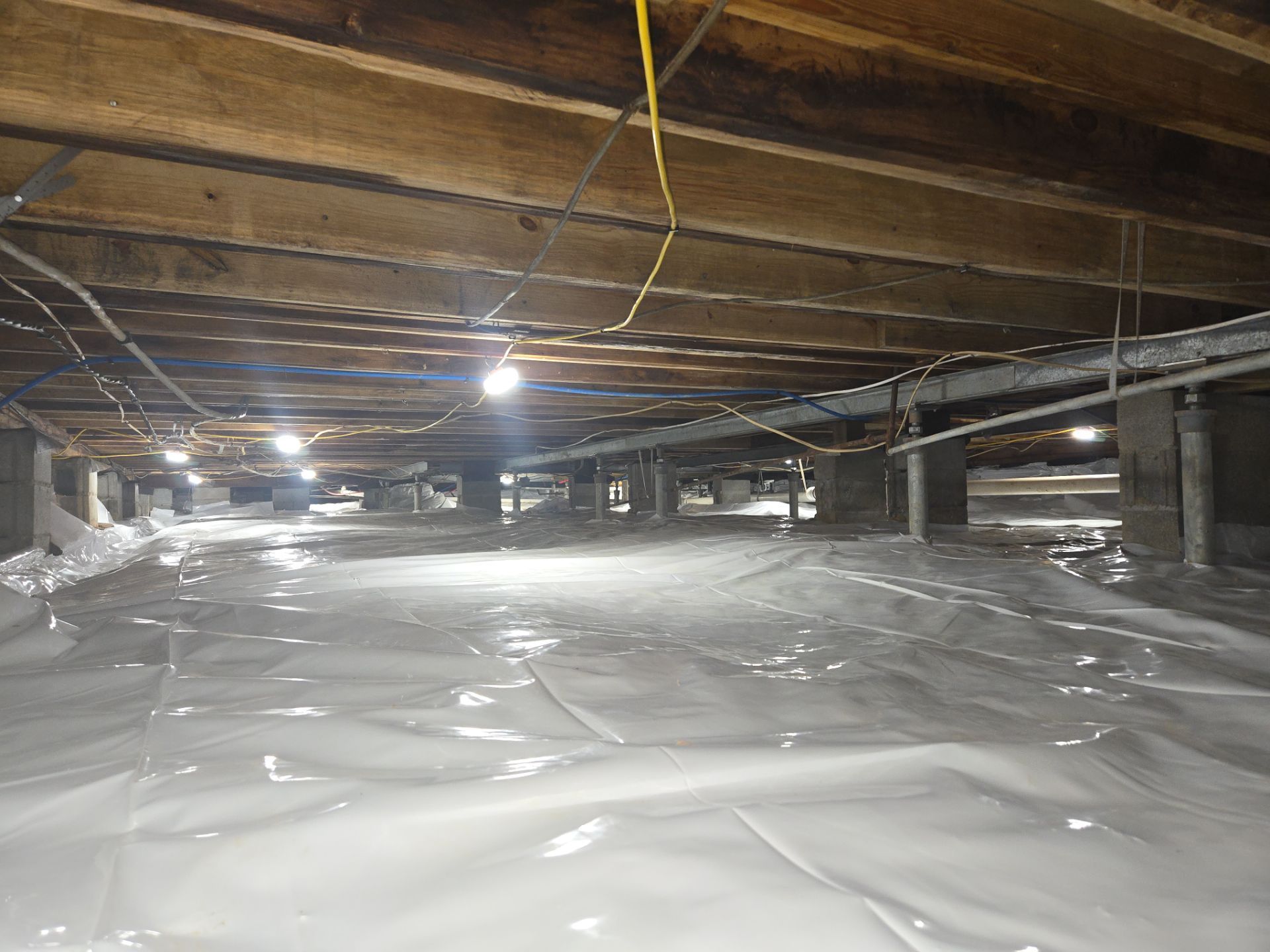
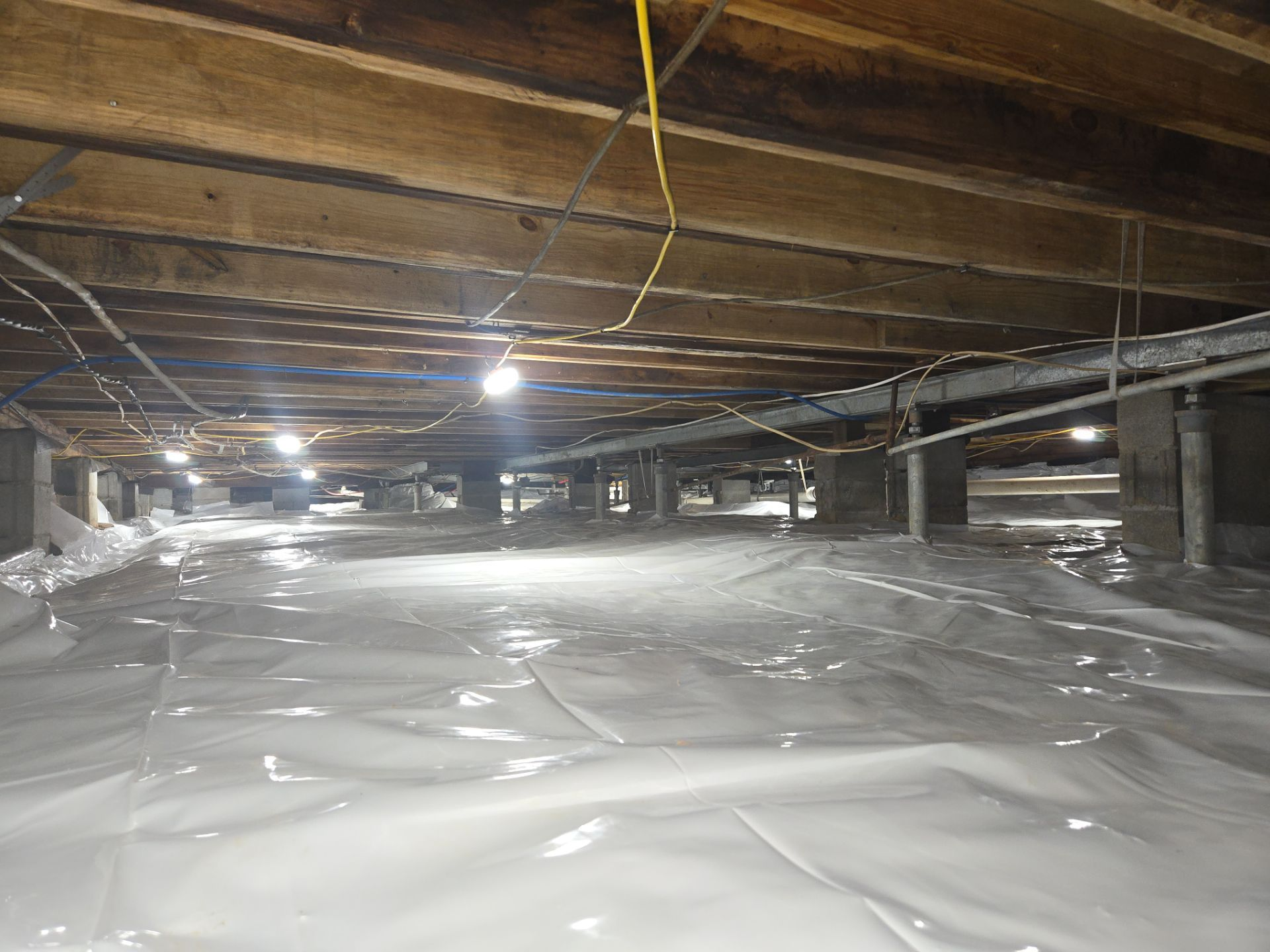
A full encapsulation proposal commonly includes insulation removal, a heavy ground liner sealed up the foundation walls, sealed vents and penetrations, a crawl space dehumidifier, and often foundation-wall insulation, drainage, and a sump pump.
Depending on the size and accessibility of the crawl space, the total price can become substantial very quickly. None of those components is inherently wrong, but they perform different jobs, and the fact that a contractor sells them together does not mean every house needs the entire package.
What Problems Does Encapsulation Solve?
Encapsulation is primarily intended to reduce moisture entering the crawl space from humid outdoor air and ground vapor while allowing mechanical humidity control to maintain a drier environment.
It does not replace drainage where groundwater enters, repair rotten framing, remove mold contamination, exclude rodents, repair damaged ductwork, or correct plumbing leaks. Those are separate building problems, and combining them under the general term “encapsulation” can make it difficult for homeowners to understand exactly what they are paying to correct.
Why Encapsulation Is Often Overbuilt
Many larger crawl space companies operate around standardized systems because standardized systems are easier to sell, price, train, and install. That can result in wall liners, foundation insulation, perimeter drains, sump pumps, and other components being proposed even when the actual moisture problem could be controlled with a simpler assembly. In low
Coastal Virginia crawl spaces, adding more materials can also make future inspection and maintenance harder while substantially increasing the cost of addressing what may primarily be a humidity and condensation problem.
The 5 Biggest Encapsulation Mistakes We See
1. Full Wall Liners In Low Crawl Spaces
In low Coastal Virginia crawl spaces, running liner material up the foundation walls can make future inspection for termites, rodents, water intrusion, foundation cracking, and staining much more difficult. Wall liners are not automatically wrong, but they should provide a clear benefit before reducing visibility of parts of the house that may need to be inspected for decades.
2. Installing Drainage Without Evidence Of A Water Problem
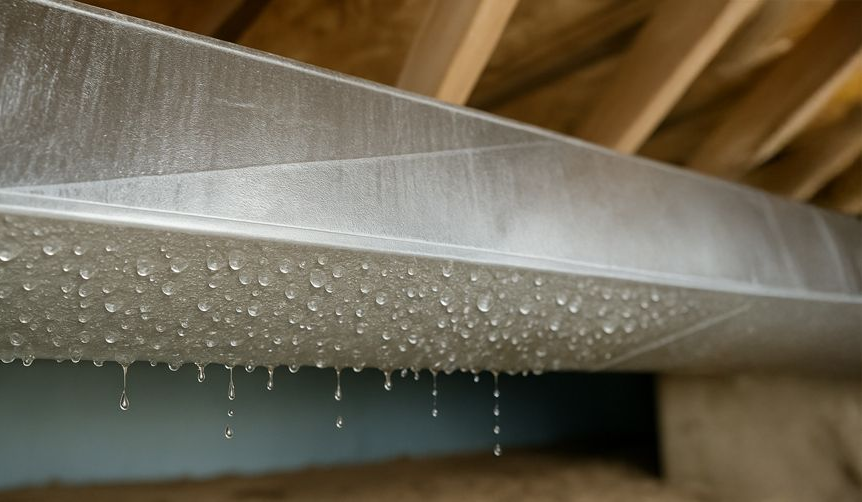
Perimeter drains and sump pumps are designed to manage liquid water, not humidity or condensation. If a crawl space is damp because warm humid air is reaching cooler surfaces, adding drainage may do little to solve the actual problem while significantly increasing the project cost. Drainage should be based on evidence of groundwater, surface water, or recurring standing water.
3. Encapsulating Before Rodent Exclusion
A new liner, insulation, and ductwork can be damaged quickly if mice or rats still have access to the crawl space. We regularly see expensive systems installed without properly sealing rodent entry points first. Exclusion should be addressed before installing materials that can be chewed, torn, contaminated, or displaced.
4. Covering Up Mold Instead Of Cleaning It
A moisture-control system may help prevent future mold growth, but it does not remove existing contamination from wood and other materials. If mold remediation is needed, affected surfaces should be properly cleaned before the crawl space is sealed. Installing a bright new liner can make the space look finished while leaving the original contamination above it.
5. Ignoring Ductwork And Other Existing Problems
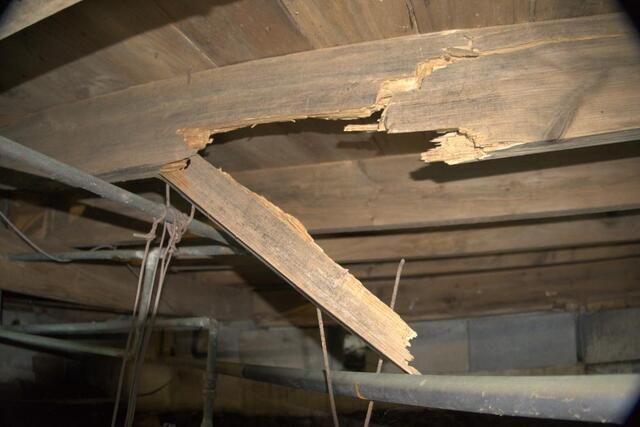
Some encapsulation proposals focus almost entirely on plastic, insulation, and dehumidification while overlooking old or contaminated ductwork, plumbing leaks, damaged insulation, rotten wood, or structural issues. A crawl space should be evaluated as a complete building system. Improving moisture conditions while ignoring major existing defects can leave the homeowner with an expensive but incomplete repair.
What Is Hybrid Encapsulation?
A hybrid approach controls the primary moisture sources without automatically covering every foundation wall or installing every component used in a full encapsulation package. A properly installed ground vapor barrier, sealed vents and openings, air sealing, and a correctly sized dehumidifier can provide effective humidity control in many crawl spaces while leaving foundation walls and structural components more accessible.
Where actual groundwater or surface water exists, drainage can be added because the house needs it rather than because it is bundled into the moisture-control package.
Why We Prefer A Simpler System
The best crawl space system is not necessarily the one with the most material in it. A simpler system can cost substantially less, preserve access to the foundation and framing, make pest activity easier to identify, and reduce the number of components that eventually require repair or replacement.
Our goal is to control the moisture condition with the least complicated system that reliably solves the problem rather than assuming that covering every visible surface automatically produces a better long-term result.
What Many Crawl Space Encapsulation Companies Skip
Some proposals devote thousands of dollars to liners, insulation, drainage, and dehumidification while failing to address conditions already present in the crawl space. Mold should be properly cleaned when remediation is needed, rodent entry points should be excluded before expensive liners and insulation are installed, and deteriorated or contaminated ductwork should be evaluated because it distributes air throughout the home.
A bright new liner can make a crawl space look dramatically better while leaving several of the most important health, pest, and building-performance problems untouched.
Why Crawl Space Inspectability Matters
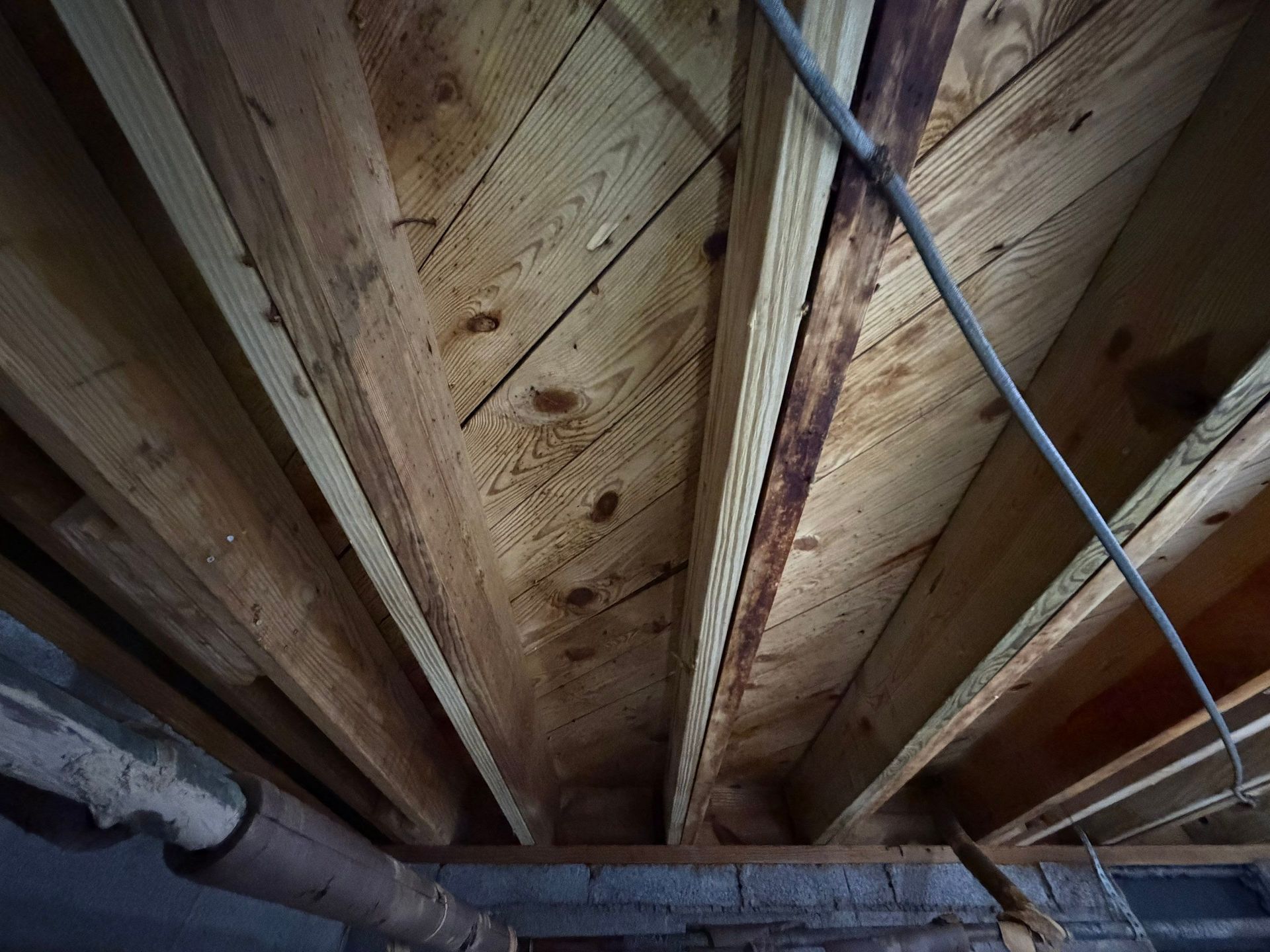
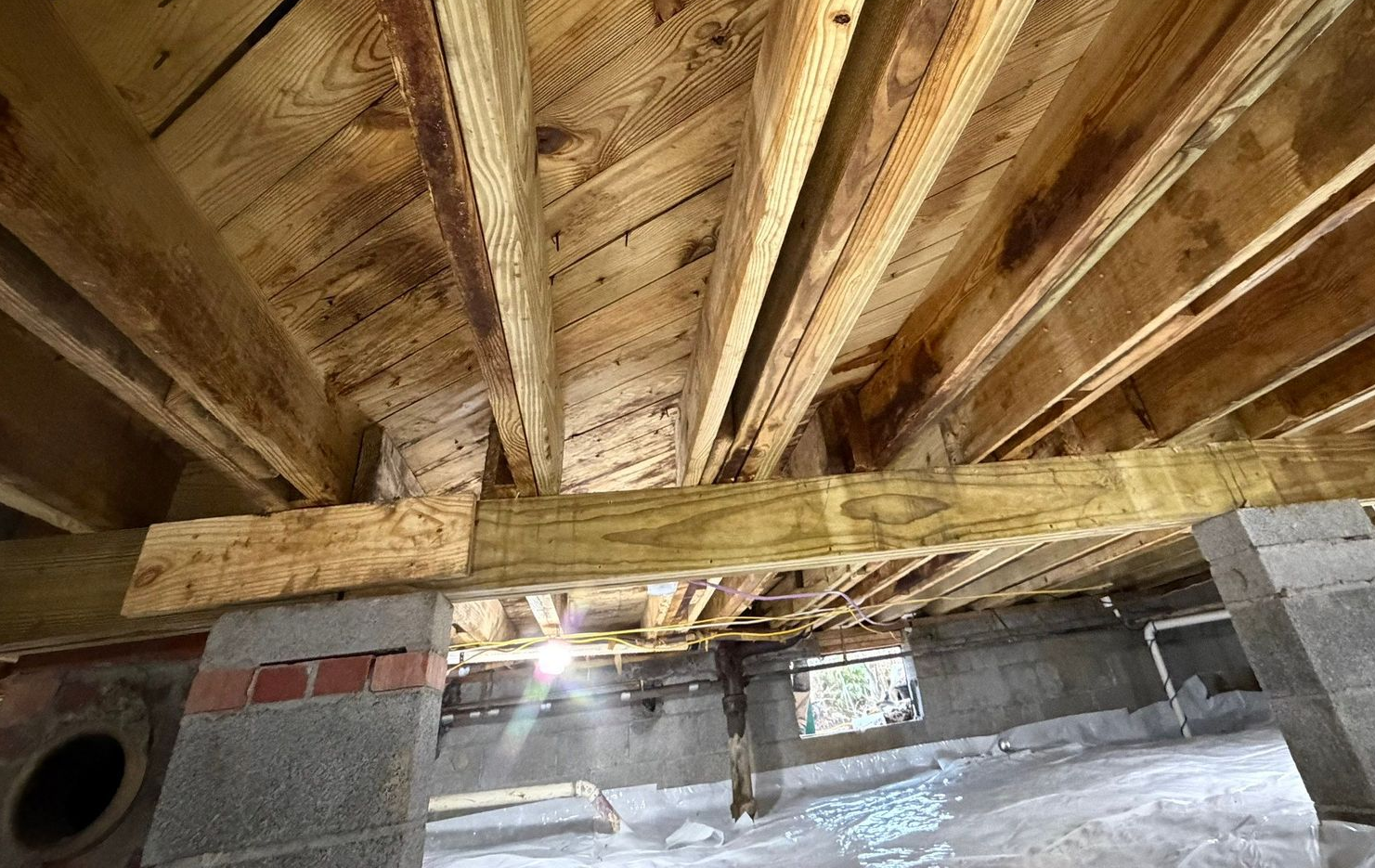
A crawl space is not simply an empty area that should be permanently covered and forgotten. It contains foundation walls, sill plates, joists, beams, plumbing, ductwork, wiring, pest entry points, and evidence of water movement that may need to be inspected for the life of the house.
Covering foundation walls and other surfaces can make termite activity, rodent entry, foundation cracking, leaks, and water intrusion harder to identify, particularly in low crawl spaces where access is already limited.
What Happens During A 2nd Opinion Inspection?
We inspect the crawl space independently rather than beginning with the assumptions in the existing proposal.
We evaluate moisture sources, wood condition, framing and load paths, drainage, insulation, ductwork, plumbing, pest damage, mold, vapor barriers, dehumidification, and any existing systems, then compare what we actually observe to the work that has been recommended and explain where we agree, disagree, or would approach the repair differently.
Why Do Homeowners Choose Patriot?
Homeowners often call Patriot because they want an experienced person to tell them what the house actually needs rather than sell them the largest available system.
Our approach is to diagnose the problem first, explain the options clearly, and recommend the minimum effective repair that addresses the condition without adding unnecessary cost, complexity, or components that do not provide a meaningful benefit.
Second Opinion Guides
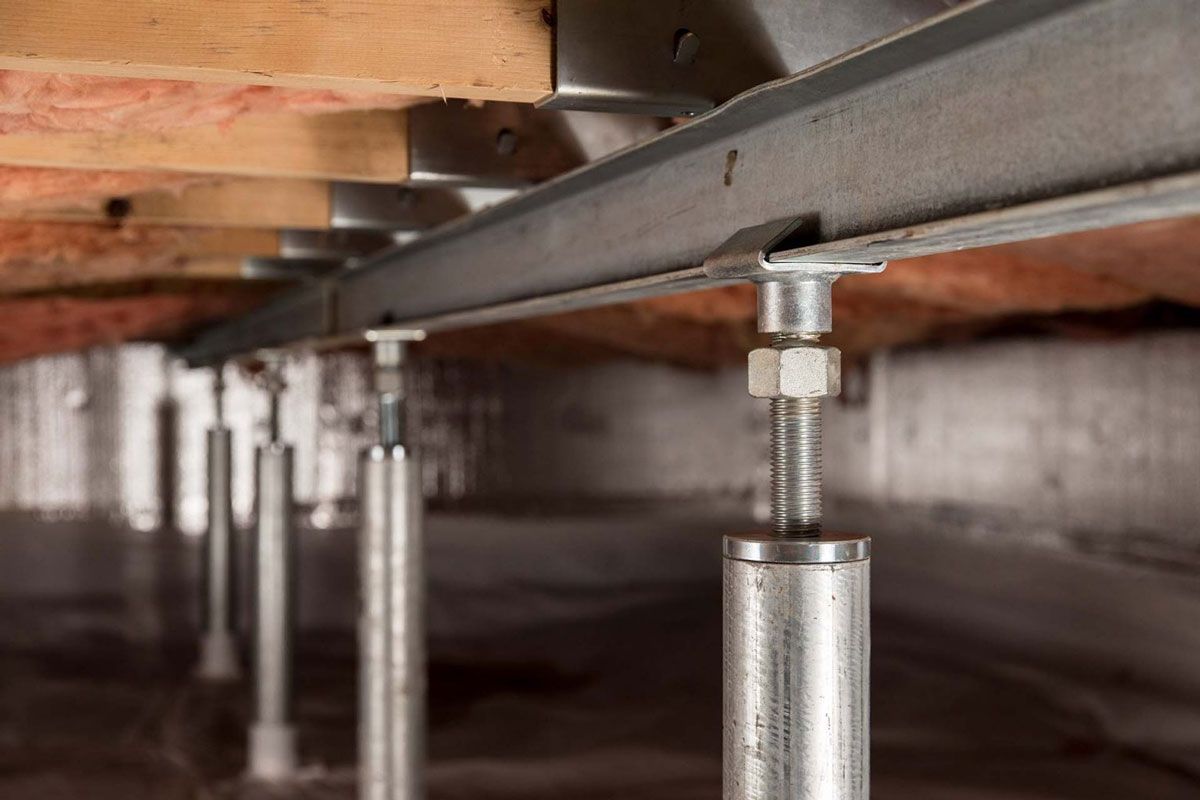
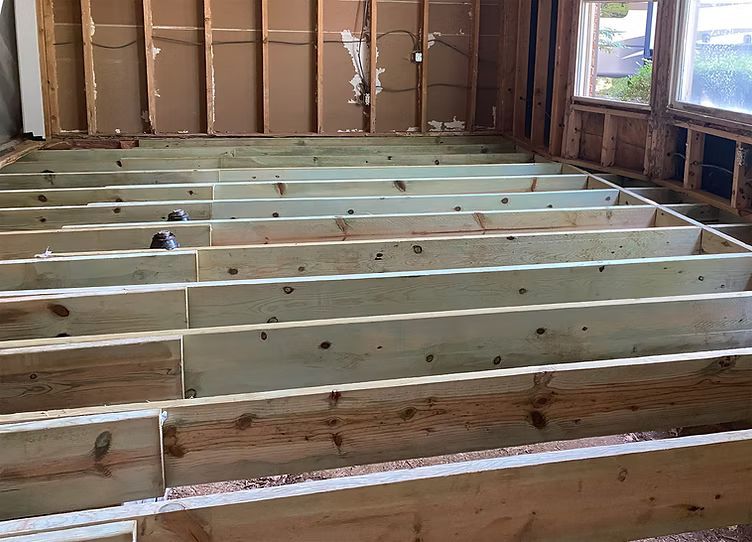
Our Second Opinion Guides examine the major decisions homeowners face when reviewing proposals for encapsulation, drainage, mold, structural repairs, support jacks, insulation, dehumidification, and other crawl space work.
The guides explain what each system is intended to accomplish, where it provides value, and where a simpler or different solution may deserve consideration.
Frequently Asked Questions
Does every wet crawl space need full encapsulation?
No. The proper repair depends on where the moisture is coming from. Humid outdoor air, ground vapor, groundwater, surface water, plumbing leaks, and condensation are different problems and may require different combinations of vapor control, dehumidification, drainage, air sealing, or repairs.
Does building code require full crawl space encapsulation?
Building code provides multiple paths for crawl space moisture control, and existing homes also have repair and maintenance provisions that can allow more flexibility than new construction. When an encapsulation salesperson says “code requires” their system, they are often referring to the requirements that apply to the specific new-construction assembly they sell—not the only assembly the code allows and not necessarily what is required to repair or maintain an existing home. In short, presenting one proprietary or new-construction-style assembly as universally mandated can be a sales tactic, and even the salesperson may believe it is true, but in many existing-home situations it simply is not.
Does building code really require full crawl space encapsulation?
No. A full encapsulation is one new construction buidling code compliance path. When contractors tell you that wall insulation is required, or that a wall sealed liner is required, they are right that for their package it is required, but the building code allows for multiple paths and crawl space configurations, especially in existing homes when the project is repair and maintenance based.
Is a dehumidifier enough without wall liners?
In most crawl spaces, yes. If the primary problem is elevated humidity and condensation rather than groundwater intrusion, a properly sized dehumidifier combined with ground vapor control and air sealing can be an effective moisture-control strategy. The answer depends on the actual conditions in the crawl space, not on one universal system.
Do I need foundation-wall insulation?
In Climate Zone 3A, which includes most Hampton Roads cities and counties, crawl space insulation is not generally required by code in a sealed crawl space. A few nearby localities fall into Climate Zone 4A, where insulation requirements can apply depending on the age of the home, the work being performed, and the code provisions that govern that specific project. Existing homes also do not automatically have to be upgraded to current new-construction insulation requirements simply because crawl space repairs are being performed.
From an energy-efficiency standpoint, crawl space insulation provides relatively little benefit once the crawl space is sealed and humidity-controlled. The more important questions are whether insulation is actually required in your climate zone, whether that requirement applies to an existing home of your age, and how your local city or county interprets and enforces the applicable code provisions.
Do I need a perimeter drain and sump pump with encapsulation?
Not automatically. A drain and sump pump are intended to manage liquid water. If there is evidence of groundwater, recurring standing water, or surface-water intrusion, drainage may be necessary. If the problem is primarily humidity or condensation, a drainage system may add significant cost without addressing the actual moisture source.
Should mold be cleaned before encapsulation?
Yes, when mold remediation is needed, the affected surfaces should be properly addressed rather than simply covered by a new moisture-control system. Encapsulation can help prevent future moisture conditions that support mold growth, but it does not physically remove existing contamination from wood and other building materials.
Should rodents be excluded before encapsulation?
Yes. Rodents can damage vapor barriers, insulation, ductwork, wiring, and other materials after an encapsulation system is installed. Entry points should be identified and properly excluded before investing thousands of dollars in materials that can be chewed, torn, contaminated, or displaced.
Can encapsulation improve indoor air quality if the ductwork is old or contaminated?
It can improve crawl space conditions, but it does not automatically correct problems inside old or damaged ductwork. If ducts have deteriorated insulation, rodent contamination, mold, air leakage, or damaged flex sections, those conditions should be evaluated separately because the duct system is directly responsible for delivering conditioned air throughout the home.
Can full wall liners make future inspections harder?
Yes. Wall liners and insulation can cover areas where termite activity, rodent entry, water intrusion, foundation cracking, staining, or other building conditions might otherwise be visible. That does not mean wall liners should never be used, but inspectability should be considered when deciding how much of the crawl space needs to be covered.
What is the main advantage of hybrid encapsulation?
The main advantage is that it can control the dominant moisture sources with fewer components while preserving greater visibility and access to the crawl space. In appropriate homes, that can lower installation cost, simplify future maintenance, and make pest, water, structural, and foundation conditions easier to monitor.
How can I tell whether my encapsulation proposal is overbuilt?
Look at each component individually and ask what specific problem it is intended to solve. If the proposal includes wall liners, insulation, drainage, sump pumps, dehumidification, mold work, or structural repairs, the contractor should be able to explain the physical condition that justifies each item rather than simply saying that it is part of the package.
Can Patriot review another company's encapsulation proposal?
Yes. Bring the complete proposal, photos, measurements, or inspection notes you received. We perform our own crawl space inspection first, then compare the proposed scope to the conditions we observe and explain where we agree, where we believe the system may be overbuilt, and what alternative approaches may be available.