
Hampton Roads Crawl Space Journal
Expert field notes on crawl space moisture, structure, and building performance from 25 years beneath coastal Virginia homes

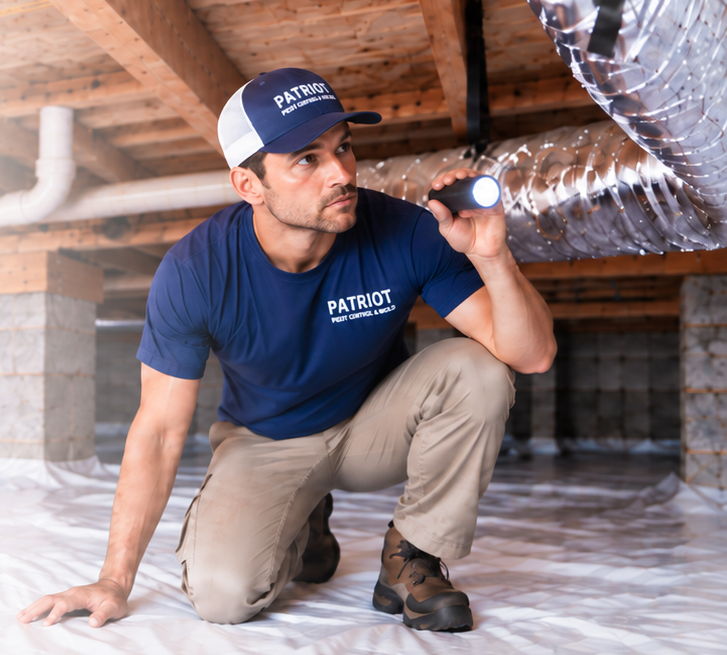
40 Lessons From 25 Years of Crawl Space Research and Field Experience
After decades of crawl-space work, hundreds of inspections per year, and a lot of time digging through research from the Department of Energy, Advanced Energy, Oak Ridge National Laboratory, building codes, and field studies, certain patterns become hard to ignore. These are the lessons I think matter most when you are trying to design, repair, or evaluate a crawl space based on how homes actually perform over time.
1. Crawl Spaces Should Be Designed for the Local Climate and Site
Crawl spaces in Coastal Virginia should not be designed the same way as crawl spaces in colder inland or mountain regions. Soil, terrain, humidity, radon risk, termites, rodents, drainage, and clearance all change what the right system looks like.
2. Coastal and Inland Crawl Spaces Are Different Problems
A low, flat coastal crawl with sandy soil has different risks than a tall crawl space on a sloped clay site. The right assembly should respond to those site conditions instead of forcing every home into the same template.
3. Most Summer Crawl-Space Moisture Comes From Humid Outdoor Air
The biggest summer moisture load in many vented crawl spaces is humid outdoor air entering through foundation vents and other openings. Ground vapor matters, but in humid coastal climates it is often not the dominant problem.
4. Condensation Is Often the Main Summer Moisture Problem
Warm, humid air entering a cooler crawl space can reach its dew point on joists, ductwork, pipes, and other surfaces. That condensation is what turns high humidity into actual liquid moisture that supports mold, fungus, and wood deterioration. Most crawl space moisture issues occur in the Summer.
5. Relative Humidity By Itself Can Be Misleading
Relative humidity is only part of the moisture equation. Dew point and surface temperature determine whether moisture actually condenses on crawl-space materials.
6. Wood Moisture Content Is the Performance Metric That Matters Most
I care more about what the framing is doing than whether a humidity meter shows one perfect number. If wood moisture stays below the range that supports mold and fungal growth, the system is doing its job.
7. Air Sealing Usually Matters More Than Adding More Insulation
Closing foundation vents and reducing uncontrolled outside-air leakage can have a much larger effect on moisture and energy performance than adding more insulation. In many closed crawl spaces, air sealing does most of the real work.
8. A Pinned Vapor Barrier Can Perform Very Well
A ground-pinned vapor barrier can provide excellent moisture control in the right closed crawl space. It does not automatically need to be glued to every foundation wall to work. A pinned vapor barrier is not a downgrade, it is the better tool for the job under certain site conditions.
9. Fully Sealed Liners Are Useful When They Have a Specific Job
A fully sealed liner makes sense when it is helping direct runoff, support radon mitigation, or create a more finished usable crawl space. More plastic is not automatically better if the added material is not solving a real site condition.
10. Inspectability Is a Performance Feature
A crawl space that is easy to inspect is easier to maintain, repair, and protect from termites, rodents, drainage problems, and structural deterioration. Hiding everything behind plastic and insulation can make a system look cleaner while making long-term problems harder to see.
11. Long-Term Durability Matters More Than Day-One Optimization
The most optimized system on installation day is not always the system that performs best over 10 or 20 years. Crawl-space design should account for rodents, flooding, termites, changing drainage conditions, and future repairs.
12. The Best System Is Usually the Simplest One That Reliably Works
Crawl-space work is home maintenance, not cosmetic remodeling. I would rather install a simple, durable system that controls the actual risks than an expensive assembly with unnecessary components.
13. A System That Requires Everything To Stay Perfect Is Not Very Resilient
Crawl spaces are harsh environments, and something will eventually get damaged, clogged, wet, or disturbed. Good systems should continue to perform reasonably well and be easy to repair when that happens.
14. Supply Air Can Be a Reliable Primary Moisture-Control Method
A properly sealed closed crawl space can often be controlled with a small amount of conditioned supply air. The system works because the major outdoor-air moisture load has already been reduced before the supply air is introduced.
15. Dehumidifiers Are More Precise but More Equipment-Dependent
A dedicated dehumidifier provides very direct humidity control when it is working properly. The tradeoff is that it can fail without the homeowner knowing, while supply air operates whenever the HVAC system operates.
16. Supply Air and Dehumidification Can Be Used Together
Choosing supply air does not mean a dehumidifier can never be added later. Moisture control can be staged, monitored, and upgraded if the crawl space shows that more control is actually needed.
17. Old Crawl-Space Insulation Often Creates More Problems Than Benefit
Fiberglass insulation in vented crawl spaces may spend decades exposed to summer moisture, rodents, insects, and mold. Once the crawl space is closed, that old material can become an odor, sanitation, and maintenance problem.
18. Removing Floor Insulation Improves Visibility and Sanitation
Without fiberglass hiding the framing, you can see joists, subfloor, plumbing leaks, termite activity, rodent damage, and wood deterioration. That visibility has real long-term value.
19. Floor Insulation Is Not What Keeps Crawl-Space Pipes From Freezing
In most vented crawl spaces, the pipes were already below the floor insulation and outside the insulated envelope. Heat keeps pipes from freezing, and a properly closed crawl space in Coastal Virginia generally stays far above freezing.
20. Rim-Joist Insulation Can Make More Sense Than Full Floor Insulation
If insulation is needed in a closed coastal crawl space, the rim joist and band-board area is often where the most useful thermal benefit can be gained. Reinstalling fiberglass across the entire floor system is usually not my first choice.
21. Termite Visibility Should Influence Crawl-Space Design
Termites are a major risk in warm coastal climates, and foundation walls should remain as inspectable as practical. Moisture control should not be designed as though pest control does not exist.
22. Rodent Resistance Should Be Part of the System Design
Rodents can damage liners, ductwork, insulation, access doors, and other crawl-space materials. A system that is difficult or expensive to repair after rodent damage is less durable than it looks on installation day.
23. Crawl-Space Duct Insulation Ages Like Upholstery
If fibrous duct insulation is exposed to damp summer conditions over and over for decades, it behaves a lot like cloth upholstery that repeatedly gets wet and dries. At some point, mold, mildew, deterioration, and odor become sanitation issues rather than simple cosmetic defects.
24. Mold or Rodent Contamination Can Make Duct Replacement a Sanitation Decision
Ductwork may still physically move air while being too contaminated to make sense to keep. When mold or rodents have affected fibrous duct insulation, replacement can be about sanitation rather than HVAC performance.
25. Drainage and Encapsulation Solve Different Problems
Encapsulation controls humidity and vapor, while drainage handles bulk water. A crawl space should not automatically receive a drain and sump system just because it is being encapsulated.
26. Standing Water Does Not Automatically Mean a Full Drainage System Is Needed
Water can come from plumbing leaks, grading, isolated runoff, groundwater, or one-time storm conditions. The source should be identified before thousands of dollars are spent on a permanent drainage system.
27. Support Jacks Are Not a Structural Diagnosis
Adding a steel jack under a low floor does not tell you why the floor moved. Structural repairs should follow the actual load path and address damaged joists, girders, piers, settlement, or inadequate spans where those are the real causes.
28. Mold Remediation Without Moisture Correction Is Incomplete
Cleaning mold without correcting the moisture conditions that allowed it to grow only addresses the symptom. The moisture source has to be controlled if the repair is expected to last.
29. The Crawl Space and First Floor Affect Each Other
The crawl space and living space are not completely separate environmental zones. Temperature, humidity, framing moisture, ductwork, and air movement allow the two spaces to help or hurt each other.
30. Existing-Home Crawl-Space Work Should Be Evaluated as Existing-Building Work
Existing homes were built under different codes, with different materials, site conditions, and histories. Treating every crawl-space repair like a new-construction assembly ignores the reason existing-building codes exist.
31. Repair and Alteration Are Different Because Purpose Matters
Repair work corrects damage or maintains a building, while alteration work changes it beyond repair. Crawl-space moisture remediation is fundamentally repair and maintenance work when its purpose is to correct or prevent deterioration.
32. Existing-Building Codes Are Designed To Protect Necessary Repairs
Existing-building codes were developed in part to prevent homeowners from being forced into unnecessary additional work every time they repair an existing building. If repair automatically triggered every new-construction requirement, many homeowners would simply defer the work.
33. Energy-Code Requirements Change by Climate Zone
A crawl-space assembly that makes sense in Maine does not automatically make sense in Coastal Virginia. Energy codes recognize those differences through climate-zone-specific requirements.
34. The Climate Zone 3A Insulation Exemption Matters
Climate Zone 3A covers much of warm-humid Coastal Virginia and other southern regions where crawl-space wall insulation provides limited benefit. That exemption is an important clue that insulation should not be treated as universally necessary.
35. Crawl Spaces Should Be Judged by Actual Performance
A crawl space should be evaluated by wood moisture, condensation, dew point, durability, sanitation, and visible condition. How much plastic, insulation, or equipment was installed is not a performance metric.
36. Crawl-Space Diagnosis Has To Be Multidisciplinary
Moisture, structure, ductwork, rodents, insulation, drainage, plumbing, mold, and pest activity all interact beneath the same house. Looking at only one trade can lead to the wrong diagnosis.
37. A Contractor Who Understands Only One Component Can Miss the Cause
A waterproofing company may see drainage, an insulation company may see insulation, and a pest company may see rodents. The actual problem may involve several systems at once, which is why the whole crawl space has to be evaluated together.
38. Long-Term Field Performance Matters More Than Theoretical Perfection
A system that looks ideal on paper but is hard to inspect, maintain, or repair may not be the best system over time. I care more about how an assembly performs after years of real-world exposure than how impressive it looks the day it is installed.
39. Homeowners Usually Need the Minimum Effective Repair
The goal should be to solve the actual problem with enough margin for durability and reliability. Adding every available component simply because it exists can increase cost without meaningfully improving the outcome.
40. Much of the Research Already Exists—The Real Gap Is Application
We already have decades of useful research from the Department of Energy, Advanced Energy, Oak Ridge National Laboratory, building codes, pest-control guidance, and field studies. The bigger challenge is connecting those sources, comparing them with what actually happens in real homes, and applying the right lesson to the right crawl space.
Conclusion
The biggest lesson after years of crawl-space work is that there is no single assembly that should be installed under every home. The best systems are based on the actual climate, site conditions, moisture sources, pest risks, structural conditions, and long-term maintenance needs of the property.
More material does not automatically mean better performance, and the most expensive system is not automatically the most durable one. The goal is much simpler: keep the crawl space dry, keep the framing healthy, keep the building inspectable, and solve the actual problems without creating unnecessary new ones.
