
Call Us Today To Schedule An Inspection At (757) 960-3231

Crawl Space Vents Open Or Closed?
Watch The Full Video
Download The Technical Whitepaper (PDF)

Crawl Space Vents: Open or Closed?
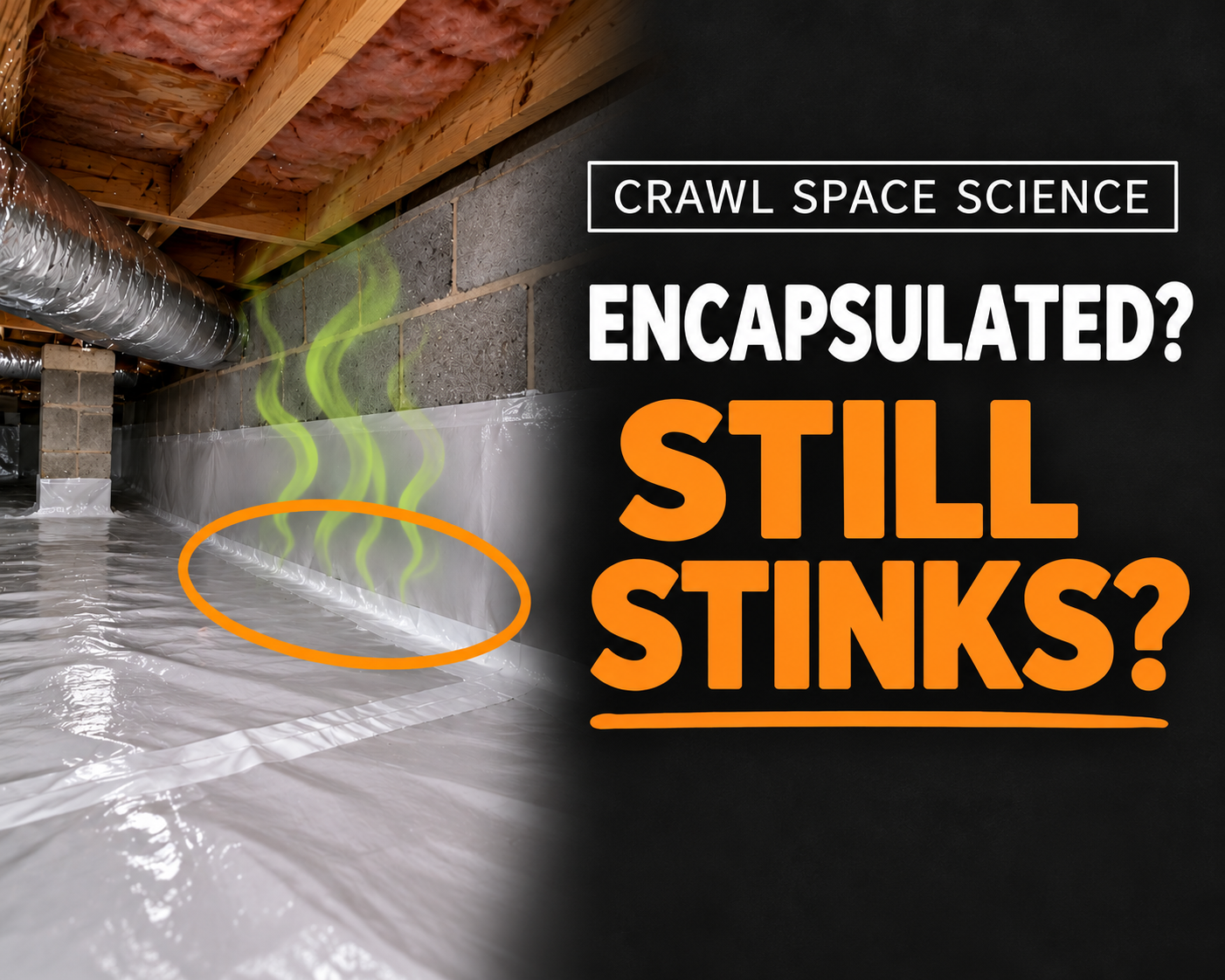
Should your crawl space vents be open in the summer and closed in the winter? Or sealed for good?
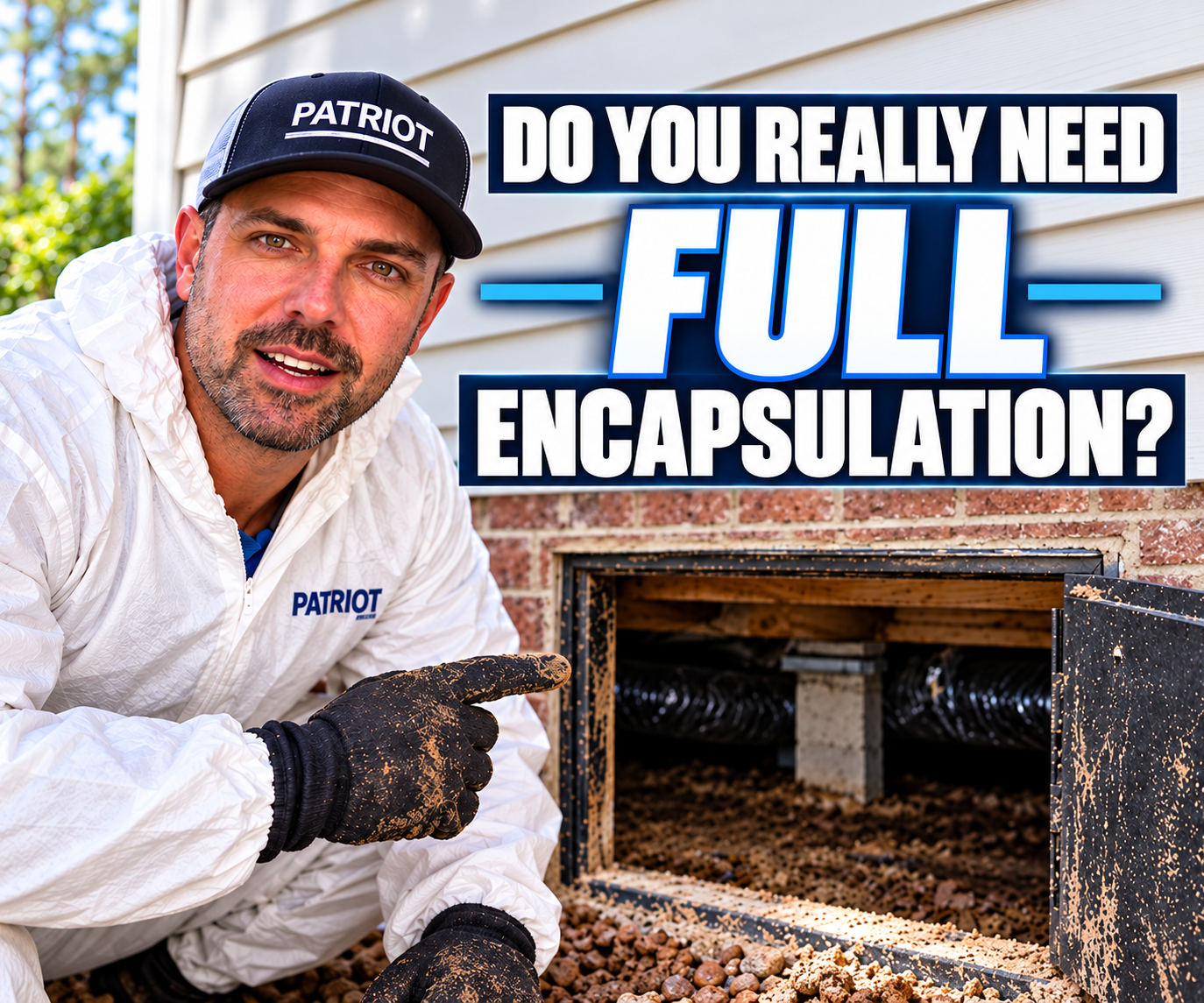
If you live in the hot, humid coastal Southeast, my recommendation is to permanently seal your foundation vents as part of a properly designed moisture-control system.
The reason is simple. In our climate, no seasonal vent strategy reliably keeps a crawl space dry. In summer, outdoor air brings in moisture that condenses on the cooler surfaces under your house. In winter, the same vents bring in cold air, which makes your floors colder and raises your heating bills.
I’m Robbie McCarty, owner of Patriot Crawl Space Repairs in Hampton Roads, Virginia. I personally inspect more than 600 crawl spaces every year. Our company handles structural repairs, mold remediation, and moisture control in the coastal Southeast. What follows comes from those field observations and from research by Advanced Energy, Duke University, the U.S. Department of Energy, and other building science organizations.
Why Were Crawl Space Vents Installed in the First Place?
The original idea was straightforward. Moisture evaporates from the soil under a house. Builders expected foundation vents to let outside air in, carry that moisture away, and keep the wood dry. Under the right conditions, that works.
Vented crawl spaces became common long before central air conditioning was widespread. Homes ran differently, and construction practices weren’t the same as today’s. Vents were written into national building codes in the mid-20th century, based on moisture studies from regions drier and colder than ours.
The advice to open vents in summer and close them in winter was passed down for generations. Before field studies and building science research were easy to find, most people learned from the generation before them. A rule of thumb goes out of date when the conditions it was based on change.
Today we have actual field measurements of what happens inside vented crawl spaces during humid Southeast summers.
Why Outdoor Air Doesn’t Dry a Crawl Space in Summer
The air outside is often carrying more moisture than the air already under your house.
Picture a typical July afternoon in coastal Virginia. It’s 95 degrees outside with high humidity, and your air conditioning is running inside. Your floor system is relatively cool. Your ductwork is cold. The ground under the house is cooler than the summer air.
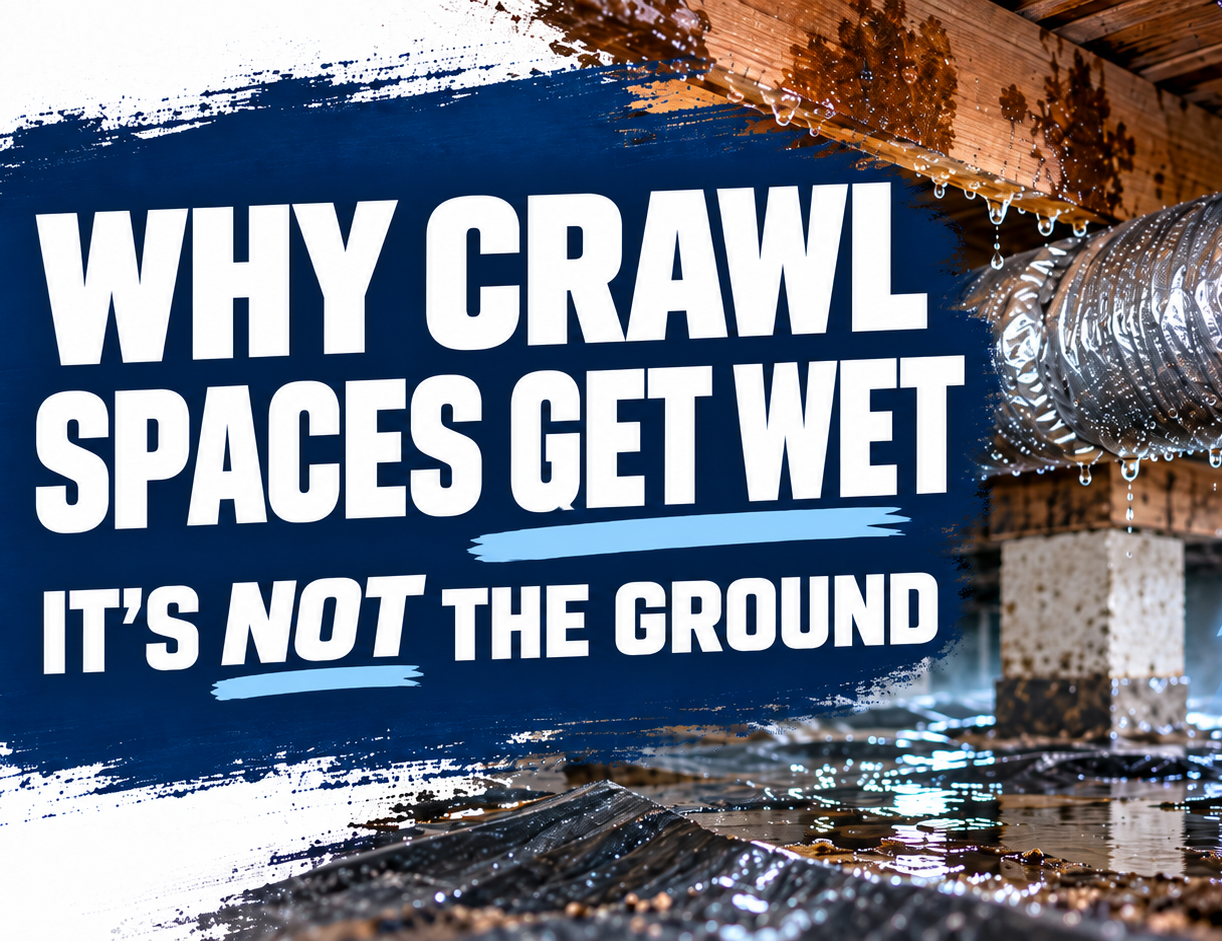
When that hot, humid outdoor air comes through the foundation vents, it cools down. As it cools, its relative humidity rises. When it touches a surface below its dew point, the moisture condenses into liquid water.
It’s the same reason a cold can of soda sweats on a humid day. The water isn’t leaking out of the can. It’s condensing out of the air around it. The same thing happens under your house.
What It Looks Like in a Real Crawl Space
I see it constantly:
- Ductwork dripping with condensation
- Puddles on top of vapor barriers
- Mold and fungus on floor joists and subflooring
- Wet fiberglass insulation hanging down
- Moldy ductwork and deteriorating wood
This can happen without a plumbing leak or groundwater coming into the foundation. In many cases, the moisture comes from the same outdoor air the vents were supposed to use to dry the crawl space.
What the Independent Research Says
In 2005, Advanced Energy studied 45 vented crawl spaces in North Carolina as part of a larger Duke University study funded by the U.S. Department of Housing and Urban Development (HUD). Researchers found visible mold in 62 percent of the crawl spaces. In 67 percent, wood moisture readings were high enough to support mold growth.
They also monitored temperature and humidity over time. During June and July, 100 percent of the relative humidity readings in those crawl spaces were at or above 70 percent, the commonly accepted threshold for mold growth. In August, it was 99 percent.
More important, they measured dew point. Summer outdoor air was confirmed to be wetter than the crawl space air, and outdoor dew points often exceeded crawl space temperatures. In the researchers’ words, venting crawl spaces with outside air “does not dry the crawl space nor does it have the potential to dry the crawl space during the summer months.” Bringing in outside air wasn’t drying the crawl space. It was creating conditions for condensation.
In separate field research in Princeville, North Carolina, funded by the Department of Energy, Advanced Energy compared closed and vented crawl spaces side by side. The finding: in the humid Southeast, a properly closed crawl space “produces a substantially drier crawl space” and reduces the energy used to heat and cool the home. These were measurements in real houses, not computer models.
What DOE, EPA, and HUD Say
The Department of Energy’s Building America program supports closing crawl space vents in humid climates. Its guide to closing ventilated crawlspaces notes that vented crawlspaces in mixed or hot-humid climates “tend to increase the moisture level within the space instead of keeping it drier,” and that this moisture then condenses on the colder wood surfaces of the floor framing.
The EPA’s Indoor airPLUS program goes further. For qualifying homes, vented crawl spaces are not permitted. The perimeter walls must be sealed against outside air, and in humid climates the crawl space must be dehumidified to keep relative humidity at or below 60 percent.
The HUD-funded research described above documented moisture failures in traditional vented crawl spaces through humid summers.
This evidence has been available for decades. Vented crawl spaces are still permitted and built across the Southeast.
Why Do Building Codes Still Allow Vented Crawl Spaces?
Building codes are written for an entire country with very different climates. A crawl space in Colorado doesn’t see the same summer moisture as one in coastal Virginia. States adopt thousands of pages of model code, and established construction methods can persist long after the research changes.
The International Residential Code has allowed unvented, conditioned crawl spaces (Section R408.3) since 2003, so sealing a crawl space has been code-approved for more than 20 years. In my opinion, builder resistance to cost and reluctance to admit past problems also play a role.
Just because a design is allowed by code doesn’t mean it’s the best-performing design for your climate.
What About Automatic Foundation Vents?
I’m not a fan. In my inspections, I regularly find automatic vents with rusted mechanisms, vents stuck open or closed, and hardware that no longer holds them in place.
Even if they worked perfectly, there’s a bigger problem. Most automatic vents open and close based on temperature. They don’t measure how much moisture is in the outdoor air. So they can open on a hot, humid summer day, exactly when you don’t want that air in your crawl space.
What About Powered Ventilation Fans?
In a dry climate, crawl space ventilation fans may be useful. In the humid coastal Southeast, more outdoor airflow can make the problem worse. If the incoming air carries more moisture than the crawl space air, pushing more of it through the foundation increases the moisture load.
A humidistat doesn’t necessarily fix that. Relative humidity alone doesn’t tell you which air holds more water vapor. You need to compare dew points.
Can’t I Just Close Them in Summer and Open Them in Winter?
In winter, open vents bring in cold air and make your floors colder, especially if the insulation has already deteriorated. Keep the vents closed year-round.
If you’re not ready for a complete system, close the vents, put a sensor in the crawl space, and watch temperature, humidity, and dew point. Check your wood moisture too. That’s a stopgap, not a system.
The Proper Way to Close a Crawl Space
For a typical low crawl space in our coastal market, we use a simple system:
- Correct any real groundwater or drainage problems first.
- Remove significant mold contamination, damaged insulation, and other deteriorated materials.
- Install a durable ground vapor barrier to control evaporation from the soil.
- Seal the foundation vents, access door, utility penetrations, and other unwanted openings to the outside. Pay close attention to rodent entry points.
- Provide a reliable drying mechanism. When suitable HVAC ductwork is available, I generally prefer a small amount of conditioned supply air, because it’s simple and needs very little maintenance. Otherwise, a dedicated crawl space dehumidifier is a good option.
Then we verify it works. In a properly controlled crawl space, we generally expect wood moisture content to average around 10 to 12 percent, with summer readings occasionally reaching 15 or 16 percent. That’s what we monitor to confirm the system is actually controlling moisture.
Simply sealing the vents might work in some homes. Without a dedicated drying strategy, though, you’re relying on incidental air leakage to handle the remaining moisture. That’s not something I’d want to rely on professionally.
Flood-prone foundations, combustion appliances, radon, and other climates can call for different designs. That’s a design conversation, not a reason to leave the vents open.
The Bottom Line
In the hot, humid coastal Southeast, traditional crawl space ventilation is a failed moisture-control strategy. Opening vents in summer brings in the very moisture you’re trying to remove. Opening them in winter brings in cold air.
Permanently seal the vents as part of a complete moisture-control system, then monitor conditions to verify it works. That’s what the field research supports, and it’s what I’ve found works in the crawl spaces we repair.
Questions about your crawl space? Call Patriot Crawl Space Repairs at 757-960-3231 or visit patriotcrawlspacerepairs.com.
Research and Sources
Advanced Energy. A Field Study Comparison of the Energy and Moisture Performance Characteristics of Ventilated Versus Sealed Crawl Spaces in the South (Princeville, NC). U.S. Department of Energy, 2005. https://www.osti.gov/biblio/850459
Advanced Energy for Duke University and the U.S. Department of Housing and Urban Development. Crawl Space Characterization and Long-Term Temperature and Relative Humidity reports. September 30, 2005.
Dickson, B., IBACOS. Guide to Closing and Conditioning Ventilated Crawlspaces. U.S. DOE Building America, 2013. https://www.nrel.gov/docs/fy13osti/54859.pdf
U.S. Environmental Protection Agency. Indoor airPLUS Verification Requirements, Version 2 (Items 4.2.3 and 5.4.1), 2024. https://www.epa.gov/system/files/documents/2024-07/iap-v2-verification-requirements_508.pdf
International Code Council. International Residential Code, Section R408.3, Unvented crawl space. https://codes.iccsafe.org
Latest Crawl Space Articles