Call Us Today To Schedule An Inspection At (757) 960-3231

Why Does Your Crawl Space Stink After Encapsulation?
Watch The Full Video
Download The Technical Whitepaper (PDF)

Why Does Your Crawl Space Smell After Encapsulation?
You spent thousands of dollars encapsulating your crawl space. The vents are sealed, there’s a new vapor barrier, and a dehumidifier is holding the humidity at 50 percent. The contractor says the system is working perfectly.
But the crawl space stinks. Sometimes the smell comes right up into the house.
After inspecting thousands of crawl spaces in southeastern Virginia, I see two main reasons this happens. The first is simple. The second is one the crawl space industry has largely overlooked.
Reason 1: The Crawl Space Was Never Cleaned
Encapsulation is a moisture-control system. It doesn’t clean anything.
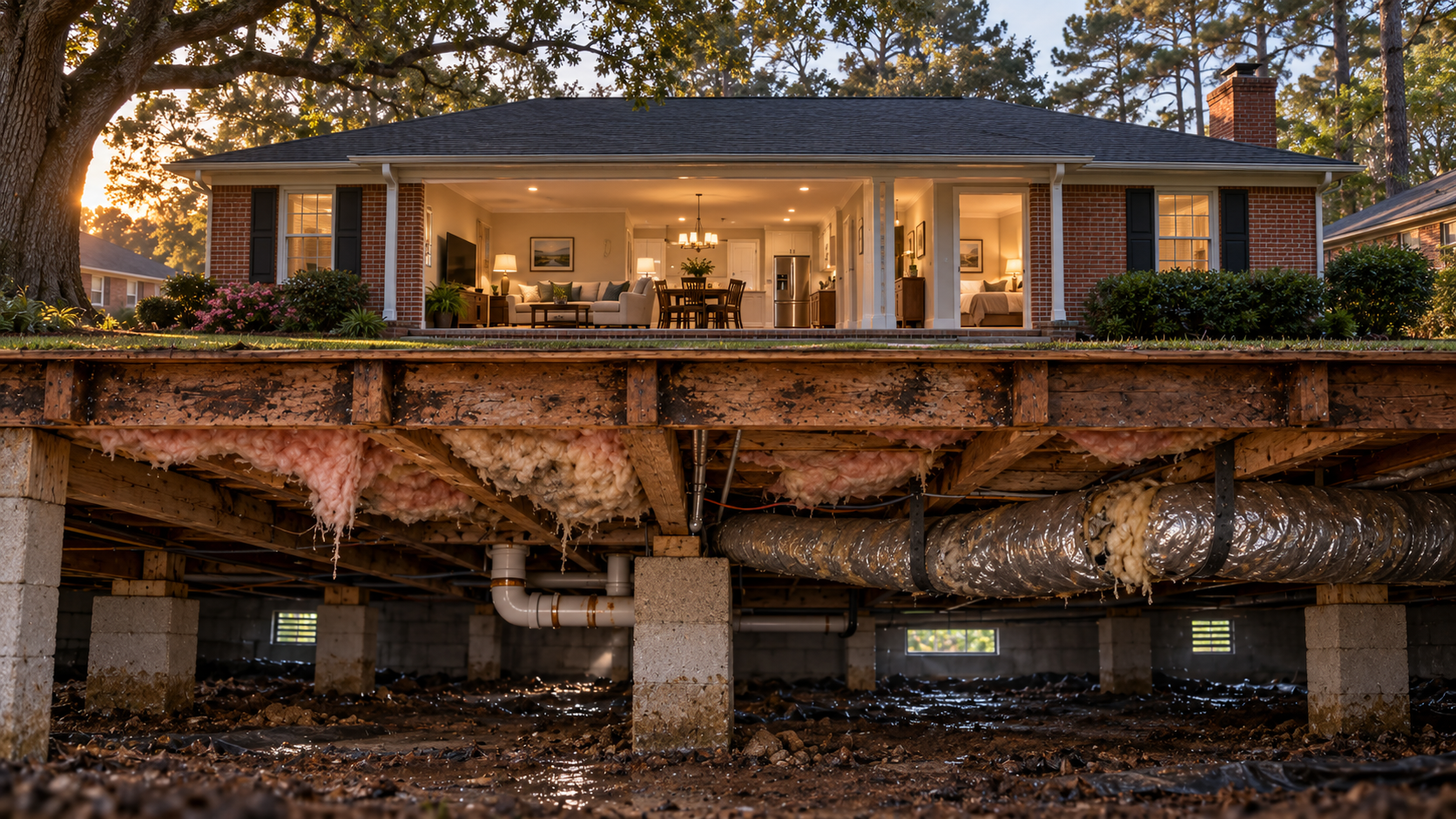
Think about a crawl space that was vented for thirty years. Every summer, hot, humid outdoor air came in through the foundation vents, hit cooler surfaces, and condensed. Over time, mold grew on the framing.
Then a contractor sealed the vents, put plastic on the ground, and installed a dehumidifier. The humidity dropped to 50 percent, but nobody cleaned the wood. The contaminated material is still there, and it keeps producing odor.
Three things are usually left behind:
- Moldy wood framing that was never cleaned or treated.
- Old fiberglass floor insulation that has absorbed twenty or thirty years of humidity, rodents, dirt, and mold. If it stays, the smell stays.
- Contaminated duct insulation. Flex duct and trunk-line wrap that sat in a humid crawl space for decades often needs to be replaced. Sealing the crawl space doesn’t make it clean.
If your crawl space smells after encapsulation, check these first. Was the wood cleaned? Was the old floor insulation removed? Was the contaminated duct insulation replaced?
Reason 2: What Happens Under a Fully Sealed Liner
Say the contractor did everything right. The framing was cleaned, the old insulation is gone, the ductwork was replaced, the wood moisture is low, and the humidity is under control.
So why does it still smell like a swamp, or like cat pee?
When I inspect crawl spaces with fully sealed ground vapor barriers, where the seams are taped and the plastic is sealed to the foundation walls, I frequently run into a distinctive odor. It’s a strong, swampy, mildew-like smell. Sometimes it’s sour, like stagnant water, damp soil, or cat pee and ammonia. It’s different from the musty smell of old fiberglass.
In my experience, more than half of crawl spaces with fully taped, perimeter-sealed liners have some degree of this odor. With pinned vapor barriers, where the seams overlap and the liner isn’t sealed to the walls, I rarely smell it.
That pattern holds across thousands of inspections, and the science explains why.
Wet Soil Under Sealed Plastic
Picture a house in coastal Virginia in the middle of summer. Three inches of rain fall over a couple of days, and some of that moisture reaches the soil under the crawl space.
A fully sealed liner keeps water vapor out of the crawl space air. But it works both ways: it also keeps the soil from drying upward. Once that soil gets wet, it can stay wet for a long time.
Soil is full of bacteria and fungi that break down organic matter and use oxygen. When the soil is saturated, the spaces between soil particles fill with water, and oxygen moves through water thousands of times more slowly than through air. The microbes use up the available oxygen, and parts of the soil become anaerobic, meaning they have little or no oxygen.
When that happens, the microbial activity changes. The soil starts producing gases and volatile compounds that smell swampy, sour, earthy, stagnant, or like cat pee.
Agricultural research on plastic mulch and anaerobic soil disinfestation shows this directly. When wet soil is covered with plastic and gas exchange is limited, oxygen drops quickly and those odor-producing compounds form. The same physical process can happen under a sealed crawl space liner.
A Taped Liner Isn’t an Airtight Liner
Anyone who has worked in crawl spaces knows this. A sealed liner has seams, pier connections, pipe penetrations, and joints at rough masonry walls. Over time, tape loosens, adhesive breaks down, and the plastic gets punctured.
So the liner is tight enough to trap the moisture and starve the soil of oxygen, but not tight enough to hold in the gases that result. Air pressure pushes those gases through ordinary gaps, into the crawl space, and sometimes into the house.
The Pinned Vapor Barrier
A pinned vapor barrier works differently:
- It still covers essentially the entire ground with polyethylene.
- The sheets overlap, but the seams aren’t taped.
- The plastic is held down with metal sod staples.
- At the foundation walls, it’s lapped against the masonry, not sealed to it.
- The vents are still sealed, air leaks are addressed, and a drying system (a dehumidifier or conditioned supply air) handles moisture in the crawl space.
The overlapping seams and open edges let some moisture escape and allow some oxygen exchange. The drying system removes that moisture, so the wood stays dry.
Advanced Energy Already Tested This
This isn’t a new idea. Advanced Energy’s Phase Three crawl space research included closed crawl spaces with overlapping, untaped ground liners and no wall liner. The vents were closed and conditioned air was supplied.
At the August 2004 measurement, that group averaged about 11 percent wood moisture, with a peak around 12.4 percent. The fully sealed comparison systems were in the same dry range.
In other words, the wood stayed just as dry without taping every seam or sealing the plastic to the walls. Fully sealing the ground costs more, makes inspections and repairs harder, and creates the conditions for an odor problem I rarely see with pinned systems, all for the same wood moisture.
How Much Moisture Does a Pinned Liner Let In?
For a typical 1,500-square-foot crawl space in our coastal climate, my engineering estimates show a pinned liner adds about two pints of moisture a day in an average summer, and about three pints a day in a particularly wet week.
That’s roughly the same daily moisture load as having one houseguest stay with you. Your heating and cooling system already handles that kind of change. A crawl space dehumidifier or a properly designed supply-air system has far more capacity than that.
The purpose of a vapor barrier is to control moisture, not to eliminate every bit of evaporation.
Two Exceptions: Bulk Water and Radon
Bulk water. If groundwater is coming into the crawl space after heavy rain, neither a pinned nor a sealed liner fixes it. The answer is drainage: correct the grading, add a perimeter drain, or install a sump pump. A vapor barrier controls vapor, not water. Sealing the plastic tighter doesn’t make the water go away.
Radon. Radon has no smell, so you have to test for it. If radon or another soil gas needs mitigation, a sealed liner with submembrane depressurization, a fan that pulls gas from under the plastic and exhausts it outdoors, is the right approach. That’s a different job from moisture control. For normally drained crawl spaces without a soil-gas hazard, sealing every seam and wall connection shouldn’t be the starting point.
What I Recommend
For existing crawl spaces in southeastern Virginia, my approach is:
- Remove contaminated materials. Clean the wood, remove old musty insulation, and replace contaminated ductwork.
- Control bulk water.
- Seal the foundation vents and air leaks.
- Install a durable pinned vapor barrier, with full coverage, overlapped seams, sod staples, and the plastic lapped but not sealed at the walls.
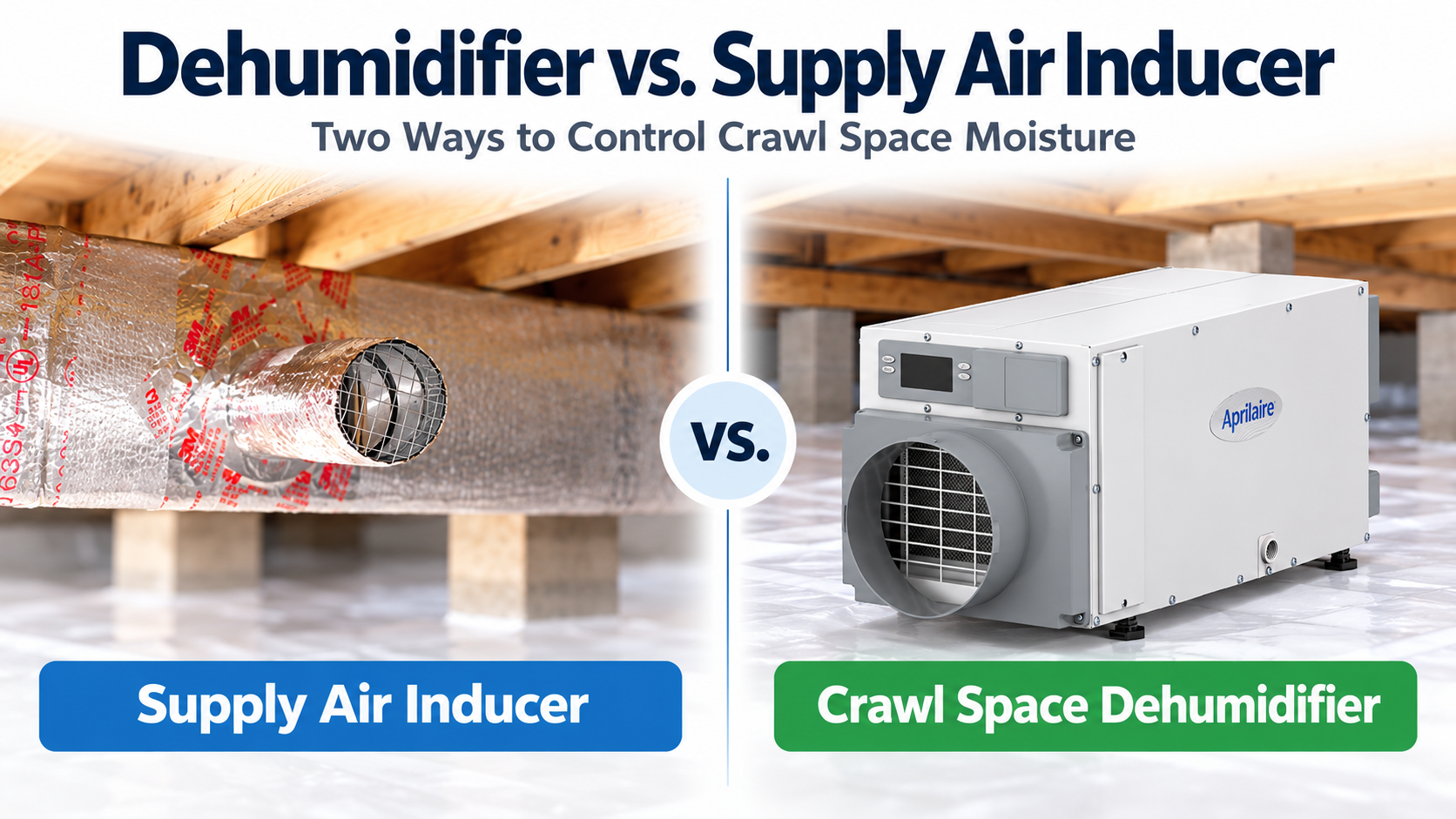
- Provide a drying system, either a dehumidifier or supply air.
- Verify it. Measure the crawl space humidity and the wood moisture. Don’t assume it works because the plastic looks nice.
The Bottom Line
If your crawl space smells after encapsulation, start with what was left behind. If that was handled, look at the liner itself. It’s not the plastic, it’s the sealing of the plastic.
Judge any crawl space system by what it does. Does the wood stay dry? Is the crawl space clean? Can you inspect the foundation? Is it affordable and easy to maintain? And does it smell the way a clean, dry crawl space should?
Patriot Crawl Space Repairs serves Hampton Roads and coastal Virginia.
If your encapsulated crawl space has an odor, call us at
757-960-3231 or visit
patriotcrawlspacerepairs.com.
Latest Crawl Space Articles