Call Us Today To Schedule An Inspection At (757) 960-3231

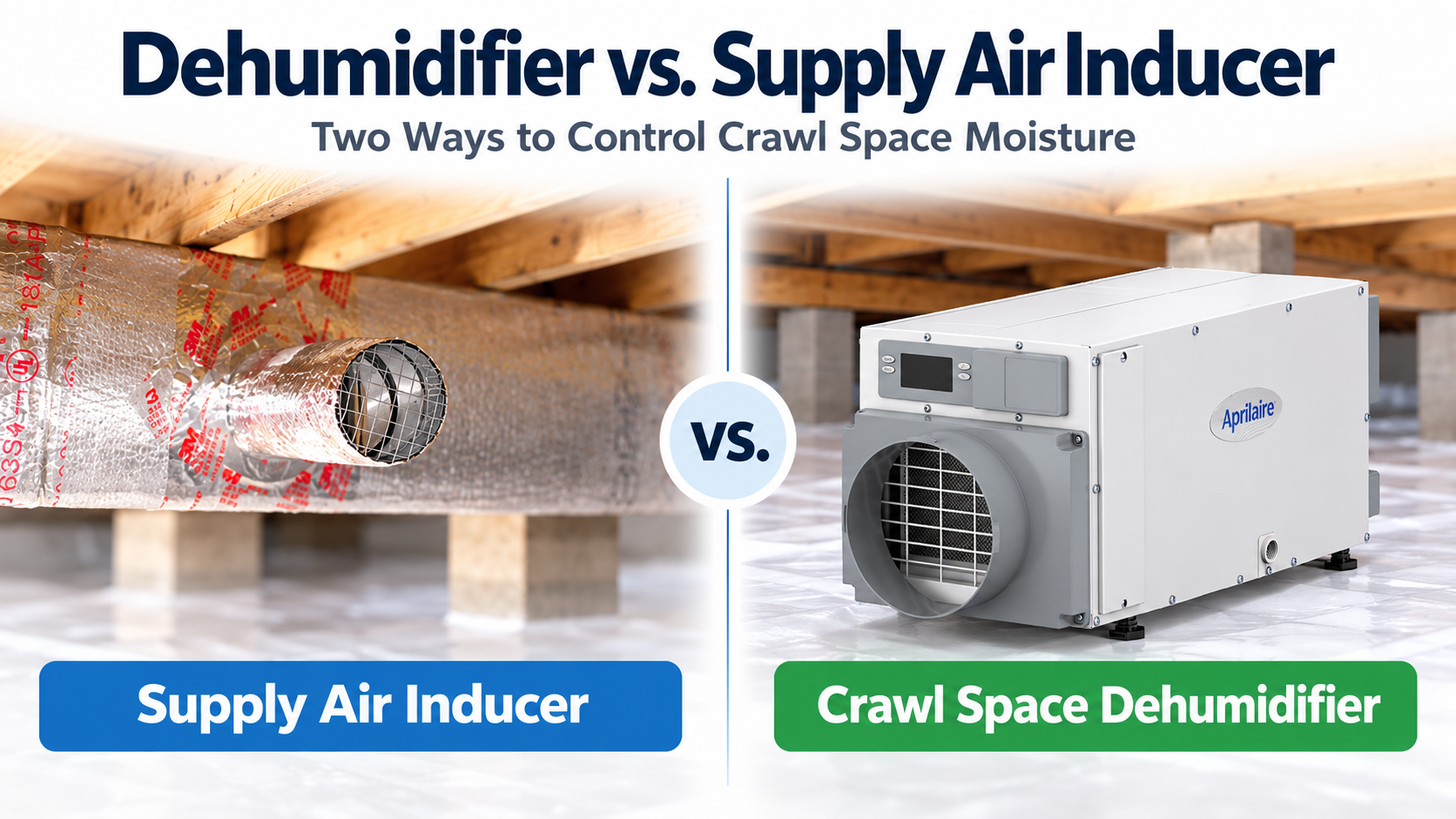
Crawl Space Dehumidifier vs. Supply Air: Two Different Ways to Control Wood Moisture
One of the biggest misconceptions in crawl space moisture control is that relative humidity, by itself, determines whether wood stays dry.
That leads to a simple assumption: if a dehumidifier keeps a crawl space at 50–55% relative humidity while a supply-air system sometimes allows it to reach 60–70%, the dehumidifier must be doing a better job.
That isn't necessarily true.
A dehumidifier and a properly designed supply-air system can produce essentially the same wood moisture content because they attack the moisture problem in completely different ways.
When both systems are installed in an appropriate closed crawl space, they can produce essentially the same wood-moisture result even though the humidity readings may look very different.
Relative humidity is only part of the picture.
The real goal is keeping the wood dry.
Why Crawl Spaces Get Wet in the First Place
In hot, humid climates, summertime outdoor air is one of the primary causes of crawl space moisture problems.
Traditional crawl space vents allow warm, moisture-laden outdoor air to enter a much cooler space underneath an air-conditioned house. When that air reaches cool floor framing, ductwork, pipes, and other surfaces, moisture can accumulate and wood moisture content can rise. Over time, those conditions can support mold, fungal growth, and deterioration.
This isn't just theory. In a U.S. Department of Energy-supported field study of crawl spaces in eastern North Carolina, Advanced Energy compared vented and closed crawl spaces under real-world conditions. The study tracked relative humidity, dew point, wood moisture content, energy use, air leakage, and mold conditions.
The study found that summer outdoor air regularly carried more moisture than the air inside vented crawl spaces, meaning outdoor-air exchange was making those crawl spaces wetter rather than drier during the humid season. By contrast, closed crawl spaces with supplemental drying remained substantially drier.
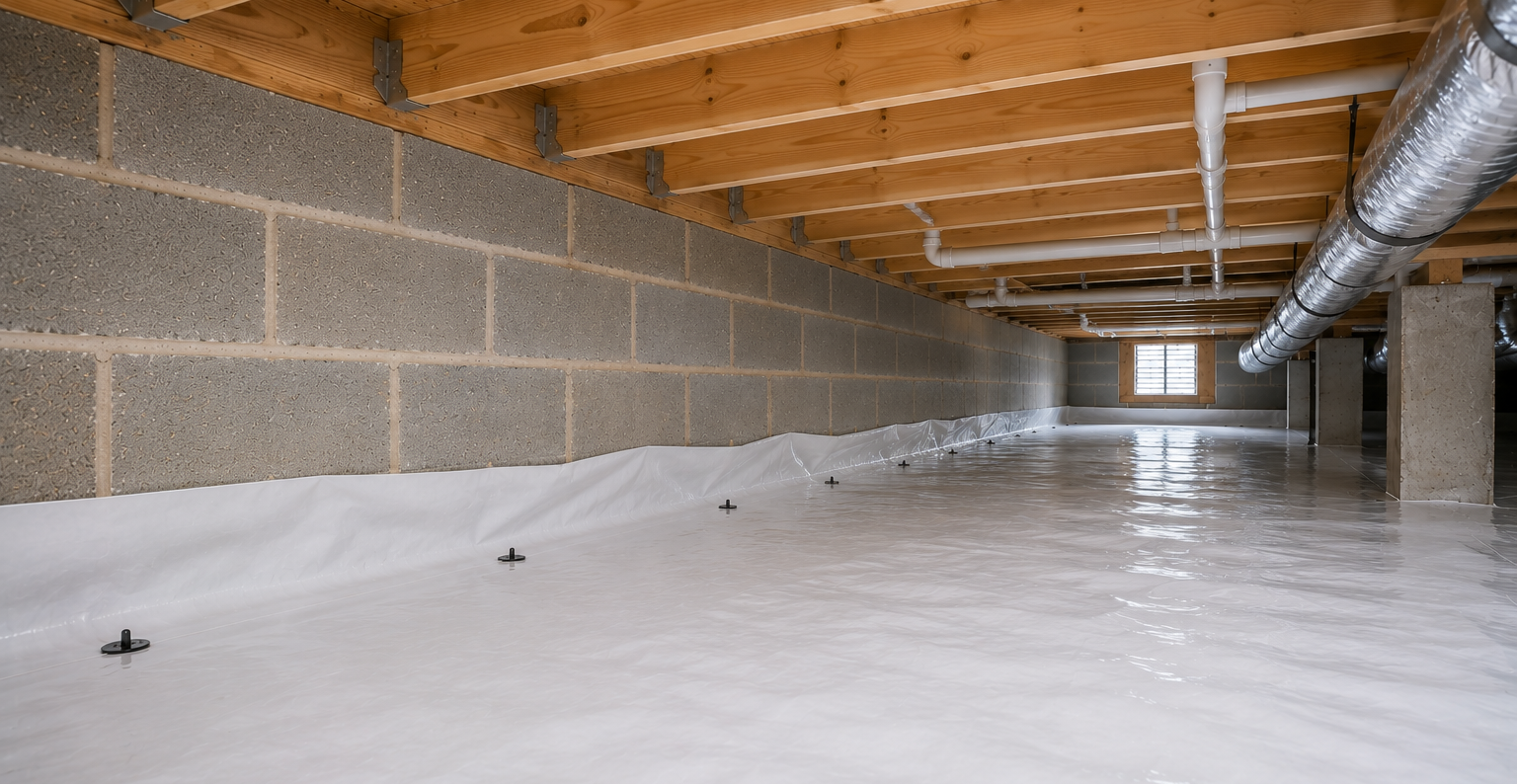
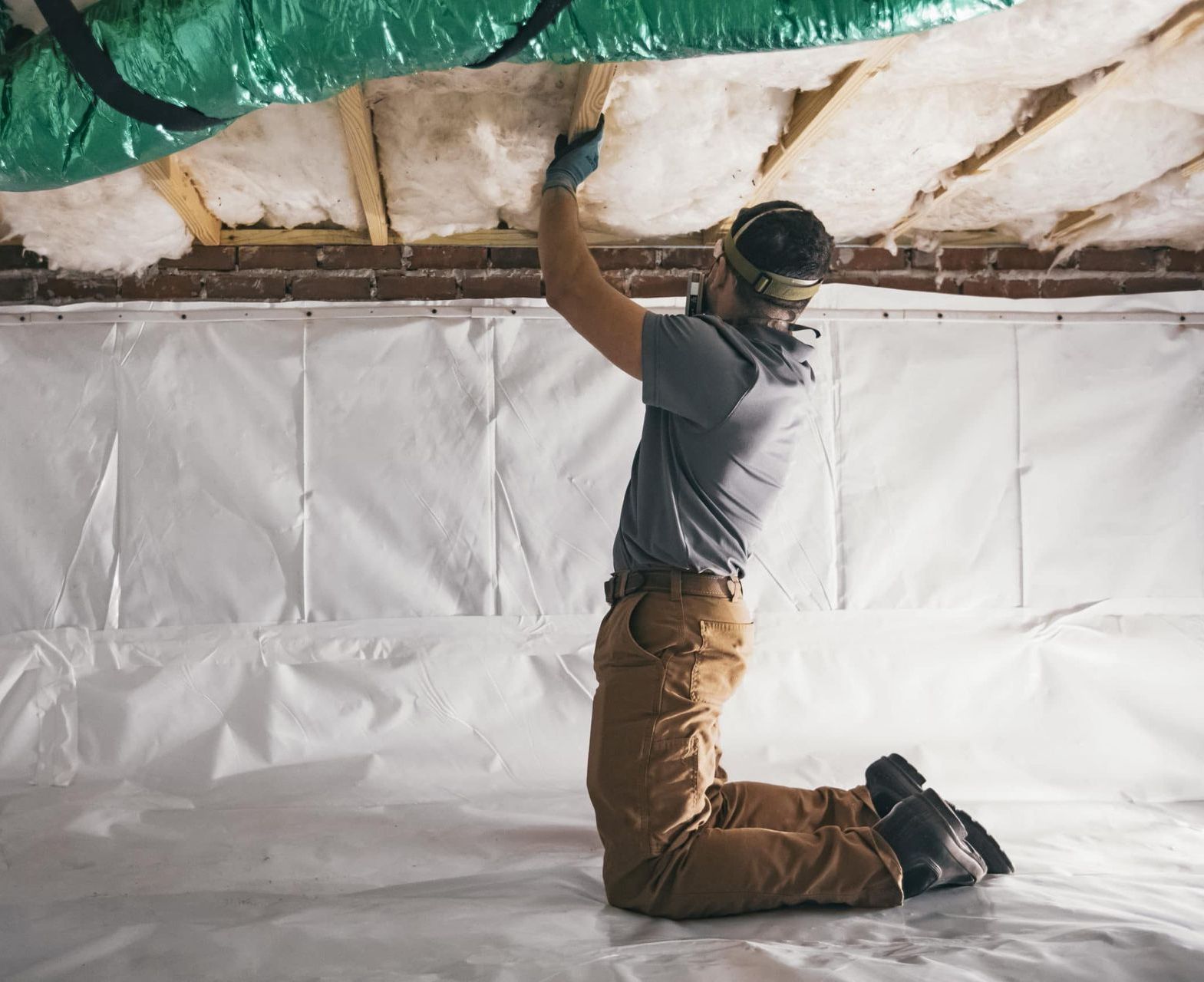
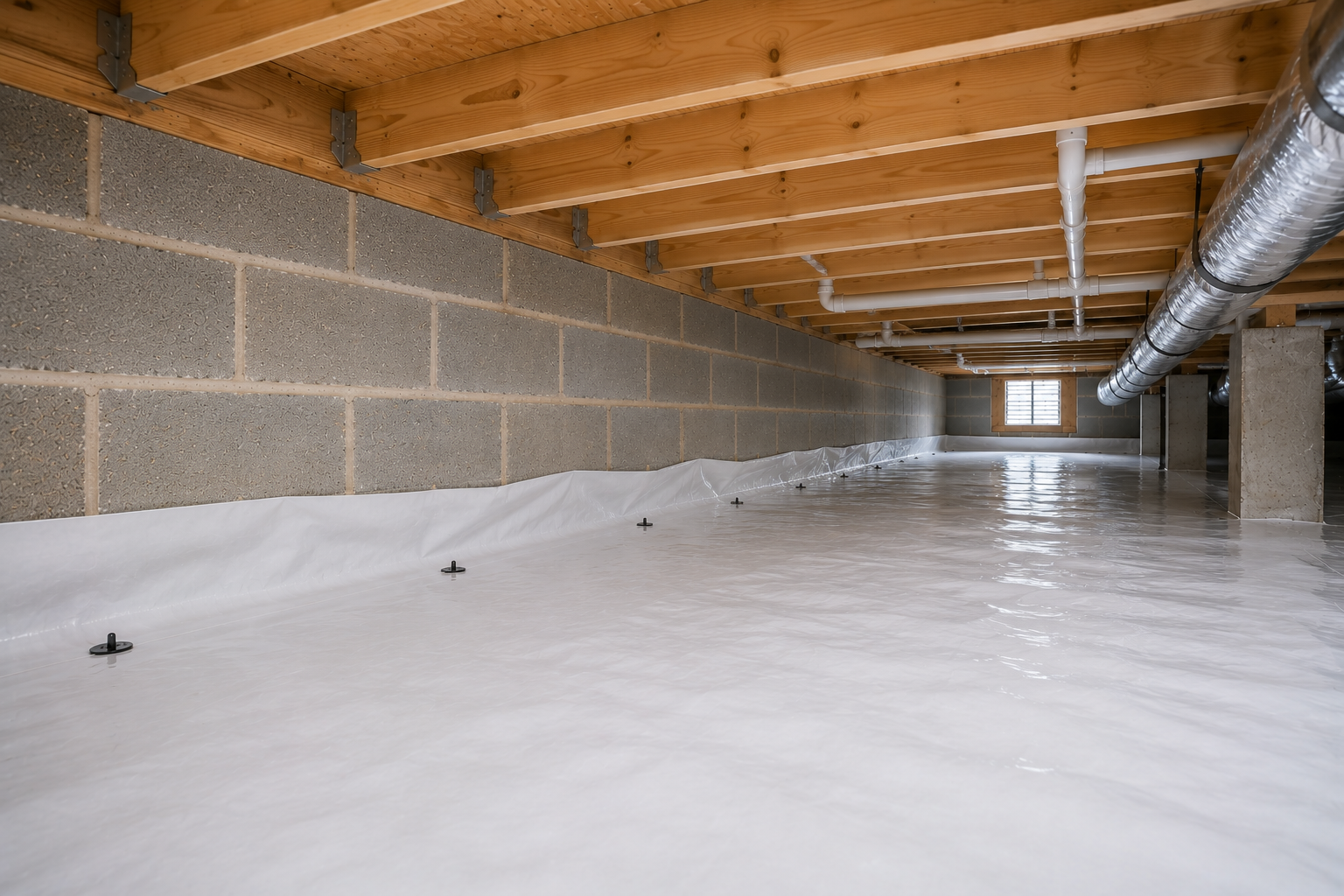
The basic remedy is to stop intentionally bringing humid outdoor air into the crawl space, cover the ground with a vapor retarder, and provide a reliable way to control the remaining moisture load.
For closed crawl spaces, the two practical and well-established active moisture-control methods are a dedicated dehumidifier or a measured amount of conditioned supply air from the home's HVAC system.
Both work.
They just work differently.
First, Separate Humidity Problems From Water Problems
This article is about controlling wood moisture caused by humid summer air.
It is not about plumbing leaks, groundwater intrusion, flooding, roof leaks, or other direct sources of liquid water.
Neither a dehumidifier nor a supply-air inducer fixes a water leak. If water is entering the crawl space, the source needs to be repaired or controlled first. A dehumidifier may help dry the space afterward, but it is not a substitute for fixing the actual water problem.
Once direct water intrusion is taken off the table, we can talk about humidity-driven wood moisture.
Crawl Space Moisture Is a Three-Legged Stool
Summer crawl space moisture generally needs three things working together:
- Cool surfaces
- Warm air
- Humidity in that air
Take away one of those legs and the moisture problem changes dramatically.
During the summer, the air conditioner cools the first floor of the house. That means the floor framing, ductwork, plumbing, and other surfaces in the crawl space become relatively cool.
When hot, humid air contacts a surface cold enough to reach that air's dew point, moisture begins accumulating on the surface.
That is why traditional vented crawl spaces can struggle so badly in hot, humid climates. Cool building materials sit underneath an air-conditioned house while hot, humid outdoor air is continuously introduced through the crawl space vents.
All three legs of the stool are present.
A dehumidifier and a supply-air inducer both solve that problem, but each one removes a different leg.
How a Dehumidifier Works
A dehumidifier attacks the humidity leg.
It does not cool the crawl space. In fact, dehumidifiers actually release some heat while they operate.
Their job is to remove water vapor from the air.
That means the crawl space can remain relatively warm and the building surfaces can remain relatively cool, but the air no longer carries enough moisture to create the same condensation conditions.
The warm air is still there.
The cold surfaces are still there.
The dehumidifier removes the humidity.
How a Supply-Air Inducer Works
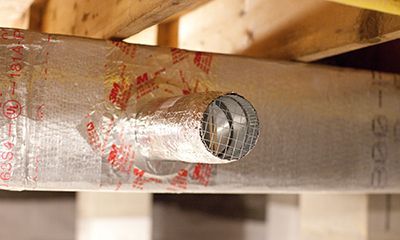
A supply-air inducer attacks the hot-air leg.
It is a small conditioned-air supply connected to the HVAC ductwork in the crawl space. When the air conditioner runs during the summer, a small amount of conditioned air is introduced into the crawl space. When the heat runs during the winter, heated air is introduced instead.
Rather than trying to drive the crawl space to an extremely low relative humidity, the air inducer changes the temperature of the crawl space environment.
The air surrounding the cool floor system and ductwork is no longer hot summer air.
Supply air also lowers humidity to some degree because air-conditioned air is relatively dry, but humidity reduction is not the only mechanism at work.
The important point is that both systems require the crawl space to be reasonably closed off from outdoor air.
The vents and other major exterior openings need to be sealed. That does not mean the ground vapor barrier must necessarily be sealed to every foundation wall.
Both systems should also have a reliable ground-cover vapor retarder to limit moisture evaporation from the soil.
In Advanced Energy's Phase III field test, researchers converted three formerly vented crawl spaces by sealing the foundation vents and providing 35 CFM of conditioned HVAC supply air.
The ground vapor-retarder seams were left overlapped but unsealed, and no vapor retarder was installed on the foundation walls. The converted crawl spaces quickly produced wood-moisture performance similar to the fully sealed closed-crawl designs.
At the August 2004 measurement, that supply-air group averaged about 11% wood moisture content, with a maximum around 12.4%, essentially the same range as the fully sealed comparison groups.
The Soda Can Explanation
The easiest way I know to explain the difference is with a cold can of soda.
A vented crawl space is Miami.
Take a cold can of soda outside on a hot, humid Miami afternoon and it starts sweating almost immediately.
The can is cold.
The air is hot.
The air is humid.
All three legs of the stool are present.
That is essentially what is happening in a vented crawl space during the summer.
A dehumidified crawl space is Arizona.
Take that same cold can outside in Arizona.
The air may still be extremely hot, but it is dry. Because the humidity leg is gone, the can does not react the same way.
That is what the dehumidifier does.
It leaves the air relatively warm but removes enough moisture from it to prevent the same condensation problem.
A supply-air crawl space is San Francisco.
Now take the cold can into a cool coastal environment.
There may still be plenty of moisture in the air, but the air itself is no longer hot.
The temperature relationship has changed.
That is what the supply-air inducer does. It removes the hot-air leg.
Three different environments.
Two different moisture-control strategies.
The same basic result:
The cold surface doesn't stay wet.
Relative Humidity Doesn't Tell the Whole Story
This is where a lot of confusion begins.
People have been trained to focus on one number: relative humidity.
If one crawl space reads 52% RH and another reads 67%, they often assume the 52% crawl space must be healthier.
But relative humidity by itself does not tell you whether moisture is going to accumulate on the building materials.
For that, you also need to understand dew point.
Dew point is the temperature at which the air can begin releasing moisture onto a surface.
And dew point depends on two things:
- air temperature, and
- the amount of moisture in the air.
That means warmer, drier air can have roughly the same dew point as cooler air with a somewhat higher relative humidity.
This is why a dehumidified crawl space and a supply-air crawl space can show very different RH readings while producing essentially the same wood moisture result.
What These Crawl Spaces Look Like in the Summer
During the drier portions of the year, both systems often operate around 50% relative humidity, with dew points around 50°F.
The difference becomes much more noticeable during the hottest part of summer.
A typical dehumidified crawl space may look something like this:
- About 78°F
- About 55% RH
- Dew point around 60°F
A typical supply-air crawl space may look more like this:
- About 72°F
- Roughly 60–70% RH
- Dew point around 60°F
The relative-humidity readings look very different.
The dew points do not.
More importantly, the wood moisture content does not look very different either.
In my experience, both assemblies commonly maintain wood moisture content around 10–11%, with the highest summer readings generally around 15–16%.
That is the result we actually care about.
Compare That With a Vented Crawl Space
Now compare those conditions with an untreated vented crawl space during hot, humid summer weather.
You might see:
- 80°F air
- 90% RH
- Dew point around 77°F
Now almost every cooler surface under the house becomes vulnerable.
The floor framing is being cooled from above.
The ductwork is carrying cold conditioned air.
Pipes and other building materials may also remain relatively cool.
When the dew point of the crawl space air climbs into the upper 70s, those surfaces can begin accumulating moisture.
That is the classic summer crawl space problem.
The Advanced Energy study documented the same mechanism. During humid summer periods, outside dew point frequently approached or exceeded the temperature of the vented crawl spaces, creating significant condensation potential when outdoor air entered the crawl.
Wood Moisture Content Is the Result That Matters
Temperature, humidity, and dew point matter because they ultimately affect wood moisture content.
That is the number I care about most.
In properly performing sealed crawl spaces, I commonly see wood moisture content around 10–11%.
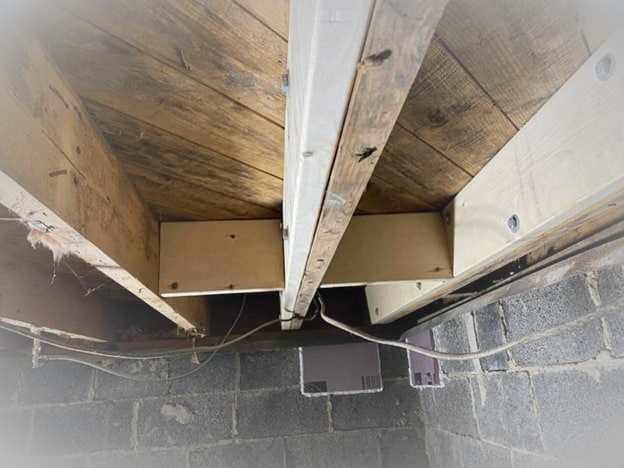
If wood stays above roughly 17% for an extended period, I start paying much closer attention.
Around 19% and above is a commonly used field warning threshold where sustained moisture conditions become much more favorable for mold, fungus, and eventually decay.
In properly functioning sealed crawl spaces using either supply air or a dehumidifier, I generally do not see the framing remain anywhere near those levels.
Even in the heart of summer, the highest readings I commonly see are around 15–16%.
That is why I care much more about what the wood is doing than whether the hygrometer reads 52% or 67%.
What I See in the Field
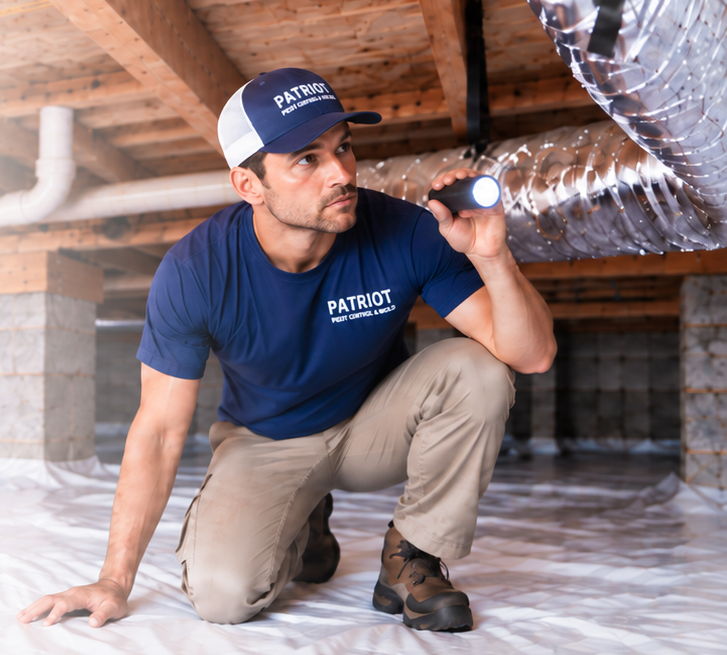
I inspect a lot of crawl spaces.
When I return to properly closed crawl spaces using either supply air or a dehumidifier, I do not normally find new mold or fungal growth developing on the framing.
When I do find a serious moisture problem in one of those crawl spaces, there is usually another explanation.
Maybe there is a plumbing leak.
Maybe groundwater is entering the crawl space.
Maybe there is a drainage problem.
At that point, the question is no longer dehumidifier versus supply air.
It is a water problem, and the water problem needs to be corrected.
When I Prefer a Dehumidifier
There are situations where I lean toward a dedicated crawl space dehumidifier.
One is a very old house where I do not have much confidence that we can achieve a good air seal around the foundation.
If outside air is still entering the crawl space at a meaningful rate, additional moisture-removal capacity gives us another layer of protection.
In some of those houses, I like using both supply air and a dehumidifier.
Obviously, if there is no HVAC ductwork in the crawl space, a supply-air inducer is not an option.
A dehumidifier is a very good piece of equipment. I have no objection to using one, and there is nothing wrong with having both systems.
The question is whether every homeowner needs to spend the additional money to get the result they are after.
Why I Think Supply Air Deserves More Attention
A basic supply-air inducer may cost around $400 to install.
A quality crawl space dehumidifier, including the electrical work needed to support it, can easily represent around a $4,000 investment.
Then there are ongoing costs.
A dehumidifier uses additional electricity.
It requires cleaning and service.
It has mechanical and refrigeration components that can eventually fail.
Over time, operating and maintenance costs can become substantial, and the unit itself may eventually need replacement.
A supply-air inducer is dramatically simpler.
There simply is not much there to break.
It requires very little maintenance.
I sometimes describe it as the Timex watch of crawl space moisture control:
It just keeps ticking.
That simplicity has real value.
One of the goals of good home maintenance should be to reduce the number of things that require maintenance whenever we can do that without sacrificing performance.
Advanced Energy reached a similar practical conclusion in its recommendations, describing HVAC supply air as appealing because of its low cost, ease of installation, durability, and longevity.
What Happens During Mild, Humid Weather?
One common criticism of supply air is that the air conditioner does not run all the time.
That is true.
But once again, you have to look at the entire moisture mechanism rather than focusing on the humidity reading alone.
During mild spring and fall weather, outdoor humidity can rise while the HVAC system is barely running. Crawl space relative humidity may rise with it.
But during those same periods, the house is generally not producing the extremely cold floors and duct surfaces that exist during heavy summer air-conditioning operation.
Another leg of the stool is gone.
High relative humidity by itself does not automatically mean the wood is getting wet.
The real question is whether the combination of air temperature, humidity, and surface temperature is pushing the building materials into a dangerous moisture condition.
What About HVAC Efficiency?
Some homeowners worry that introducing conditioned air into a crawl space must automatically make the HVAC system less efficient.
The reality is more complicated.
Ductwork located in a crawl space is already exchanging heat with the surrounding environment.
If the crawl space is extremely hot during the summer or extremely cold during the winter, the temperature difference between the ductwork and the surrounding air increases heat transfer.
Moderating the crawl space temperature reduces that temperature difference.
In other words, the duct system is now operating in a more favorable environment.
That can reduce duct losses and offset at least part of the energy used to condition the crawl space.
So I do not view supply air as simply wasting conditioned air into the crawl space.
The crawl space is part of the environment surrounding the HVAC distribution system.
Advanced Energy found lower space-conditioning energy use in the closed-crawl experimental homes than in the vented controls, although the researchers noted that occupant behavior and other variables created some uncertainty in the exact magnitude of the savings.
Where I Think Homeowners Should Spend Their Money
This is probably the biggest practical reason I do not automatically recommend a dehumidifier on every project.
Homes often have several major repair needs competing for the same budget.
The ductwork may be failing.
The plumbing may need replacement.
Structural repairs may be necessary.
Drainage may need to be corrected.
If a homeowner has limited money, I would rather see that money go toward repairing a major failing system than toward spending thousands of additional dollars on a dehumidifier when a much simpler supply-air system can already keep the framing dry.
A dehumidifier can always be added later if crawl space conditions show that additional drying capacity would be helpful.
That gives the homeowner the ability to spend money where it matters most first.
The Bottom Line
Dehumidifiers are excellent tools.
Supply-air systems are excellent tools too.
They simply do not work the same way.
A dehumidifier controls crawl space moisture primarily by removing water vapor from the air.
A supply-air inducer controls it primarily by changing the temperature and moisture conditions surrounding the building materials.
Because the mechanisms are different, the two crawl spaces can show very different relative-humidity readings while maintaining nearly identical wood moisture content.
And that is the point.
The goal of crawl space moisture control is not to produce the lowest humidity number possible. The goal is to keep the structure dry.
For many homes with ductwork in the crawl space, I think homeowners should strongly consider supply air.
It is inexpensive, simple, reliable, and has very few failure points.
For older or leakier crawl spaces, homes without crawl space ductwork, or situations where additional moisture-control capacity is wanted, a dedicated dehumidifier remains an excellent option.
Sometimes using both makes sense.
Homeowners should understand that they have options and spend their money where it produces the most value.
The most expensive moisture-control system is not automatically the one producing the best practical result.
Reference
Advanced Energy Corporation. Bruce Davis, Cyrus Dastur, and William E. Warren. A Field Study Comparison of the Energy and Moisture Performance Characteristics of Ventilated Versus Sealed Crawl Spaces in the South. Field Study Final Report, U.S. Department of Energy Award DE-FC26-00NT40995, submitted to the U.S. Department of Energy, National Energy Technology Laboratory, June 22, 2005.
Latest Crawl Space Articles