Call Us Today To Schedule An Inspection At (757) 960-3231

Crawl Space Moisture Is a Housing Preservation Issue
Crawl space moisture is usually discussed as a mold problem, a humidity problem, or a home-comfort problem. I think that understates what is happening.
Crawl space moisture is a housing-preservation problem.
Millions of homes across the humid eastern and southeastern United States are built over crawl spaces. Those homes experience long summers with high temperatures, high humidity, and heavy air-conditioning use. At the same time, the crawl space is where many of the most important systems in the house come together: the floor framing and subfloor, ductwork, plumbing, electrical systems, insulation, pest pathways, and access for future repairs.
The exact national count varies depending on how crawl-space foundations and climate regions are classified, but the relevant housing stock is clearly measured in the millions. That scale matters because even a problem that develops gradually becomes enormous when it is repeated beneath millions of homes.
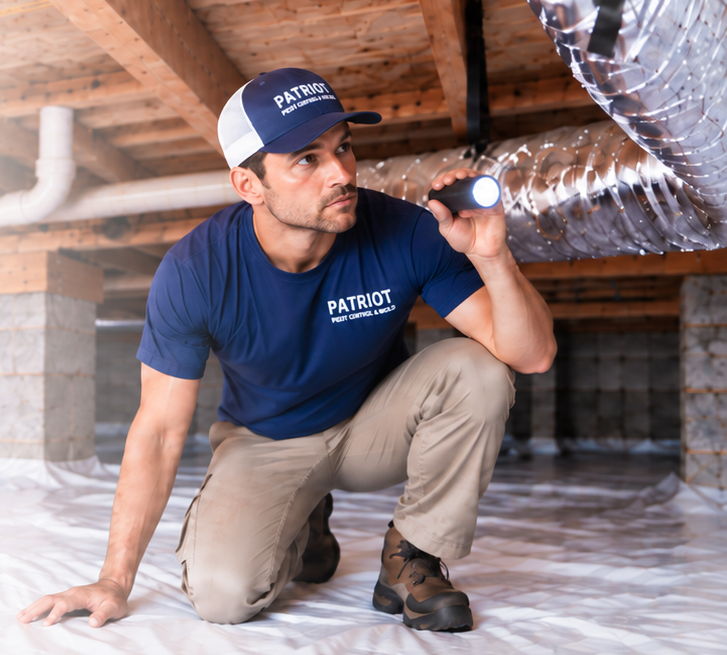
It is also one of the least understood and least frequently inspected parts of the home.
That combination matters. We are cooling homes more aggressively while continuing to allow hot, humid summer air beneath them through traditional crawl-space vents. That air encounters cooler framing, ductwork, plumbing, and floor surfaces created by the air-conditioned house above. When those surfaces approach or fall below the dew point of the surrounding air, moisture accumulates.
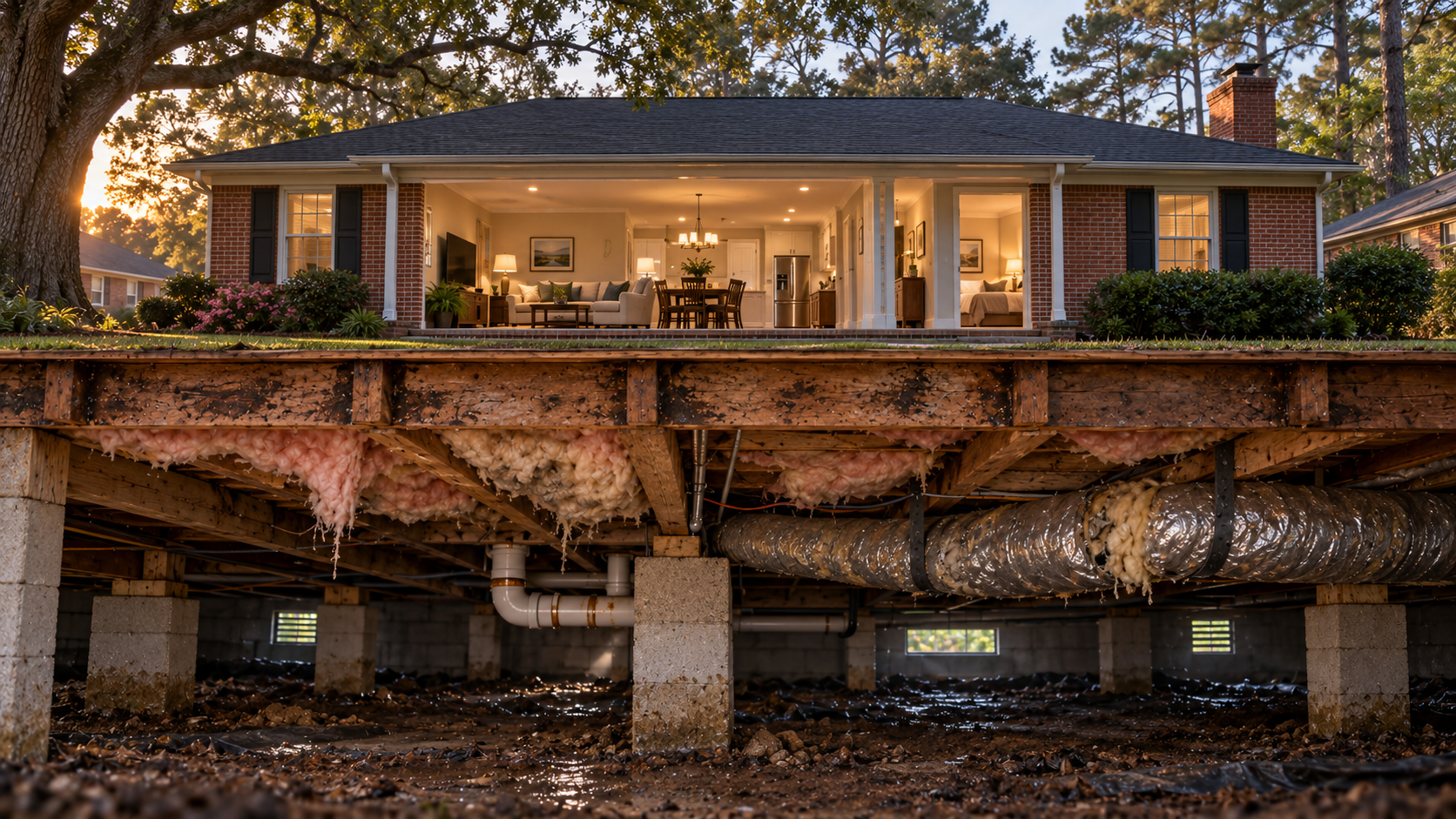
One summer becomes another. Wood moisture rises. Mold and fungus develop. Insulation becomes wet and contaminated. Ductwork deteriorates. Metal corrodes. Rodents move into an increasingly unsanitary environment. Eventually, what began as a humidity problem becomes a structural and housing-preservation problem.
The practical answer is not especially complicated: reduce uncontrolled outdoor air, control ground vapor, clean existing contamination, provide an appropriate drying method, monitor the wood, and correct additional drainage, plumbing, duct, or structural problems where they actually exist.
The challenge is making that solution affordable enough to use across millions of homes.
Modern Air Conditioning Has Changed The Moisture Equation
Traditional vented crawl spaces did not suddenly become a problem because somebody invented crawl-space encapsulation. The conditions surrounding them changed.
Homes today are routinely maintained at lower temperatures for longer portions of the summer. HVAC equipment has become more efficient. Building envelopes have become tighter.
Homeowners expect the inside of the house to remain comfortable even when outdoor conditions are brutally hot and humid.
The house has changed faster than the crawl-space strategy.
That changes what happens beneath the floor.
The first-floor system is being cooled from above. Supply ducts may be carrying air in the 50-degree range through the crawl space. Boots, pipes, framing, and subflooring can all be significantly cooler than the outdoor environment. Now introduce summer air with a high dew point through foundation vents.
The physics are simple:
Cold building materials + hot air + high humidity = moisture risk.
It does not require a plumbing leak. It does not require groundwater. It does not require a defective house. It can happen because the house is operating exactly as the homeowner expects it to operate: the air conditioner is keeping the living space cool during a hot, humid summer.
This is why I believe the importance of crawl-space moisture has grown over time. A vented crawl space that may have created a relatively modest problem decades ago can become a much more aggressive moisture environment under modern cooling conditions.
And this is not limited to old houses. I am now seeing very new homes develop significant crawl-space mold and moisture during their first summer. When a recently built house can develop rampant fungal growth beneath the floor during its first cooling season, we need to look beyond deferred maintenance and ask whether the basic moisture-control strategy is appropriate for the environment.
Crawl-Space Deterioration Threatens The Whole House
If this were happening in an unimportant storage shed, it would be annoying. It is happening underneath the house, where a tremendous amount of the home's value is concentrated.
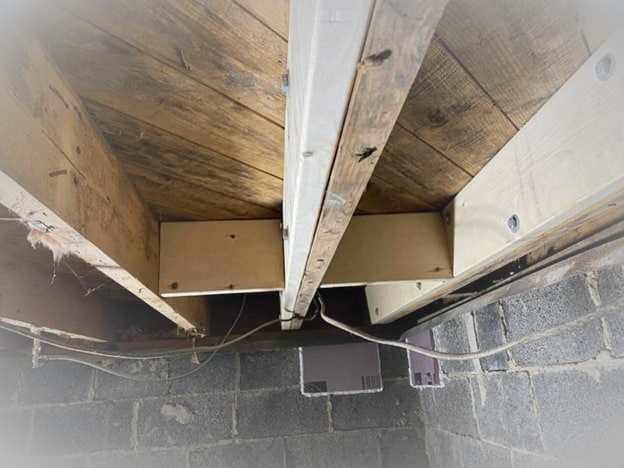
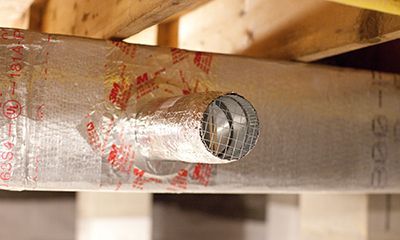
The joists, beams, girders, sill plates, and subfloor are there. If the framing remains wet long enough, deterioration follows. The HVAC distribution system is often there. If duct insulation repeatedly absorbs moisture or becomes contaminated, the homeowner eventually faces duct repair or replacement. Plumbing runs through the space, and damp, dirty conditions make an already difficult system harder to maintain.
Insulation can also become part of the problem. Fiberglass floor insulation exposed to prolonged humid conditions can absorb moisture, collect contamination, sag, fall, and conceal the framing above it. Once it becomes moldy or wet, it is no longer simply an energy-efficiency product. It becomes another material that has to be removed or remediated.
Then there are pests. Rodents, insects, and termites are much harder to manage in a dark, damp, rarely inspected space full of falling insulation and concealed surfaces.
There is also a basic sanitation and indoor-environment concern. Families can spend years living over crawl spaces containing heavy fungal growth, rodent contamination, wet insulation, and deteriorating duct materials without realizing those conditions exist. That does not mean every contaminated crawl space automatically causes a health problem, but it does mean the condition should not be dismissed as cosmetic—especially in homes occupied by children, older adults, or people who may be more sensitive to poor indoor environmental conditions.
The crawl space can deteriorate for years while the home looks perfectly normal from the living room.
That is what makes the problem dangerous from a preservation standpoint: the damage is hidden until it becomes expensive.
Why The Problem Has Remained Under-Addressed
I do not think there is a conspiracy behind this. I think there is institutional inertia and a difficult set of optics.
Fully confronting humid-climate crawl-space moisture means acknowledging that long-standing vented crawl-space practices do not always perform well under modern cooling conditions. Millions of homeowners did not choose an experimental foundation system. They bought homes built according to accepted practices and codes.
If we suddenly tell those homeowners that the space beneath their house may need substantial moisture work, they are naturally going to ask why nobody told them before.
It also means acknowledging that a large number of homes may have mold, fungal growth, contaminated insulation, deteriorating ducts, rodents, or elevated wood moisture in an area the owners rarely inspect. That quickly becomes more than a building-science discussion. It touches sanitation, real estate, affordability, property value, and potentially public health.
And it requires builders, contractors, code bodies, and regulators to change established practices.
That is hard in any industry. Housing makes it harder because the scale is enormous.
The productive response is not to spend the next twenty years arguing about blame. Buildings changed. HVAC systems changed. Energy standards changed. Homeowner expectations changed. Our understanding of moisture changed.
The answer should be practical correction, not institutional defensiveness.
The Solution Has To Be Affordable And Scalable
If this problem affects millions of homes, the solution has to survive basic market reality.
A $15,000, $20,000, or $25,000 crawl-space project can absolutely be justified when a house needs extensive drainage, structural repairs, duct replacement, plumbing work, a sump system, or a complicated liner installation.
But that cannot be the minimum entry price for controlling ordinary humidity-driven crawl-space moisture.
Most homeowners simply cannot afford that at scale.
For widespread preservation work, I think a basic moisture-control package needs to begin closer to the $5,000 to $8,000 range, with additional work added where the house actually needs it.
Otherwise people defer the repair. And deferred moisture problems do not become cheaper.
A homeowner who cannot afford a large encapsulation project may wait five years. During those five years, the framing continues getting wet, the duct insulation deteriorates, rodents damage materials, and plumbing or structural problems become more expensive.
That is the opposite of preservation.
Homeowner money should be directed toward actual failures. If the ducts are falling apart, fix the ducts. If the plumbing is bad, fix the plumbing. If there is groundwater, fix drainage. If the structure is damaged, repair the structure. If the crawl needs more drying capacity, add it.
The question should always be: what problem are we solving with this dollar?
A Practical Minimum-Effective Retrofit
For a typical vented crawl space with humidity-driven moisture and no major bulk-water problem, the starting point can be fairly simple.
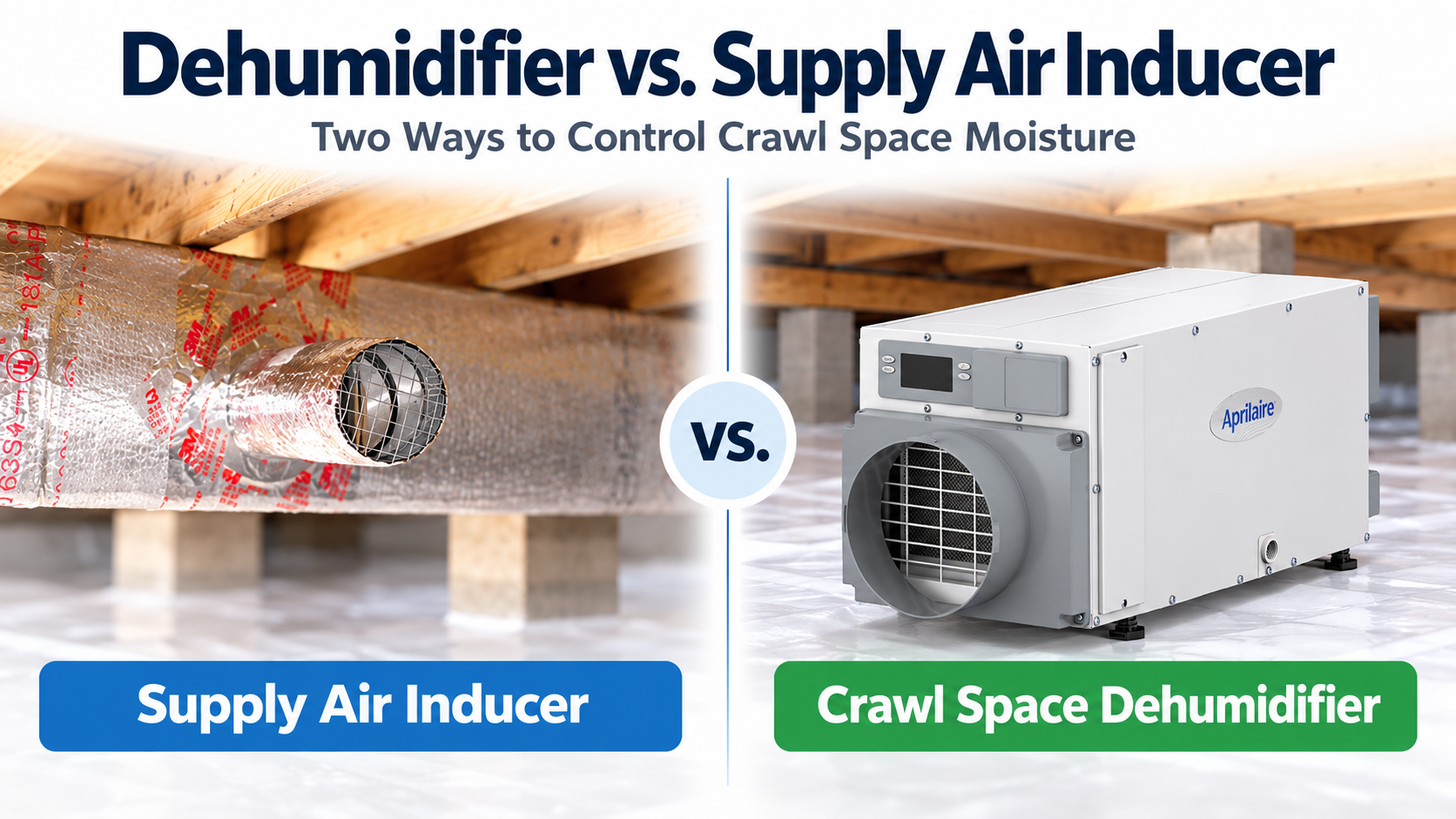
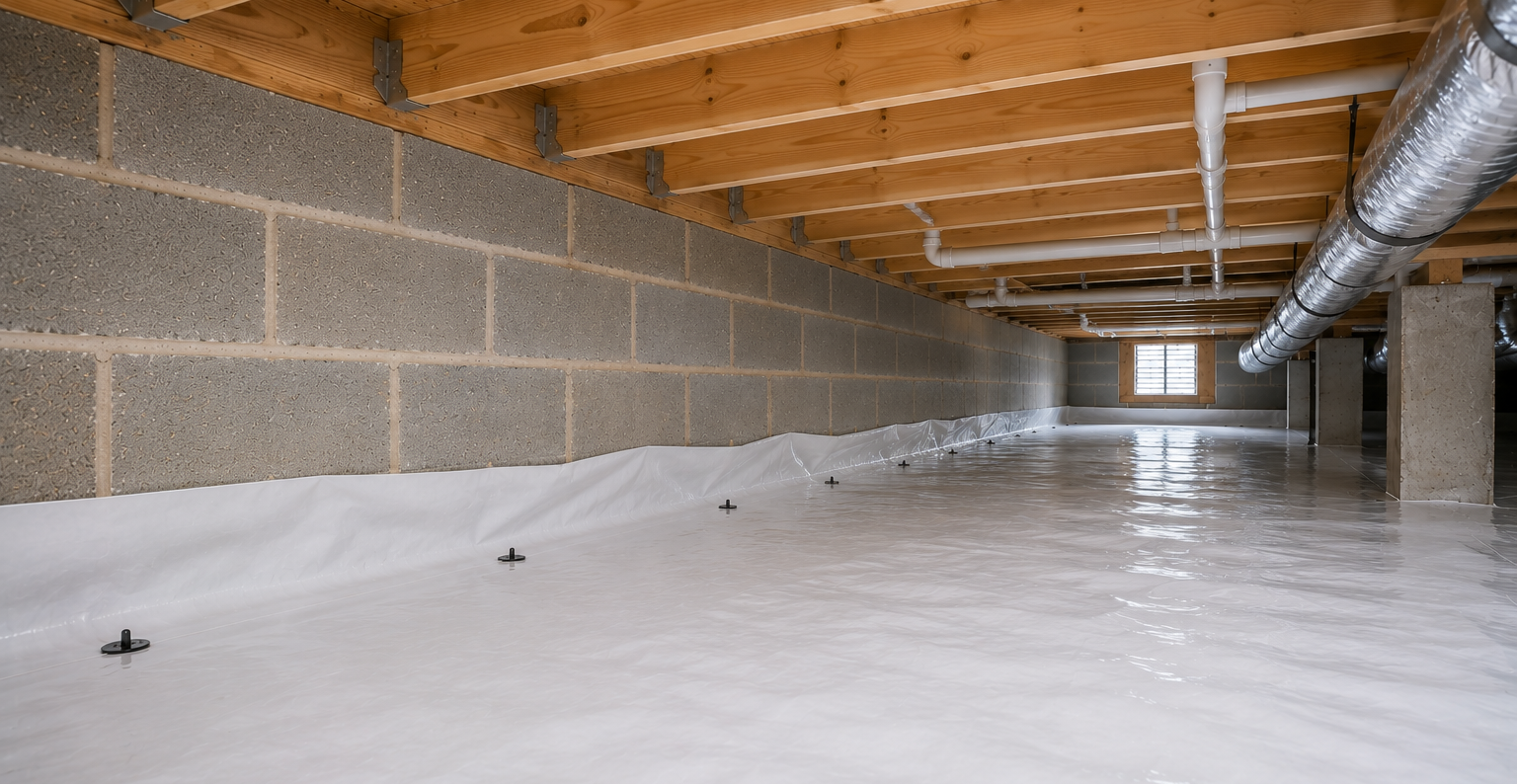
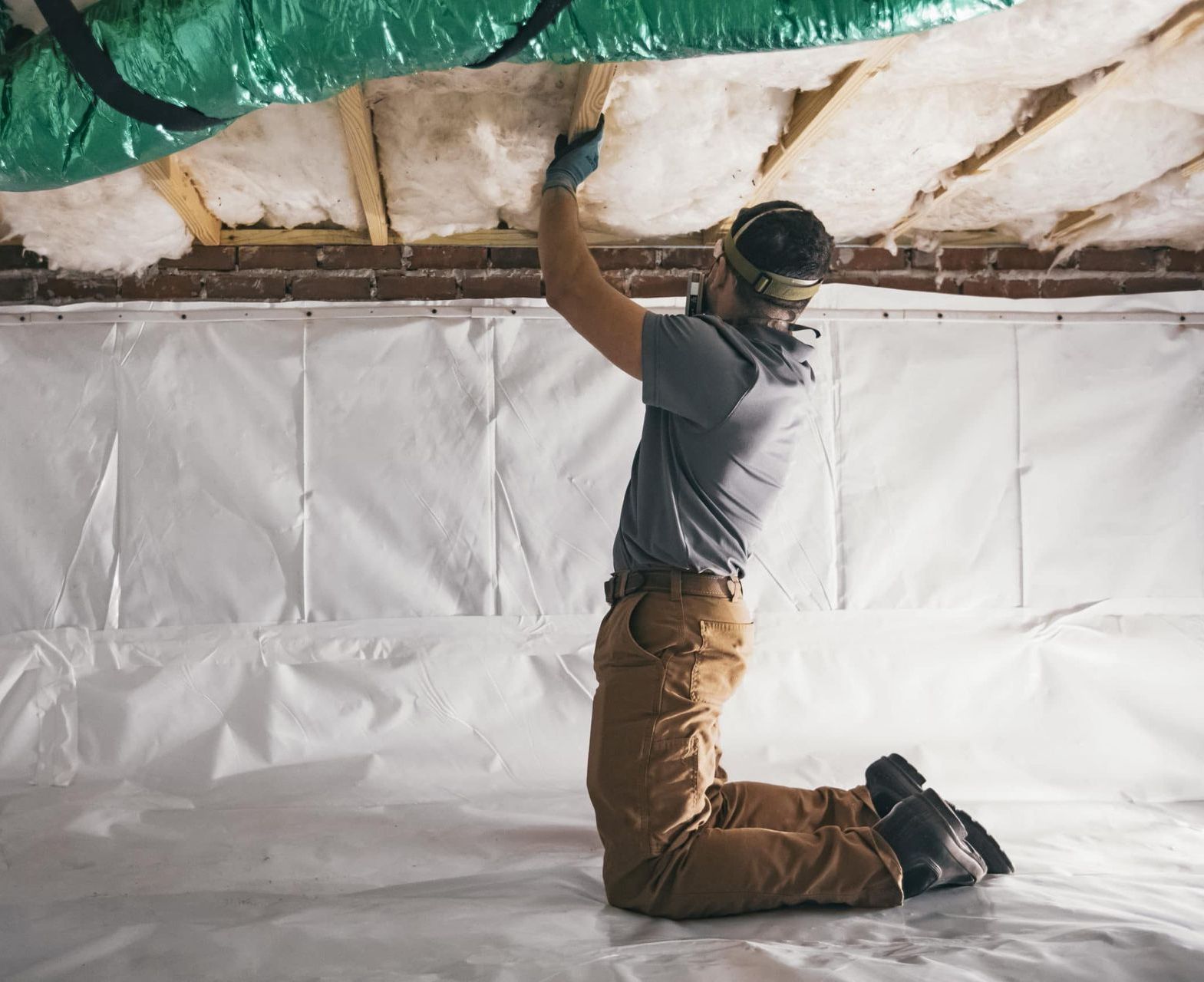
Remove contaminated floor insulation. Clean mold and fungal growth from the framing, pipes, and affected surfaces. Seal foundation vents and major exterior air openings. Install a high-coverage pinned ground vapor barrier. Provide a properly sized drying method, such as conditioned HVAC supply air. Inspect the duct system and repair or replace insulation that has become heavily contaminated or deteriorated.
That is the foundation.
From there, add what the house actually needs.
If groundwater is entering, address drainage. If the framing is damaged, repair it. If plumbing is failing, fix it. If supply air cannot reliably control moisture, add a dehumidifier. If a fully sealed liner has a legitimate job to perform—such as managing water, assisting radon control, or creating a usable crawl-space environment—install one.
The goal is not to prohibit more sophisticated systems.
The goal is to stop treating every possible upgrade as the minimum acceptable starting point.
This is fundamentally a sanitation and housing-preservation protocol: remove contamination, stop the moisture mechanism, dry the assembly, verify the result, and fix the remaining failures that actually exist.
Wood Moisture Content Should Be The Main Performance Check
Relative humidity is useful. Dew point is useful. Temperature is useful.
But ultimately I want to know what the wood is doing.
In properly controlled crawl spaces, I commonly see framing around 10–11% wood moisture content. That is excellent.
During the most demanding part of summer, I am generally comfortable seeing temporary readings rise into the 15–16% range. Once the framing begins staying above roughly 17% for extended periods, I want to know why.
Something may have changed. Air leakage may have increased. Supply air may be inadequate. A plumbing leak may have developed. Groundwater may be entering. The vapor barrier may have been damaged. A dehumidifier may have failed.
Around 19% wood moisture content and above, sustained conditions become much more concerning because the environment becomes substantially more favorable for mold and fungal activity.
The exact number on one meter reading is not the entire story. Duration, location, wood species, and site conditions matter. But homeowners and contractors need usable thresholds.
My practical field approach is simple:
- 10–11% WMC: excellent
- 15–16% WMC: generally acceptable during peak summer
- 17%+ sustained: investigate
- around 19%+ sustained: serious moisture concern
That gives people a performance standard they can actually use.
Monitoring Should Create A Feedback Loop
The easiest time to convince yourself a crawl space is working is during pleasant weather.
I want to know what the framing is doing in July and August.
That is when outdoor dew points are high, air conditioners are running hard, floor systems and ductwork are cold, and the crawl space is being tested by the conditions most likely to create summer moisture problems.
Homeowners do not need sophisticated instrumentation to participate in that process. An inexpensive indoor weather station with a remote crawl-space sensor can monitor temperature, relative humidity and dew point.
There are two early warning signs depending on your moisture control system:
With a dehumidifier the main number you want to monitor is relative humidity. If that gets over 60% for multiple days you want to investigate.
With the supply air inducer system the main number you want to watch is dew point. If you see dew point get into the mid 60s for multiple days, then you need to check it out and figure out if there is an issue.
Then the homeowner has a simple early-warning system.
The process should be:
Normal humidity or dew point → leave the system alone.
Humidity or dew point begins rising → investigate.
Then work through the possible causes: vent or door leakage, insufficient supply air, plumbing leaks, groundwater, damaged vapor barrier, drainage changes, duct problems, or the need for additional dehumidification.
That is a diagnostic feedback loop for summertime moisture season.
Homeowners still have responsibility for maintaining their homes. But they cannot maintain something they have never been taught to understand. The answer is not pretending crawl spaces require no maintenance. The answer is giving homeowners simple tools, understandable thresholds, and a clear path to service when something changes.
This Is A Housing Affordability Issue Too
Housing affordability is usually discussed in terms of buying or building homes.
Preserving the homes we already have is just as important.
The cheapest house to create is often the one that is already standing.
If existing homes deteriorate because repair requirements become too expensive or too complicated, the broader housing problem gets worse.
The cost of crawl-space moisture eventually appears somewhere. It shows up in structural repair, duct replacement, insulation removal, mold remediation, plumbing deterioration, pest control, and flooring repair. Eventually, it can show up when an older house requires so much work that preserving it no longer makes economic sense.
I have seen crawl spaces where fungal growth is so aggressive that heavy growth can literally be broken away from the wood by hand. It can look like mushrooms are growing beneath the house.
That is not cosmetic discoloration.
That is an environment that has gone badly wrong.
Now multiply that process across millions of homes, one humid summer after another.
That is how housing stock can be lost—not necessarily in one dramatic event, but one damp summer at a time.
HUD, DOE, And Code Bodies Should Help Lead The Response
I believe HUD and the U.S. Department of Energy are well positioned to help move this issue forward.
This does not have to begin with a massive federal mandate. It can begin with research, education, practical retrofit guidance, and performance standards that homeowners and contractors can understand.
What does a healthy crawl space look like? What wood-moisture readings should trigger concern? When is conditioned supply air appropriate? When is a dehumidifier appropriate? When does a liner need to be fully sealed? When is drainage required? What should homeowners inspect every summer?
These are answerable questions.
Code should support the same performance goal.
Different homes have different risks. A low, flat coastal crawl space may perform well with a pinned vapor barrier, sealed vents, and conditioned supply air. A very leaky older crawl may need a dehumidifier for additional protection. A tall crawl on a sloped clay site may benefit from a fully sealed liner that also serves as part of the drainage system. A radon-prone site may need a different strategy.
That is why I support flexible code paths similar to the approach North Carolina has used.
The goal is not to reduce protection.
The goal is to make effective protection practical enough to deploy at scale.
The Mission Is Preserving The House
Crawl-space contractors sometimes talk about encapsulation as though encapsulation itself is the objective.
It is not.
Dehumidification is not the objective either. Neither is supply air. Neither is a pinned vapor barrier.
Those are tools.
The mission is preserving the house.
Sometimes preservation requires a sump pump. Sometimes it requires new ducts. Sometimes it requires structural repair or plumbing. Sometimes it requires a fully sealed liner. Sometimes it requires a dehumidifier. Sometimes it requires a pinned ground cover and a small amount of conditioned HVAC air.
Good building science is not choosing a favorite product and finding a reason to install it everywhere.
It is identifying the actual failure mechanism and using the simplest durable system that controls it.
If the framing is dry, the system is working.
If it is not, diagnose why and correct the actual problem.
That is where I think crawl-space moisture management needs to go: less mystery, fewer predetermined packages, and more measurable performance.
The Bottom Line
We have created a straightforward physics problem beneath millions of homes.
We cool the house above. We allow hot, humid summer air beneath it. That air encounters colder framing, ductwork, plumbing, and other surfaces.
Moisture accumulates. Mold and fungal growth follow. Materials deteriorate. Pests move in.
And because the entire process happens in a dark space that most homeowners rarely visit, the damage can continue unnoticed for years.
A cold air-conditioned home sitting above a vented crawl space in a hot, humid climate can become a mold and fungus farm beneath the floor.
That does not mean every house needs the most elaborate crawl-space system available.
It means every crawl-space home in these climates deserves a practical moisture-management strategy that is affordable, understandable, measurable, and appropriate for the actual risks present at that property.
The goal should not be to sell the most material or install the most equipment.
The goal is to keep the house dry, sanitary, structurally sound, inspectable, and repairable for as long as possible.
If we can make that the mission, this is a manageable problem.
If we ignore it, the physics will continue whether we acknowledge them or not.
We need to get serious about preserving the housing stock we already have. Otherwise, we had better get very good at building replacements at a low cost.
Latest Crawl Space Articles