Call Us Today To Schedule An Inspection At (757) 960-3231

Crawl Space Mold: What You Actually Need (And What's A Waste Of Money)
Watch The Full Video
Download The Technical Whitepaper (PDF)

Crawl Space Mold: What You Actually Need
(and What's a Waste of Money)
If you've found mold under your house, you probably have questions. Is it dangerous? Does it all have to come out? Can you clean it yourself? How do you keep it from coming back?
I'm Robbie McCarty, owner of Patriot Crawl Space Repairs in coastal Virginia. I'm a licensed contractor, pest control operator and certified mold remediator, and I inspect more than 600 crawl spaces a year. Here are straight answers to the questions homeowners ask me most.
Crawl space mold remediation isn't mysterious
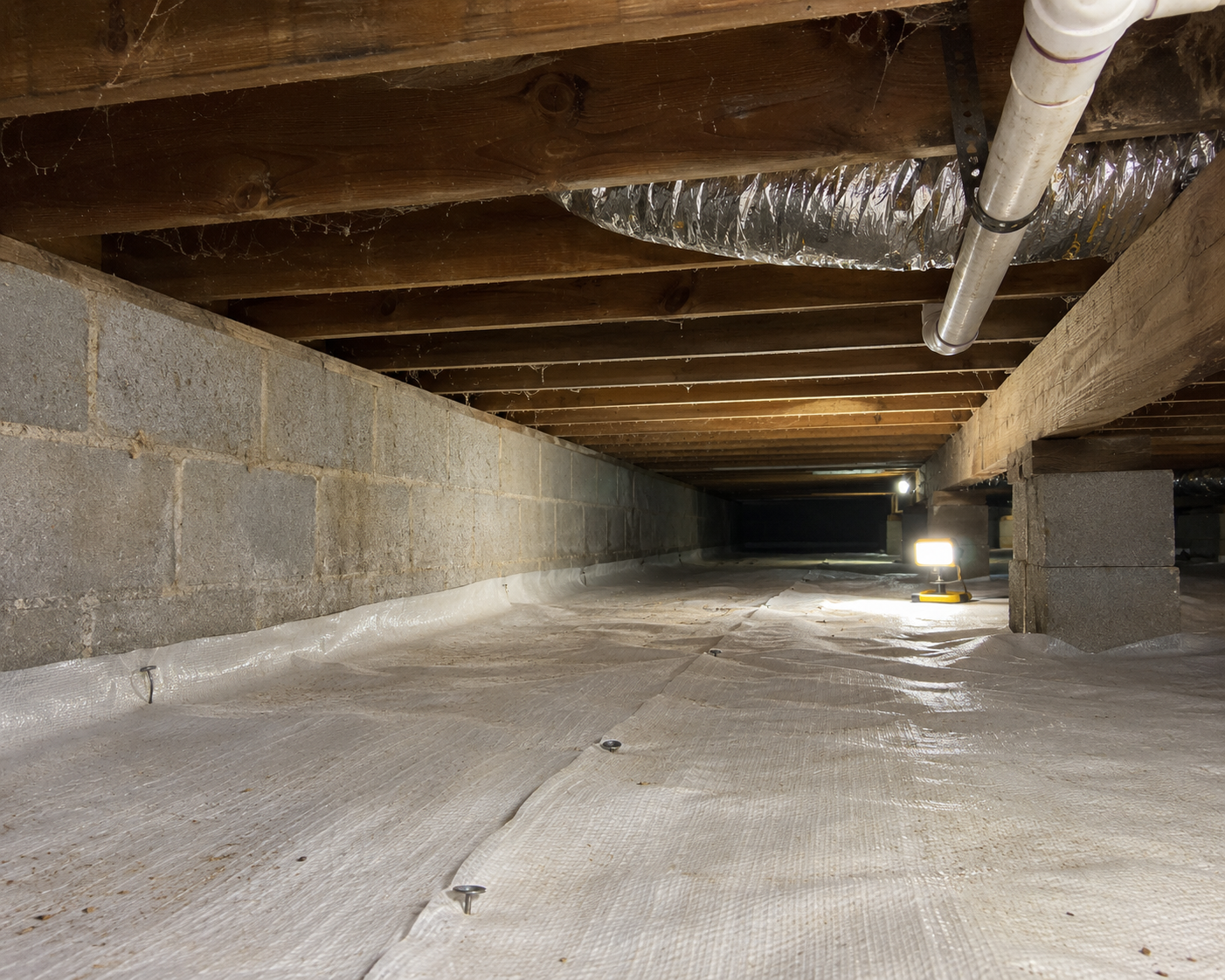
The job has four parts. Remove contaminated materials that can't reasonably be cleaned. Clean the mold off the wood. Correct the moisture problem. Make sure the crawl space stays dry.
Some companies make it look like a hazardous materials cleanup and sell expensive coatings, special procedures and add-ons. In a typical crawl space, much of that is unnecessary and drives up the price. Indoor remediation has to protect furniture and belongings. A crawl space still needs protective equipment and precautions, but not every indoor procedure. The job is simple. Doing it well in a low crawl space is hard work.
1. What causes crawl space mold?
You have a moisture problem. Mold is the result.
It's also common. In a Duke University study funded by HUD, Advanced Energy inspected 45 homes with vented crawl spaces in North Carolina and found visible mold in 62% of them. That's almost two out of three. It was a small study, so it doesn't mean exactly 62% of all homes have mold, but it shows how common the problem is in a humid climate. We see the same conditions every summer here in coastal Virginia.
Here's how it happens. Take a cold can of soda outside on a hot day, and water forms on the outside of the can within minutes. That water came out of the air. When warm, humid air touches a surface that's cold enough, some of its moisture turns to liquid. That's condensation, and the temperature where it happens is the dew point.
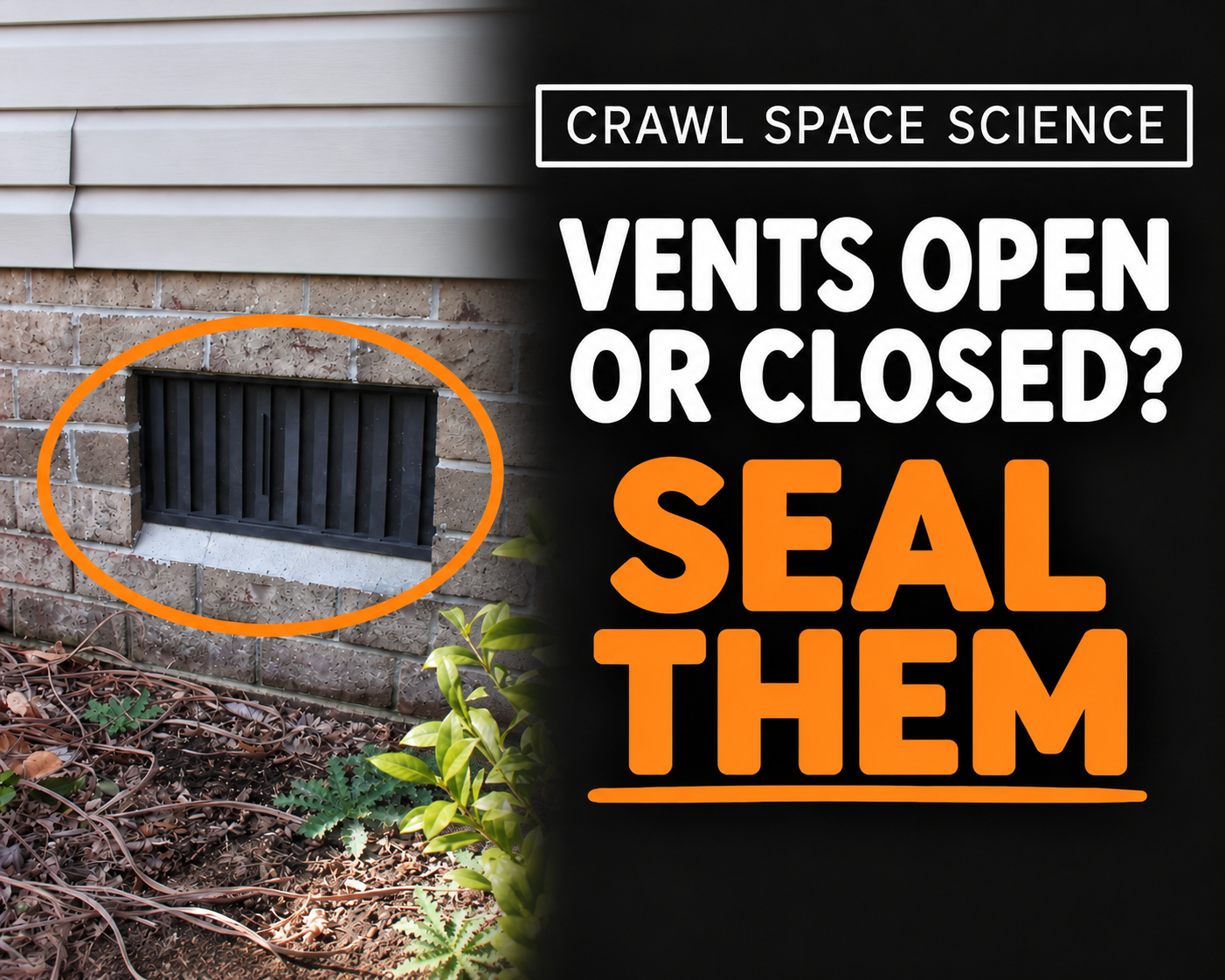
Under your house, humid outdoor air comes in through vents and openings and meets ductwork, plumbing and framing cooled by the air conditioning above. Condensation forms, and even without visible water, the wood absorbs moisture. After weeks or months, mold has what it needs.
You don't need a broken pipe or standing water. Sometimes all it takes is a vented crawl space and a hot, humid summer.
2. Is crawl space mold dangerous?
Mold exposure can cause coughing, itching, irritated eyes and allergic reactions, and it can make asthma worse. Some people are far more sensitive than others. Air from the crawl space moves up through openings around plumbing, gaps in the floor and duct leaks. Not everyone living over a moldy crawl space gets sick, but take it seriously.
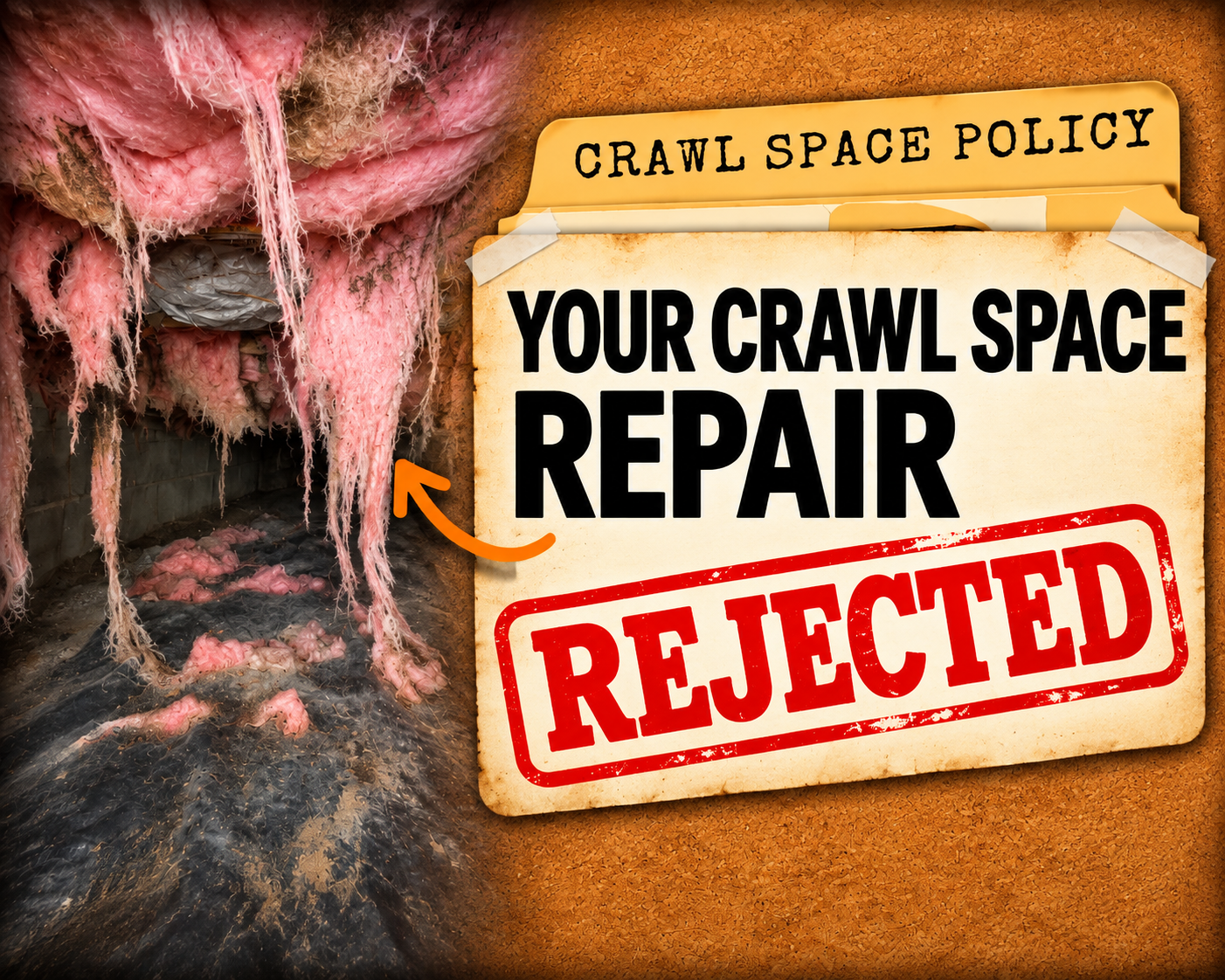
For the house, picture wet towels wrapped around your floor joists and air conditioning ducts. Every summer they get damp. Every winter they dry out. Now imagine that for 25 years. That's what happens to the fiberglass insulation under many older homes: it gets damp, collects dirt, can become contaminated and falls apart. Old duct insulation has the same problems.
Mold isn't wood rot, but the same moisture can support wood-destroying fungi that damage framing and subfloor over time. Finding mold doesn't mean your house is ruined. It means finding the moisture source and correcting it.
3. Is black mold worse than other mold?
You can't reliably identify a mold species by its color, and color doesn't tell you how dangerous it is. Different molds cause different reactions, and different people have different sensitivities. One color on the surface also doesn't mean only one type is present. Several molds and other fungi often grow in the same crawl space.
Color doesn't change how I recommend cleaning it. The amount of contamination, the materials involved and the moisture problem determine the work. I wouldn't recommend a more expensive process because the mold happens to be black.
4. Does every bit of mold need to be removed?
No. If I find a few tiny spots of suspected growth on sound wood, with very little contamination and no other major problems, I may give the homeowner the option of leaving it while we correct the moisture and monitor the conditions.
Obvious growth across the joists and subfloor should be cleaned. Old, dirty, falling or contaminated fiberglass insulation should come out. Old, leaking ducts with mold-contaminated insulation that can't reasonably be cleaned should be replaced, but not every dirty duct needs replacing. Inspect first, then decide.
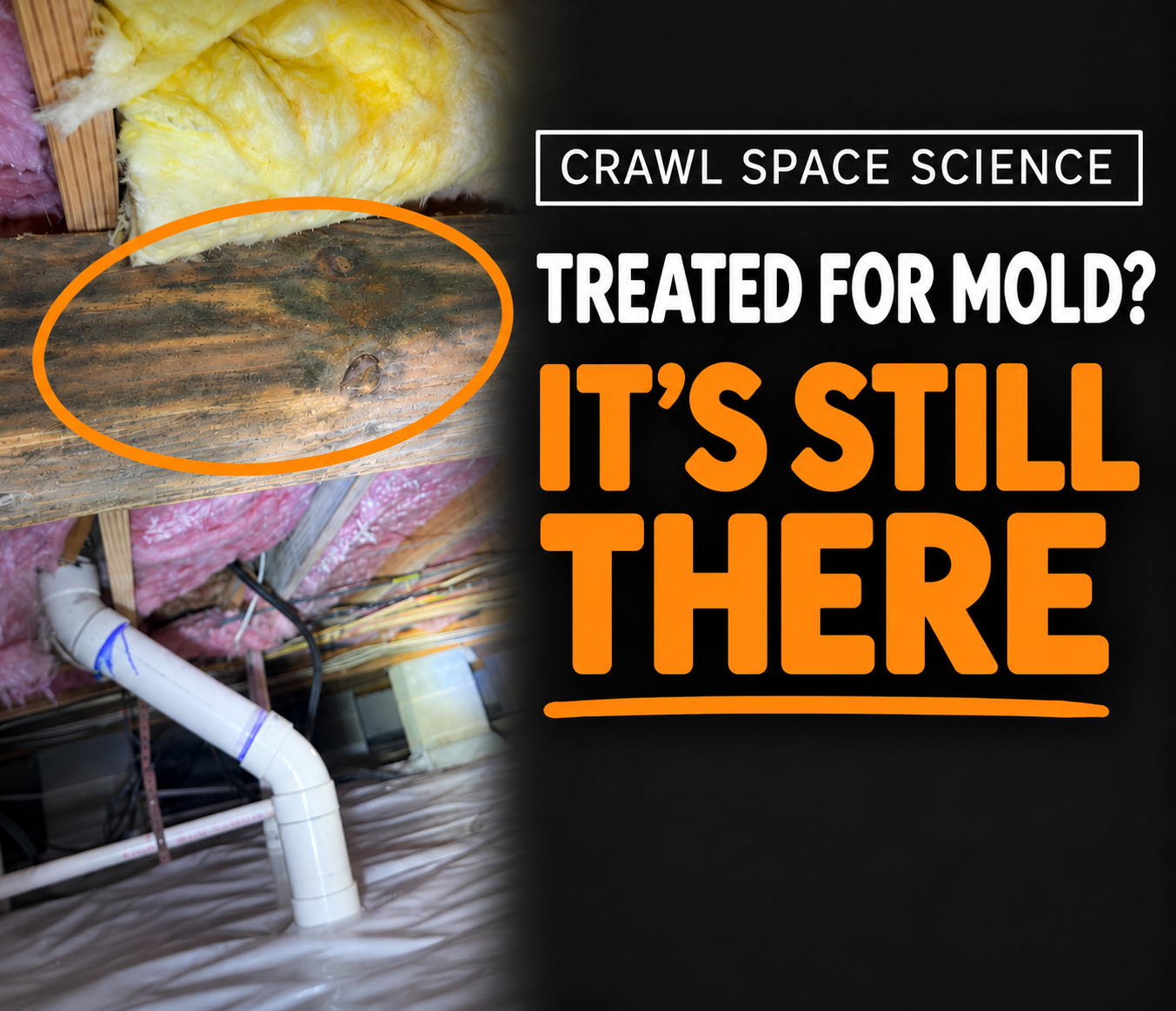
Also know the difference between growth and staining. Wood can stay discolored after it's been properly cleaned. A stain doesn't mean there's still active growth. The amount of work should match the problem.
5. Can you clean crawl space mold yourself?
You can, if you understand the process and can do the work safely. There's nothing proprietary about it. You're cleaning contaminated hard surfaces and removing materials that can't be cleaned, the same principle as cleaning a dirty shower.
The difference is scale. A shower has maybe 50 square feet of surface. A crawl space can have thousands of square feet of wood. You work it on your stomach in a two-foot space around ducts and plumbing, with protective equipment and a plan to get materials out without spreading them into the house. A small, accessible area may be a reasonable DIY job. A large crawl space is a different amount of work.
6. Do you need to pay for mold testing?
Usually not. If mold is visibly growing on the wood, what are you paying someone to tell you? The EPA says that when visible mold is present, sampling is generally unnecessary. Identifying the exact type rarely changes the work: you still have to clean the contamination and correct the moisture.
Testing helps when you can't tell whether something is mold, when there's a dispute, or when there's a specific reason to identify the organism. After cleaning, you should be able to inspect the work yourself. Old staining may remain, but visible growth should be gone.
7. Does spraying or fogging work?
Spraying mold with a chemical isn't removing it. A product may kill some organisms or stop growth for a while, but the contamination can stay on the wood, and even dead mold can cause allergic reactions.
If you hired someone to clean a moldy shower and came home to mold on the tile, "Don't worry, I treated it" wouldn't fly. It shouldn't under your house either. Cleaning products are useful when they're used to remove growth. And if the moisture isn't fixed, nothing stops the mold from coming back.
8. What's the proper way to remove crawl space mold?
First, remove what can't reasonably be cleaned. In older crawl spaces that usually means old fiberglass insulation, damaged vapor barriers and other contaminated materials. Then physically clean the wood. We use YCS Pro Cleaner, a hydrogen peroxide-based product. We apply it according to the label, give it the proper time to work, and wipe away any visible growth that remains. The objective is clean wood.
9. How do you know the problem is fixed?
I look at three things. Is the wood clean, meaning the growth was removed, not just sprayed? Is the moisture-control system working? Is the wood staying dry?
We measure wood moisture content because it tells us how much moisture is in the framing. Our goal is below 16% during the worst summer months and around 11% most of the year.
Be careful with humidity readings. A crawl space dried with conditioned supply air might run around 70% relative humidity in peak summer, while one with a dehumidifier might run around 55%. That doesn't necessarily mean the first one holds more water. Relative humidity changes with temperature, and cooler air shows a higher reading for the same amount of water vapor. That's why we also look at dew point, which compares moisture fairly across temperatures. I judge performance by temperature, dew point and, most of all, wood moisture.
Then keep monitoring. Equipment fails and conditions change, and a simple temperature and humidity sensor lets you check without crawling under the house.
The bottom line
Remove contaminated materials. Clean the wood. Correct the moisture problem. Keep the crawl space dry. Don't assume you need the most expensive system someone can sell you, and don't pay thousands of dollars to spray something that needed to be cleaned. Do the basics, do them well and verify the results.
Sources: Advanced Energy, Crawl Space Characterization (Duke University study, HUD-funded), 2005;
U.S. EPA, A Brief Guide to Mold, Moisture and Your Home.
Latest Crawl Space Articles