Call Us Today To Schedule An Inspection At (757) 960-3231

Is Gambling A Better Investment Than Crawl Space Wall Insulation?
Watch The Full Video
Download The Technical Whitepaper (PDF)

Is Gambling a Better Investment Than Crawl Space Wall Insulation?
Is crawl space wall insulation worth it? In coastal Virginia, $5,000 of crawl space wall insulation saves about $60 a year. That's an 83-year payback before you spend a dime on maintenance.
In some jurisdictions, the energy code requires that insulation when a crawl space is closed. Some code officials even try to disregard the code's own warm-humid footnote exemption to require it.
So we asked a simple question: if a homeowner is forced to spend $5,000, how does that compare with other ways to spend the same $5,000?
We ranked it against nine alternatives, from a coin flip to the World Sauna Championships. The comparisons are absurd. That's the point.
The Benchmark: $5,000 of Wall Insulation
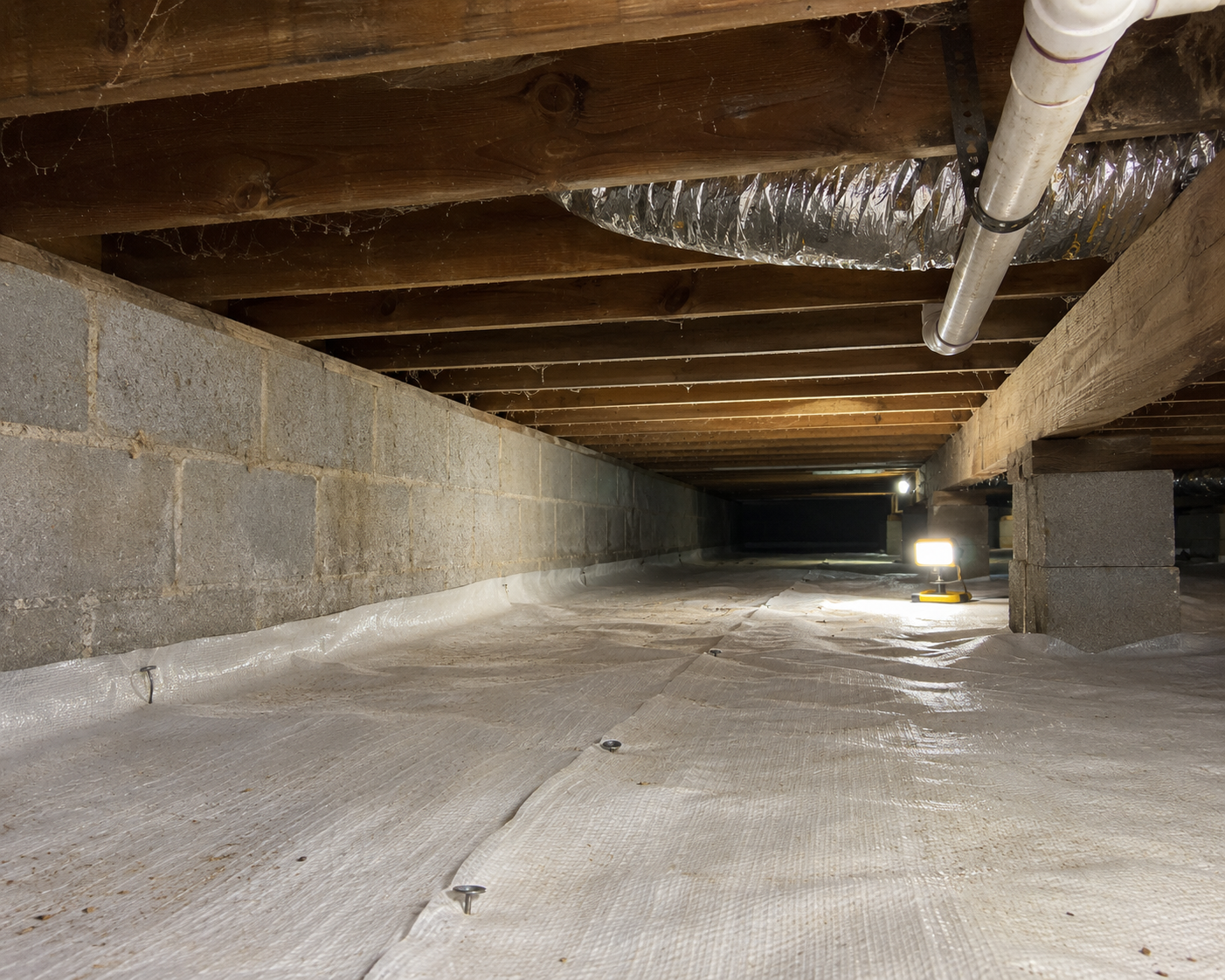
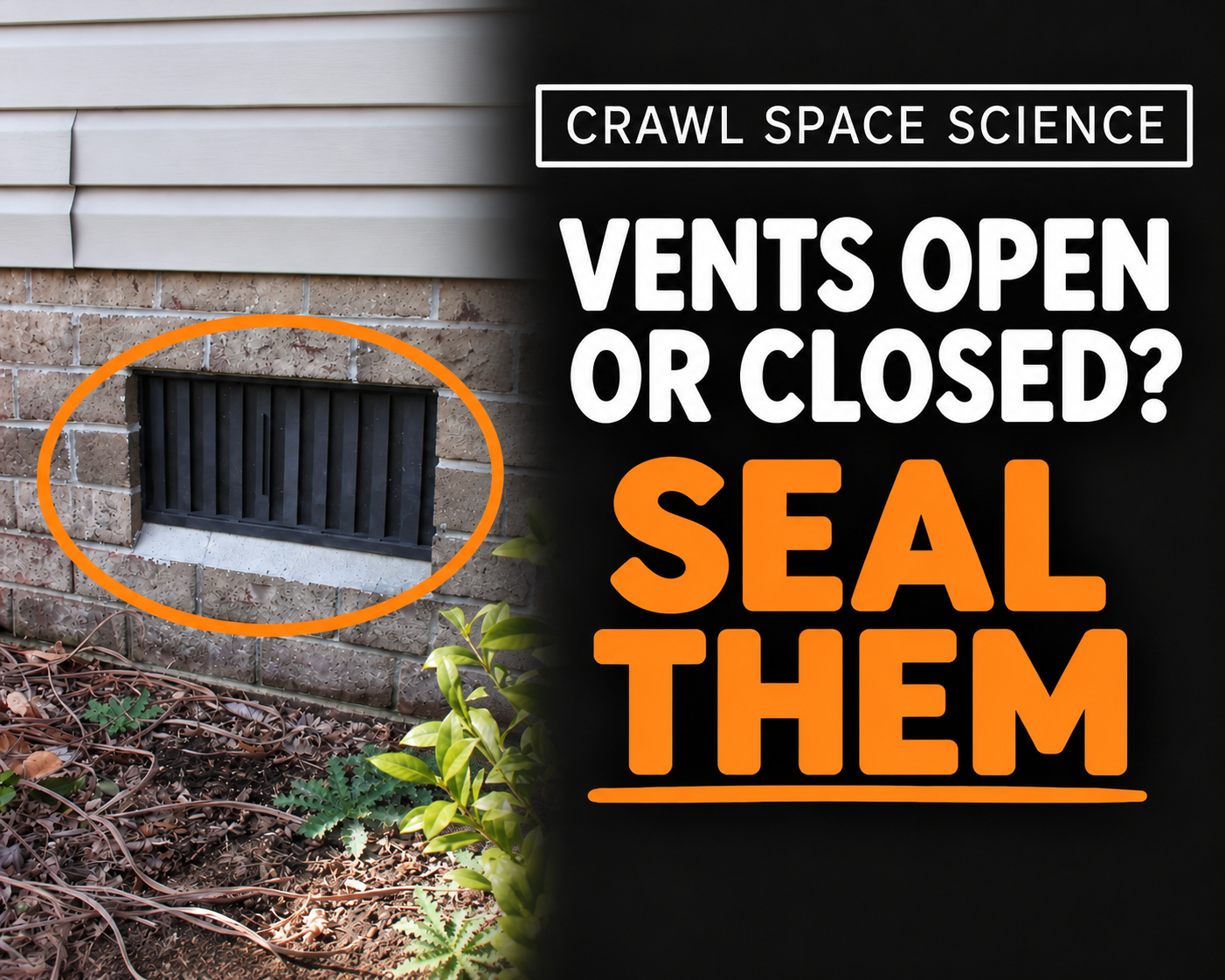
Our reference house is a typical Southeast home with a closed crawl space about 2 feet tall, block foundation walls and ductwork in the crawl space. The vents are sealed, the ground vapor barrier is in and humidity is controlled. The moisture problem is solved. The only question is whether to add rigid foam board to the foundation walls.
Advanced Energy's field study for the Department of Energy measured about 18% less heating and cooling energy in sealed, insulated crawl spaces than in vented crawl spaces with R-19 floor insulation. That 18% comes from the whole closed system. Using the method in the Department of Energy's Builder's Foundation Handbook, the wall insulation accounts for about 6 points of it. Air sealing does most of the work.
We checked the dollar value three ways:
- Measured crawl space temperatures: about $35 a year
- Oak Ridge National Laboratory modeling: about $47 a year
- Builder's Foundation Handbook: about $60 a year
We used the highest: $60 a year, or $5 a month.
The Insulation Math
Simple payback
$5,000 ÷ $60 = 83 years. That assumes the insulation stays on the wall in perfect condition for 83 years. At the end, you've broken even. Your profit is zero.
Maintenance
The foam board has to come off for termite treatment, foundation inspections, rodent exclusion and plumbing repairs. Fasteners rust, and adhesive fails on damp masonry. In coastal crawl spaces we see insulation come loose in as little as 5 to 7 years. Removing and reinstalling part of it can easily cost $1,500, which is 25 years of energy savings.
With one maintenance event expected every 15 years, maintenance averages about $100 a year against $60 a year in savings. We project maintenance costs to outpace the energy savings, so the investment likely keeps draining the owner and the original $5,000 is never returned.
After 50 years:
- No maintenance: $5,000 spent, $3,000 saved, net −$2,000. Breaks even at 83 years.
- One $1,500 repair every 15 years: $9,500 spent, $3,000 saved, net −$6,500. Never breaks even.
How long people stay
According to the National Association of Realtors, the median seller now owns a home for 11 years before selling, an all-time high. Over 11 years, the insulation returns $660 of its $5,000.
The time value of money
A dollar saved 60 years from now is worth less than a dollar spent today. At a 3% discount rate, $60 a year for 50 years is worth about $1,544 today, so the insulation's net present value is about −$3,456. At any discount rate above 1.2%, it never pays for itself, no matter how long it lasts.
What if energy prices rise?
If prices rise 3% every year and the insulation is never maintained, payback drops to about 42 years. That's still almost four times longer than the typical owner keeps the house. Only a tenfold price jump the day after installation gets payback under 10 years.
The Casino Bets
Coin flip
A 50% chance of winning $5,000 and a 50% chance of losing $5,000. The expected result is $0. There's no house edge, no fees and no maintenance.
Casino War
You and the dealer each get one card, and the higher card wins. On a tie, you can go to war, which carries a house edge of about 2.88%. On $5,000, that's an expected loss of $144. Counting the wars, your chance of ending ahead is about 50%. The catch is a small chance of losing $10,000 if you go to war and lose.
American roulette
Eighteen of the 38 pockets are black, so a bet on black wins 47.37% of the time. The expected loss is $263 on $5,000.
Every one of these settles in minutes, and the most you can lose is the money on the table.
The Prediction Markets
The Second Coming before 2027
On Polymarket, a $5,000 order displayed a payout of about $332,000. That works out to about a 1.5% market-implied chance.
Washington Commanders win the Super Bowl
At 3-5-1, the Commanders contract on Kalshi showed a maximum payout of about $467,000 on $5,000, about a 1.1% chance. The bigger payout means the market thinks this is even less likely than the Second Coming bet.
Both are long shots. But both have a clearly defined outcome, a definite settlement date and a real chance of a six-figure return. The insulation has none of those three.
The Options With No Cash Path
The gas station treehouse timeshare
Ownership is unverified, and the location is "somewhere in Tennessee." If the deed is real, you still get a vacation property.
CarJitsu
Grappling inside a parked car. The downside includes being choked with a seatbelt.
The Wife Carrying World Championships
The champion wins his wife's weight in beer, but under the official rules, prizes can't be exchanged for cash and aren't mailed. There's no path back to $5,000, even before airfare.
The World Sauna Championships
One finalist died and another was nearly killed in the 2010 final, and the event was never held again.
The Final Ranking
- Coin flip
- Casino War
- American roulette
- Gas station treehouse timeshare
- Second Coming
- Commanders win the Super Bowl
- Crawl space wall insulation
- CarJitsu
- Wife Carrying World Championships
- World Sauna Championships
Crawl space wall insulation did not outperform a single alternative whose primary risk was financial. It ranked above only the alternatives that carry a material risk of bodily injury or death.
Put plainly: as a financial decision, $5,000 of foundation wall insulation in a low crawl space in the humid Southeast is beaten by every alternative whose only downside is losing money. Its best argument is that it's unlikely to injure the person who pays for it.
What This Doesn't Mean
Nobody should gamble their savings. The casino bets lose money on average, and the prediction markets are long shots. The comparison exists to show how poor the insulation's numbers are.
The math is also specific to low crawl spaces in the humid Southeast. Taller foundation walls lose more heat, and colder climates make insulation more valuable. In climate zone 5 and colder, and at high elevation, the economics are different.
Show Us the Numbers
A coin flip is a choice. Where the energy code requires foundation wall insulation, it isn't.
When government uses that kind of authority, the people imposing the requirement should have to show that the benefits justify the cost, not the other way around. For a low crawl space in the humid Southeast, this purchase doesn't return its cost within the time most people own the house, within 50 years or, at any normal discount rate, ever.
If someone believes this insulation should be mandatory, the request is simple: show us the numbers.
Download the full white paper for the math behind every number in this article.
Patriot Crawl Space Repairs serves Hampton Roads and coastal Virginia.
Call 757-960-3231 or visit patriotcrawlspacerepairs.com for a free crawl space inspection.
Latest Crawl Space Articles