Call Us Today To Schedule An Inspection At (757) 960-3231

Why Your Crawl Space Ductwork Is Sweating
Watch The Full Video
Download The Technical Whitepaper (PDF)

Why Your Crawl Space Ductwork Is Sweating
Imagine spending five or six thousand dollars replacing the ductwork under your house, then finding the brand-new ducts dripping water a few months later.
It happens all the time in the coastal Southeast. In most cases there is nothing wrong with the air conditioner, nothing wrong with the new ductwork, and nothing uniquely wrong with the house. The problem is the crawl space the ducts are sitting in.
In July and August in Hampton Roads, I find dripping ducts in nearly every vented crawl space I inspect. Million-dollar homes and hundred-thousand-dollar homes alike. Physics doesn’t care how nice your house is.
The physics, stripped down
Your air conditioner sends roughly 55°F air through the supply ducts. That’s normal.
On a typical July day in coastal Virginia, outdoor air carries a dew point in the low to mid 70s. The dew point is the temperature at which air can’t hold its water anymore. Any surface colder than the dew point gets wet.
When that hot, humid air enters a vented crawl space, it cools. Cooler air holds less moisture, so relative humidity climbs hard. The air under the house can sit only a few degrees above its own dew point, right on the edge of saturation.
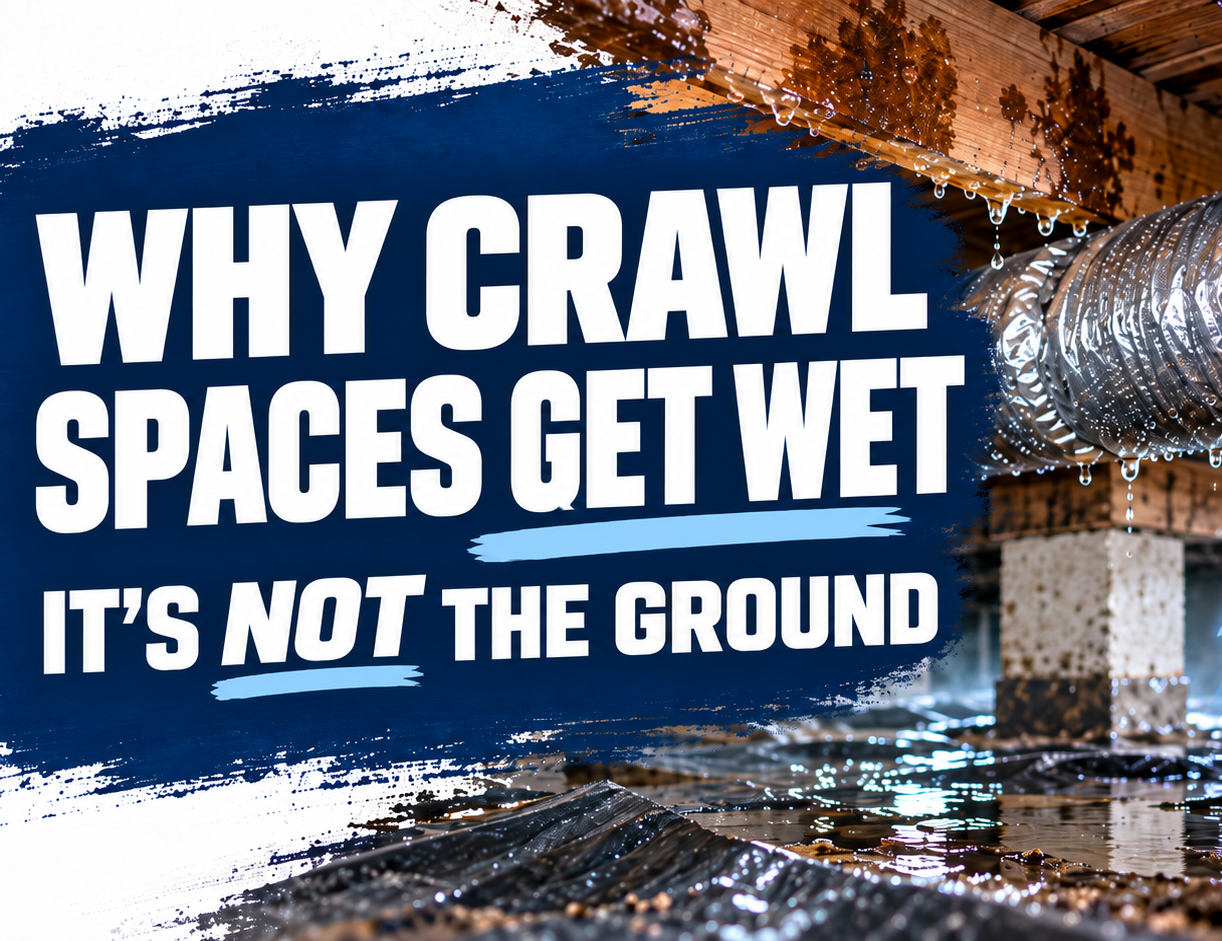
Now put a 55°F duct in the middle of that air. The duct is more than 15 degrees below the dew point. Water condenses on it.
The floor framing has the same problem. With the AC running, the house above stays cool, and that cool floor keeps the framing in the mid to high 60s, also below the dew point. The ground under the house sits around 60°F. Everything in a vented crawl space in July is colder than the air coming in.
This isn’t a defect in your house. It’s basic thermodynamics meeting a high-dew-point climate.
Why it happens here and not everywhere
Look at the 30-year normal July dew point map for the United States. The highest dew points cover the humid Southeast: the Gulf Coast, Florida, the Mississippi Delta, and up the coast into Virginia. That’s not most of the country. It’s a distinct climate band, and it’s exactly where this problem repeats every summer.
Why duct insulation doesn’t stop it
Duct insulation doesn’t change the basic equation. It only changes where the water shows up.
Good insulation keeps the outer jacket warmer than the metal or liner inside. But the jacket is still cooled by the 55°F air moving through the duct, so it always runs a little cooler than the air around it. In a crawl space already near its dew point, that small difference is enough for water to form on the jacket.
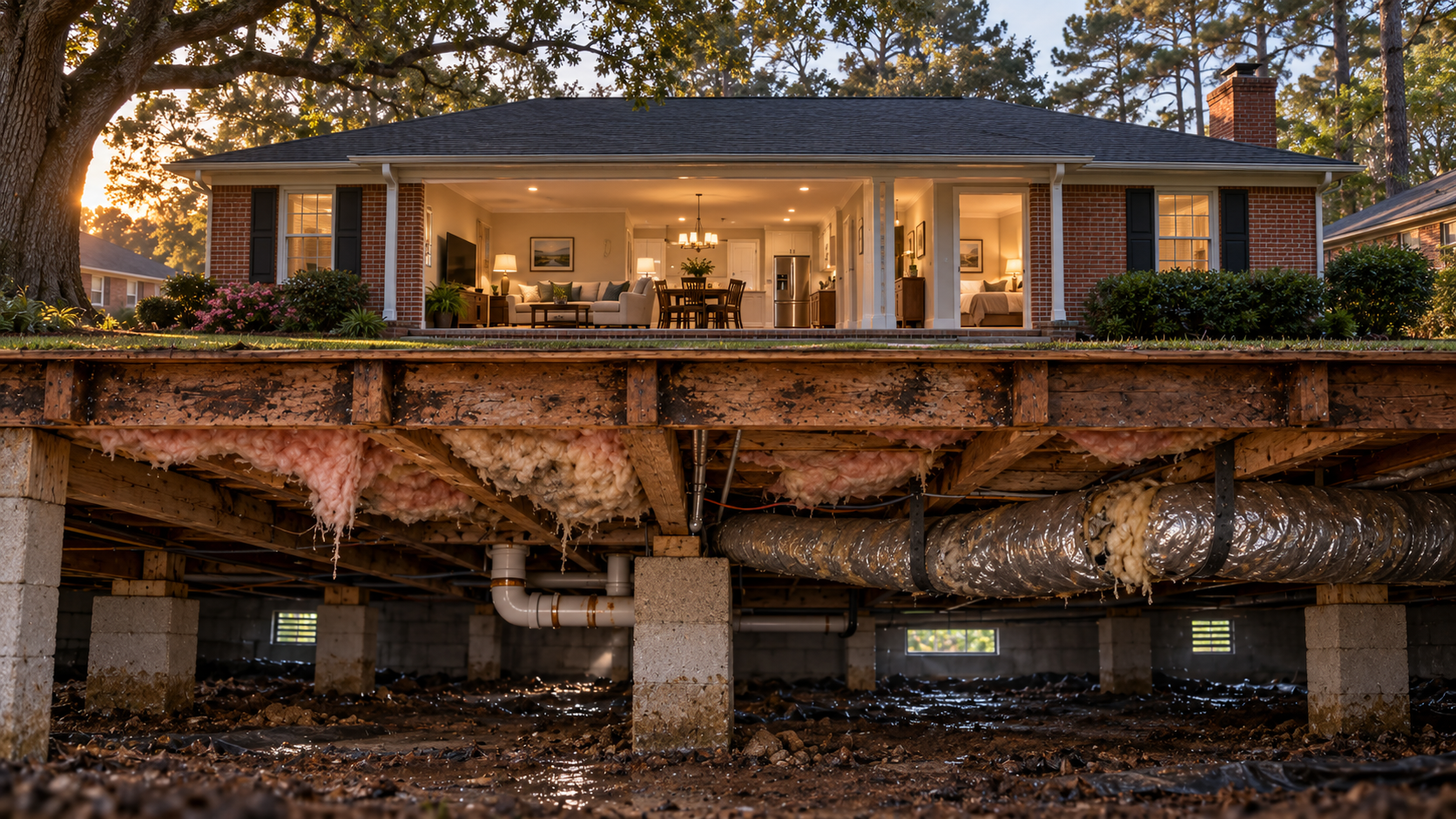
If the insulation is torn, compressed, missing at fittings, or poorly sealed, which is common, humid air reaches much colder surfaces. Water collects out of sight inside the insulation. The insulation gets heavier, sags, grows mold, and eventually fails.
Then homeowners replace the ducts, the new ducts go right back into the same vented crawl space, and the cycle starts over.
The design problem
The default in American residential construction is still the vented crawl space. That default comes from national model building codes, written for the country as a whole and adopted by states with few climate-specific changes.
In much of the country a vented crawl space works acceptably. In the high-dew-point Southeast, the same design repeatedly creates the conditions that make ductwork sweat, insulation fail, and framing sit in humid air for months.
This isn’t a collection of isolated house defects. It’s a regional mismatch between a national design and a climate that covers only part of the country.
What the research found
Research in the Southeast documented the pattern. In Advanced Energy’s field study of 12 homes in North Carolina, the wall-vented crawl spaces ran near 90% relative humidity in summer, with dew points above 70°F for most of the season. The vented crawl spaces were cooler than the outdoor dew point, so bringing in more outside air added moisture instead of drying anything out.
A separate Duke University study of 238 North Carolina homes found mold spores moving from the crawl space into the living space in 19% of homes, with another 36% inconclusive.
Two common responses that make it worse
1. Crawl space vent fans. Fans are sold to “dry out” the crawl space. During a humid coastal summer, they pull in more outdoor air with a dew point in the 70s. As that air cools under the house, you’re feeding the crawl space more moisture, not less.
2. Replacing the ducts without changing the crawl space. If the insulation is saturated and falling apart, replacement may be necessary. But new ducts installed in the same vented, high-dew-point crawl space go right back into the conditions that destroyed the old ones. Many start sweating the first summer.
The actual fix
The fix is straightforward:
- Stop outside air coming in. Seal the vents and openings so high-dew-point outdoor air isn’t continuously entering.
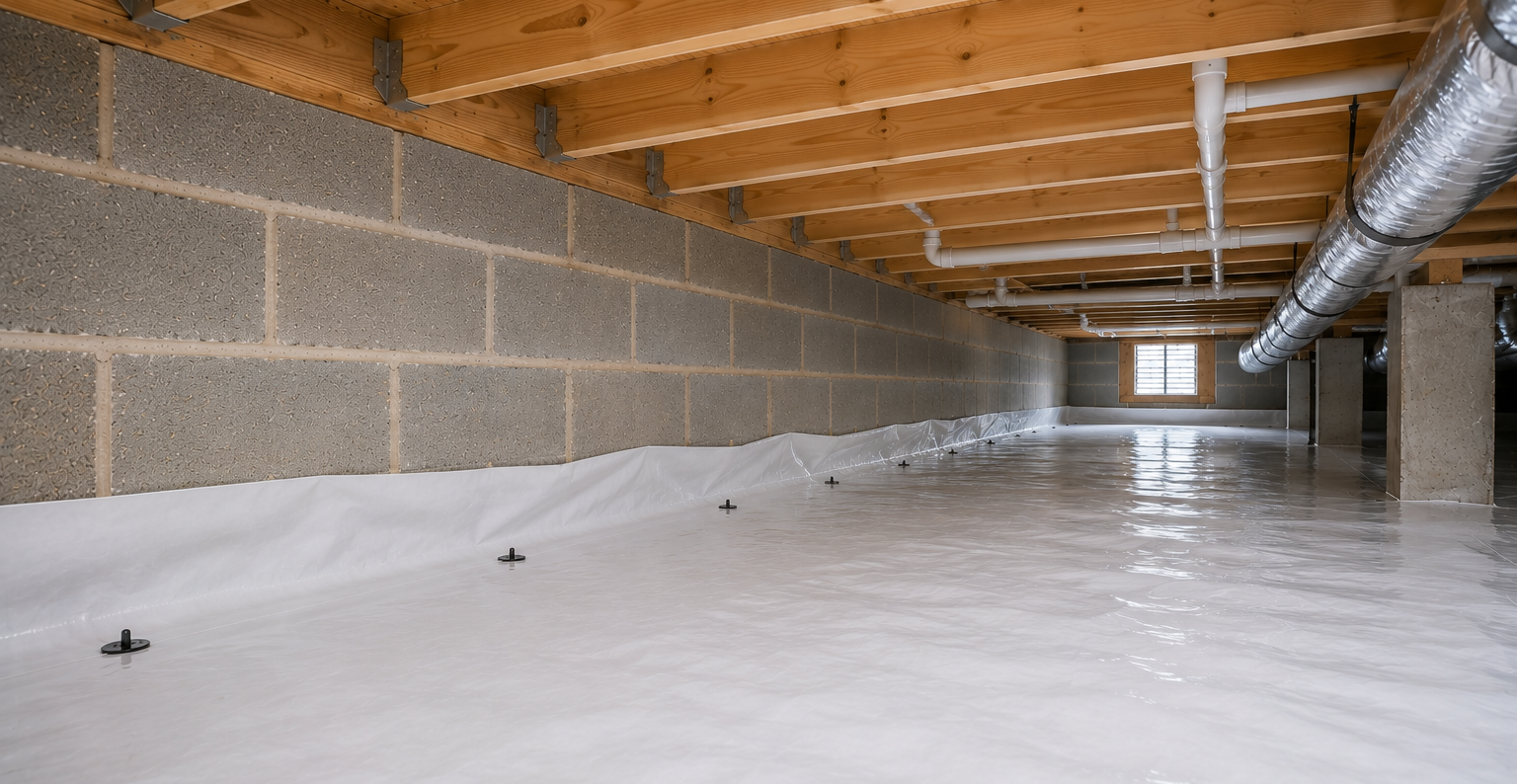
- Control ground moisture. Install a ground vapor barrier.
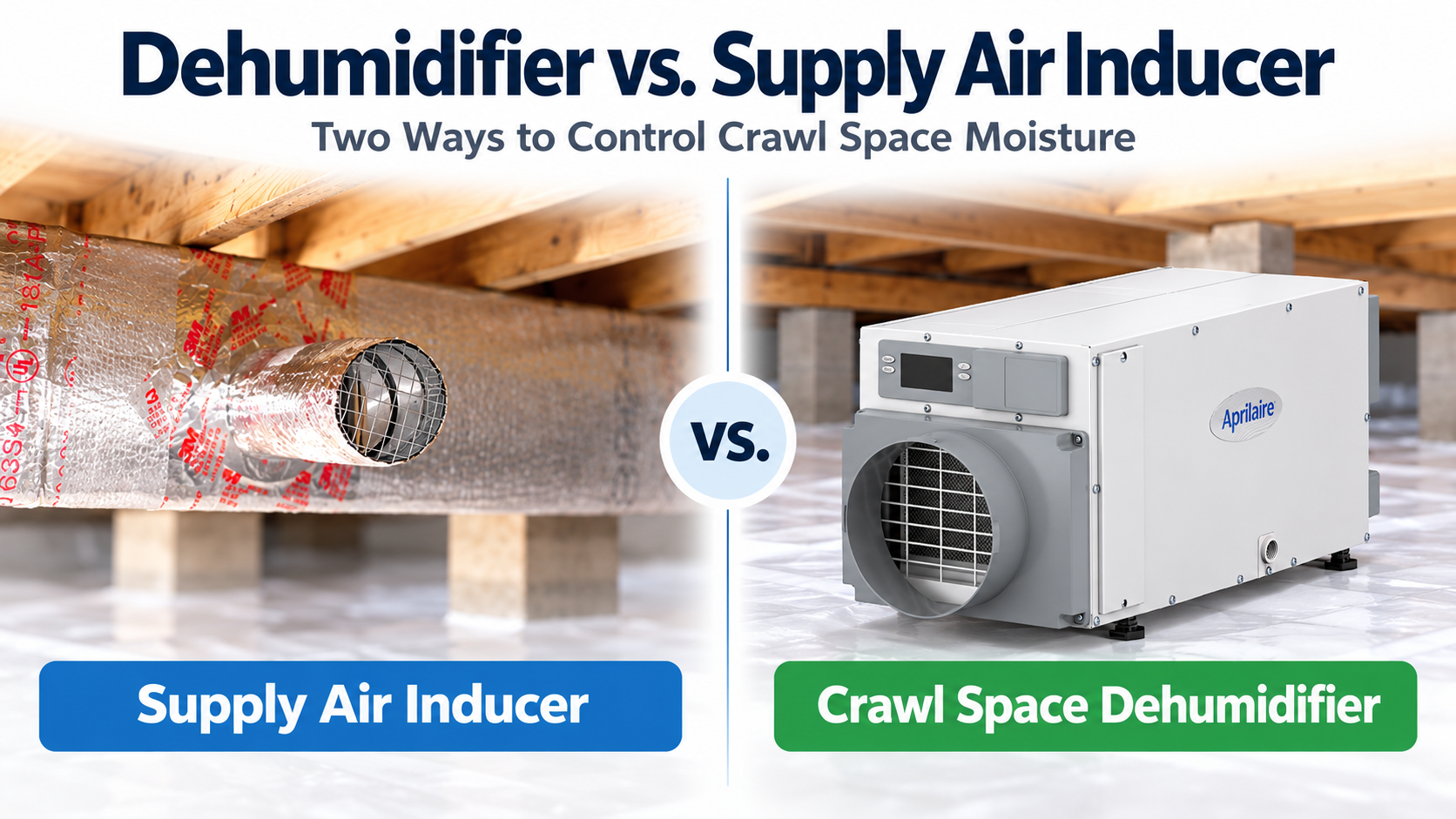
- Keep the crawl space dew point low. Use a dehumidifier or supply air so condensation on the ducts and framing becomes unlikely..
Once the conditions are corrected, deal with the damaged materials. Correct the conditions first, then replace what’s ruined. That’s how you stop paying for the same failure twice.
The diagnosis
In this climate, sweating ductwork is usually not a ductwork problem first, and it’s not an AC problem. It’s a crawl space condition problem that the ducts are revealing.
If your ducts are dripping this summer, the most important question isn’t “What’s wrong with my HVAC system?” It’s “Why is the air under my house sitting near saturation in July and August, and what do I do about it?”
Frequently asked questions
Why are my new crawl space ducts dripping water?
The duct surface is colder than the dew point of the air around it. In a vented crawl space in coastal Virginia, outdoor air with a dew point in the low to mid 70s meets 55°F ducts, and water condenses.
Is sweating ductwork a problem with my air conditioner?
Usually not. 55°F supply air is normal. The problem is the humid air surrounding the ducts.
Will better duct insulation stop the sweating?
Not by itself. Insulation changes where the water forms, but in a crawl space near saturation even an insulated jacket gets wet. Torn or gapped insulation makes it worse.
Do crawl space vent fans help?
In a humid coastal summer, no. They pull in more high-dew-point outdoor air, which adds moisture.
Should I replace my wet ducts?
If the insulation is saturated or moldy, replacement may be needed, but fix the crawl space conditions first. Otherwise the new ducts will sweat too.
Sources
Advanced Energy (2005). A Field Study Comparison of the Energy and Moisture Performance Characteristics of Ventilated Versus Sealed Crawl Spaces in the South. Final report to the U.S. Department of Energy (OSTI 850459).
Miranda et al. (2011). Crawl Spaces as Reservoirs for Transmission of Mold to the Livable Part of the Home Environment. Reviews on Environmental Health.
PRISM Climate Group / NACSE, Oregon State University. 30-Year Climate Normals (1991–2020): July Mean Dew Point Temperature.s://prism.oregonstate.edu/explorer/map.php
Latest Crawl Space Articles