Call Us Today To Schedule An Inspection At (757) 960-3231

Is Crawl Space Wall Insulation Worth The Money?
Watch The Full Video
Is Crawl Space Wall Insulation Worth the Cost?
If you’re getting a quote to close or encapsulate your crawl space in Virginia, North Carolina or anywhere in the humid Southeast, there’s a good chance it includes rigid foam board insulation on the foundation walls.
In a typical 1,000 square foot crawl space, that insulation costs about $4,600 installed. By our calculations, it saves about $60 a year in energy. That’s about $5 a month.
It also covers the foundation walls we need to inspect for termites, rodents, water leaks and structural damage.
After inspecting more than 600 crawl spaces a year, I believe foundation wall insulation is one of the worst uses of money and labor in modern residential construction. Here’s why.
We’re Not Talking About Fiberglass Either
To be clear: I’m not suggesting we put fiberglass insulation back between the floor joists. In low crawl spaces, fiberglass becomes rodent harborage, hides problems, and eventually falls down.
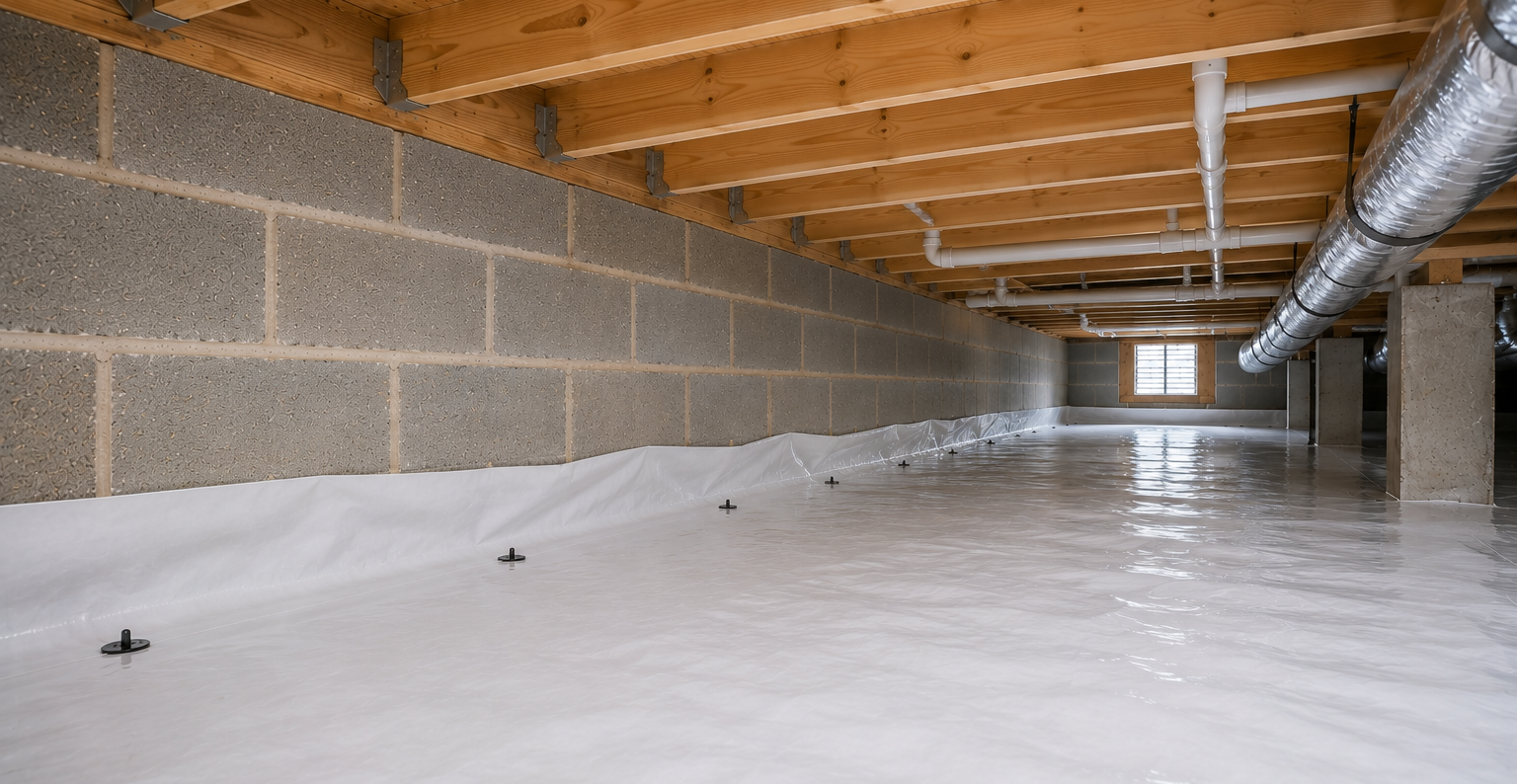
I’m talking about a closed crawl space with no insulation at all. No wall insulation and no fiberglass floor insulation.
We still seal the vents, cover the ground and control humidity. And based on the research and our calculations, that crawl space can still use less heating and cooling energy than a traditional vented crawl space with R-19 floor insulation.
Our Reference House
To keep this fair, we used a typical Southeast home:
- About 1,000 square feet of crawl space
- A 2-foot block foundation wall
- Heating and cooling ducts in the crawl space
- No unusual flooding, groundwater or radon problems
The crawl space is already closed, with the vents sealed, a ground vapor barrier installed and humidity control in place. The moisture problem is solved. The only question left is whether to add insulation to the foundation walls.
Insulation’s job is to slow heat transfer. In the closed crawl spaces we inspect and maintain, we haven’t found any moisture control benefit from wall insulation that we can’t get through proper air sealing and humidity control. So this comes down to energy savings versus cost.
How Much Energy Does Wall Insulation Save?
We started with research from Advanced Energy, which studied homes in North Carolina for the Department of Energy. They measured about 18% less heating and cooling energy in homes with sealed, insulated crawl spaces than in traditional vented crawl spaces with R-19 floor insulation.
That 18% comes from the entire closed system, not just the wall insulation.
So how much of it comes from the walls? Using the method in the Department of Energy’s Builder’s Foundation Handbook, wall insulation accounts for about 6 percentage points in our example house.
Subtract that from 18% and you get an estimated 12% savings for a closed crawl space with no insulation at all.
The reason is simple: air sealing does most of the work. Keeping cold air out in the winter and hot, humid air out in the summer saves more energy than adding insulation to the walls or the floors.
And Advanced Energy studied relatively new homes that were carefully sealed, with properly installed ductwork and insulation. In the older homes we work under, we find leaking ducts, air leaks and wall insulation that’s loose or falling off. We believe the 6-point allowance is reasonable and may give wall insulation more credit than it deserves.
How Much Money Does It Save?
We checked it three different ways.
1. Real crawl space temperatures. In winter, crawl spaces without wall insulation run about 6 degrees colder than the first floor. With wall insulation, they run about 4.5 degrees colder. That’s only a 1.5-degree difference. We gave the insulation extra credit and used 2 degrees. That works out to about $35 a year.
2. Oak Ridge National Laboratory. Their research shows a slightly bigger temperature difference. Using their numbers, we get about $47 a year.
3. The Builder’s Foundation Handbook. Their calculations give about $60 a year.
So we used the highest number: $60 a year.
The Payback Problem
The insulation costs $4,600 to install. At $60 a year, it takes 77 years just to get your money back, and that assumes you never spend another dime maintaining it.
After 50 years, you’ve saved about $3,000. You still haven’t paid for the insulation.
What Happens in Real Homes
The foam board itself can last for decades. The problem is keeping it on the wall.
Installers use nails, screws, plastic anchors or glue. Nails are driven into the block with considerable force. Screws and anchors mean drilling holes in the foundation. Glue doesn’t hold up well on damp masonry.
We’ve seen brick and block crack during installation, especially on older brick skirt foundations. We’re potentially damaging a foundation to install insulation that saves $5 a month.
Over time, fasteners rust or loosen, glue fails, and the insulation comes loose. We see it in as little as 5 to 7 years in coastal crawl spaces.
Then the homeowner has two choices: remove it and lose the investment, or pay to reattach it, which means even more holes in the foundation. Repeat that over 50 to 100 years and ask how many holes it takes before we admit it doesn’t make sense.
Rodents and Termites
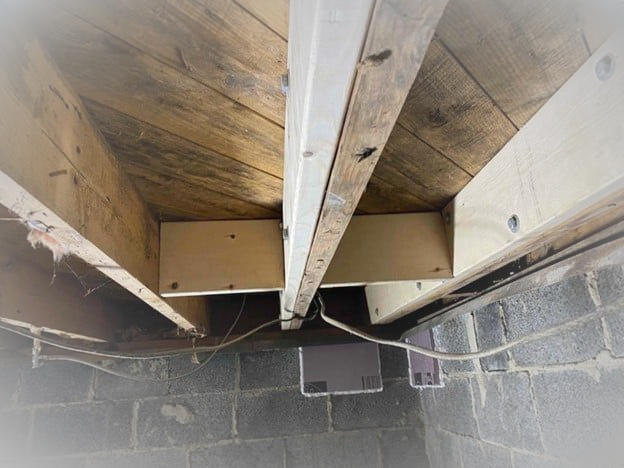
Rodents get into crawl spaces. That’s a fact of life. Before anyone spends thousands on cleanup, every entry point has to be found and sealed. When the walls are covered, you can’t see where they’re getting in, so the insulation has to come out.
Termites travel through cracks, mortar joints and hollow block and reach the wood framing without being seen. A small “inspection gap” at the top or bottom of the foam doesn’t solve that. You can’t inspect what you can’t see.
Removing and reinstalling part of the insulation can easily cost $1,500. One repair like that wipes out 25 years of energy savings. Replacing all of it can run $6,000 to $10,000.
What About Spray Foam?
Spray foam solves the loose-fastener problem but makes removal far worse. If we need to inspect for termites, repair a leak or work on the foundation, the foam has to be cut or ground off the wall.
That’s a $5,000 to $10,000 demolition job, plus the cost to replace it. In low crawl spaces, spray foam makes the access problem worse.
To Be Fair
Wall height and climate matter. Taller foundation walls lose more heat, and taller crawl spaces are easier and cheaper to work in. Farther north, colder winters make insulation more valuable.
But in existing Southeast homes with crawl spaces 2 to 3 feet tall, in places like Chesapeake, Richmond, Charlotte and Charleston, wall insulation saves only a few dollars a month. The numbers don’t justify the cost or the problems it creates.
The Report Card
We judge crawl space systems against eight engineering requirements. Here’s how wall insulation scores:
- Moisture control: no added benefit
- Durability: fail
- Affordability: fail
- Inspectability: fail
- Low maintenance: fail
- Reliable installation: fail
- Rodent resistance: fail
- Health, safety and energy: pass
Six failures, one no benefit, one pass, all in exchange for about $5 a month.
A Problem the Research Saw Coming
This isn’t new. In 2004, a HUD research report said the new code requirements for unvented crawl spaces were “exacting and performance-oriented which will not facilitate their use,” and called for testing to identify which details are actually essential.
In Advanced Energy’s interviews with North Carolina crawl space installers, most said the cost of closed crawl spaces could be prohibitive for average homeowners. One suggested finding a middle ground that delivers the most important benefits at a more affordable price.
Where I’d Spend the Money
For a typical low crawl space in the Southeast:
- Remove old floor insulation and repair damaged wood or ductwork
- Seal the vents, access door and other openings
- Install a good ground vapor barrier
- Keep rodents out
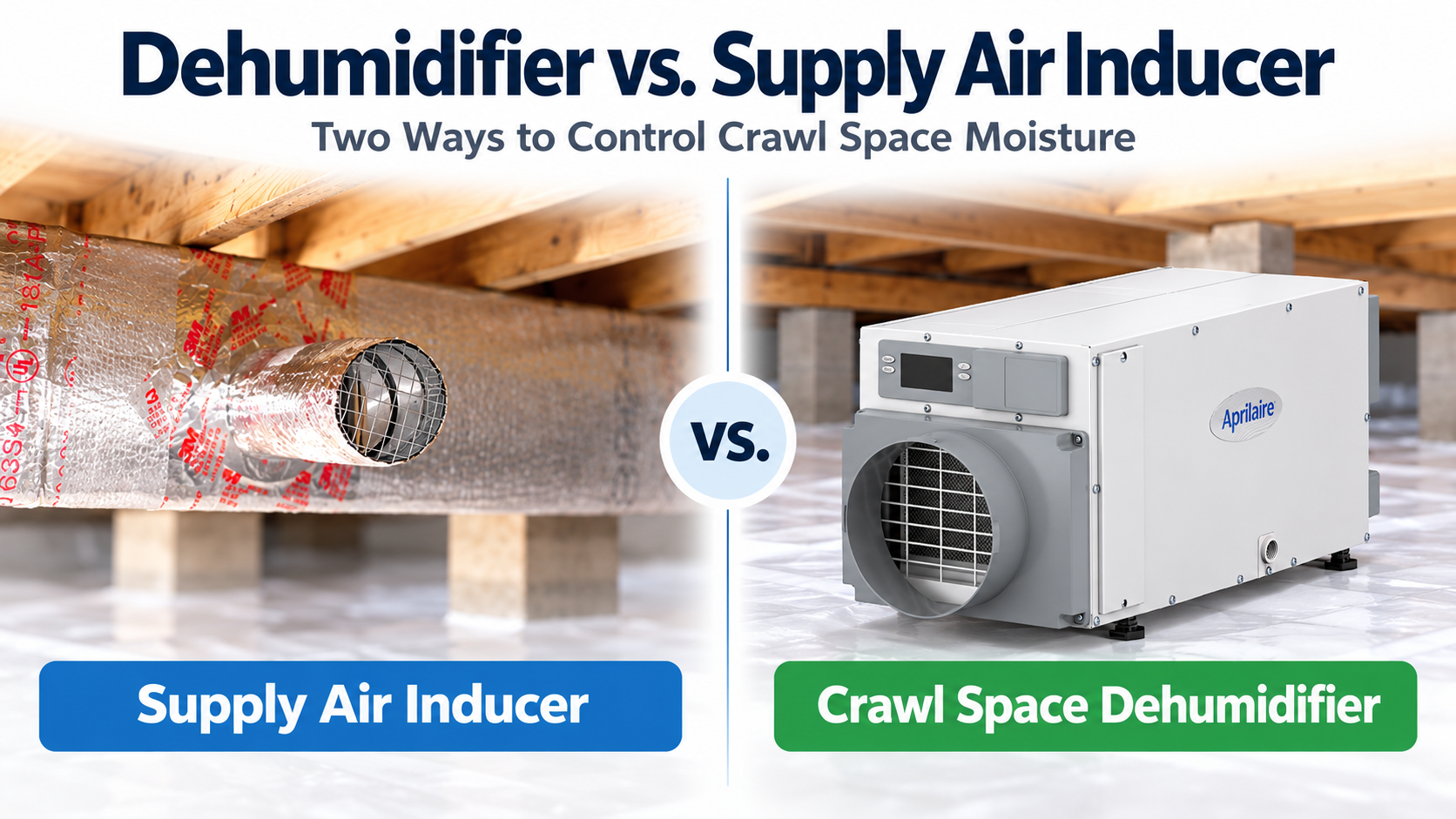
- Control humidity with conditioned supply air or a dehumidifier, depending on the house
- Fix any groundwater problems
- Check moisture conditions regularly
- Leave the foundation walls exposed so the home can be inspected and maintained
On a suitable home, that can be done for around $5,000. Structural repairs, duct replacement and major drainage work are extra.
The Bottom Line
I’m all for saving energy. Better ductwork, better air sealing, or an entirely new way to insulate crawl spaces: I’m open to all of it. But the goal should be to make the whole house better, not to improve a number on an energy calculation.
If your mother owned a 50-year-old house in coastal Virginia with a 2-foot crawl space and was spending her retirement savings to fix it, would you tell her to spend another $4,600 on wall insulation?
That’s the standard we should use when making decisions about other people’s homes and their hard-earned money.
Patriot Crawl Space Repairs serves Hampton Roads and coastal Virginia. Call 757-960-3231 or visit patriotcrawlspacerepairs.com for a free crawl space inspection.
Research and Sources
Advanced Energy (2005). A Field Study Comparison of the Energy and Moisture Performance Characteristics of Ventilated Versus Sealed Crawl Spaces in the South. Final report, DOE Award DE-FC26-00NT40995.
https://www.osti.gov/biblio/850459
Karagiozis, A.N., Oak Ridge National Laboratory (2005). Hygrothermal Performance Study (Experimental & Modeling), Phase 2. Prepared for Advanced Energy under DOE Award DE-FC26-00NT40995.
https://irp.cdn-website.com/3885a763/files/uploaded/oakridge+report.pdf
Carmody, Christian & Labs, Oak Ridge National Laboratory (1991). Builder’s Foundation Handbook. ORNL/CON-295, U.S. DOE.
https://irp.cdn-website.com/3885a763/files/uploaded/builders+foundation+handbook.pdf
Advanced Energy (2005). Closed Crawl Spaces: An Introduction to Design, Construction and Performance (Building Codes, pp. 39–44).
https://constructioninstruction.com/wp-content/uploads/2020/11/Closed-Crawl-Spaces_An-Introduction-for-the-Southeast_Part3.pdf
Malkin-Weber, Dastur, Mauceri & Hannas, Advanced Energy (2008). Closed Crawl Space Performance: Proof of Concept in the Production Builder Marketplace. DOE Award DE-FC26-04NT42319 (installer interviews on cost, pp. 22–26).
https://www.osti.gov/biblio/924882
U.S. Department of Housing and Urban Development (2004). Building Moisture and Durability: Past, Present and Future Work (Section 4.2, p. 16).
https://www.huduser.gov/publications/pdf/buildingmoistureanddurability.pdf
U.S. DOE Building America. Unvented, Conditioned Crawlspaces.
https://www.energy.gov/eere/buildings/articles/unvented-conditioned-crawlspaces-building-america-top-innovation
Latest Crawl Space Articles