Call Us Today To Schedule An Inspection At (757) 960-3231

Do Your Really Need Full Encapsulation?
Watch The Full Video
Do You Really Need Full Crawl Space Encapsulation?
A full crawl space encapsulation, with a wall liner, foam board insulation, and a dedicated dehumidifier, can cost three times as much as a simpler system. The question every homeowner should ask is what that extra money actually buys.
In the video, we start with the simplest effective system for a typical 1,500-square-foot crawl space in the flat coastal Southeast. Then we add the components of full encapsulation one at a time and check each one against long-term field research.
Who This Applies To
We're talking about low crawl spaces in the flat coastal regions of the Southeast, roughly Delaware down to Florida.
Homes in mountainous or hilly areas, especially those with high ground against the foundation walls or radon concerns, may benefit from a fully wall-sealed assembly.
Different site conditions call for different solutions.
Cleanup Comes First Either Way
Before either system goes in, the crawl space has to be cleaned up.
That means removing contaminated insulation, treating mold and fungus on the framing, repairing ductwork, and fixing any plumbing, structural, or groundwater problems.
That work is the same no matter which system you choose, so it's left out of the cost comparison.
Where Crawl Space Moisture Really Comes From
In most low coastal crawl spaces, the main summer moisture problem isn't water evaporating from the ground.
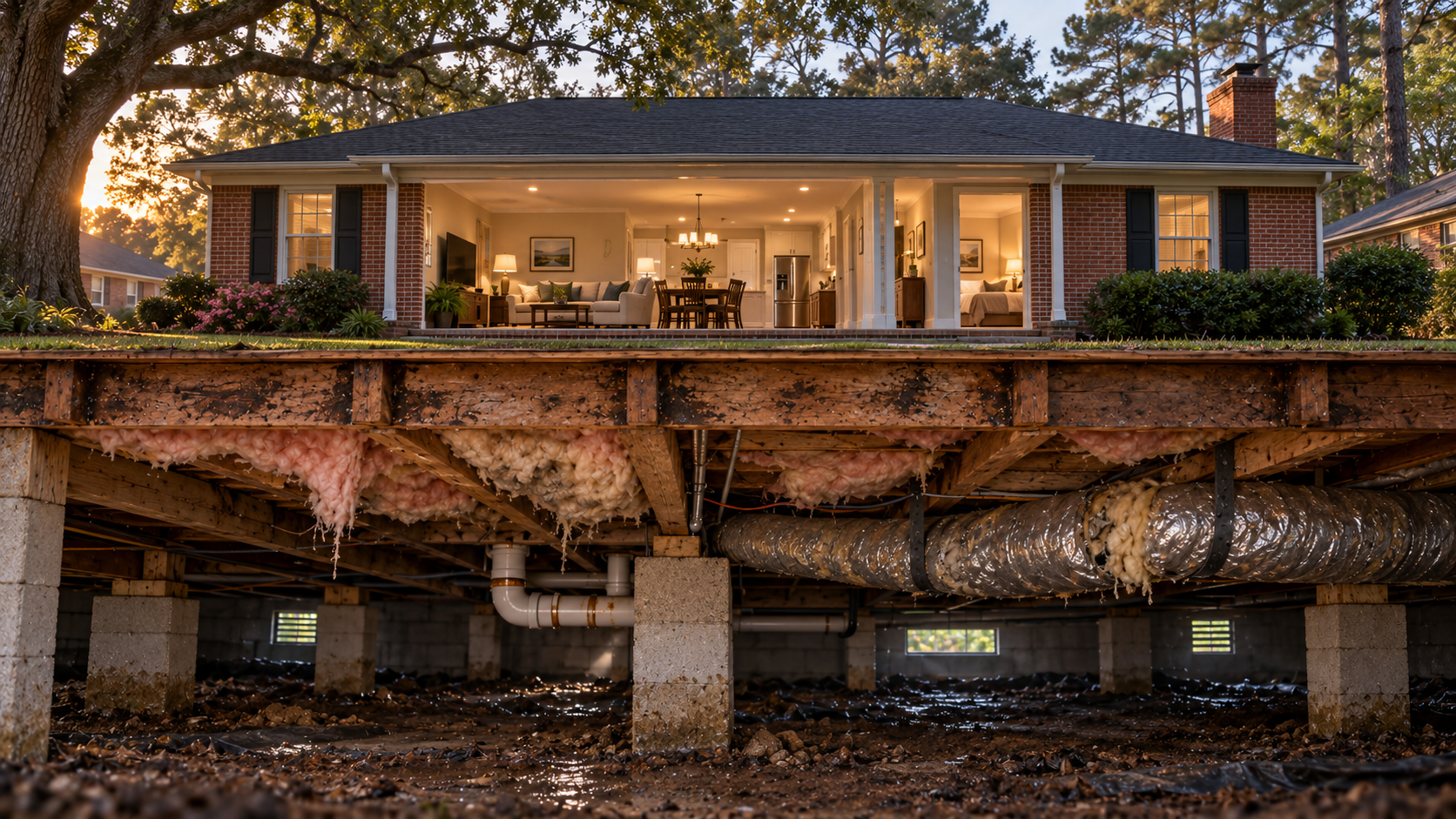
It's hot, humid outdoor air coming in through foundation vents and other openings. When that air hits cooler surfaces, it condenses on ductwork and framing.
That's why air sealing is the key.
Seal the vents and openings, and most of the incoming moisture is gone. A ground vapor barrier controls evaporation from the soil, and a supply air inducer handles what's left.
The Basic System: $4,725
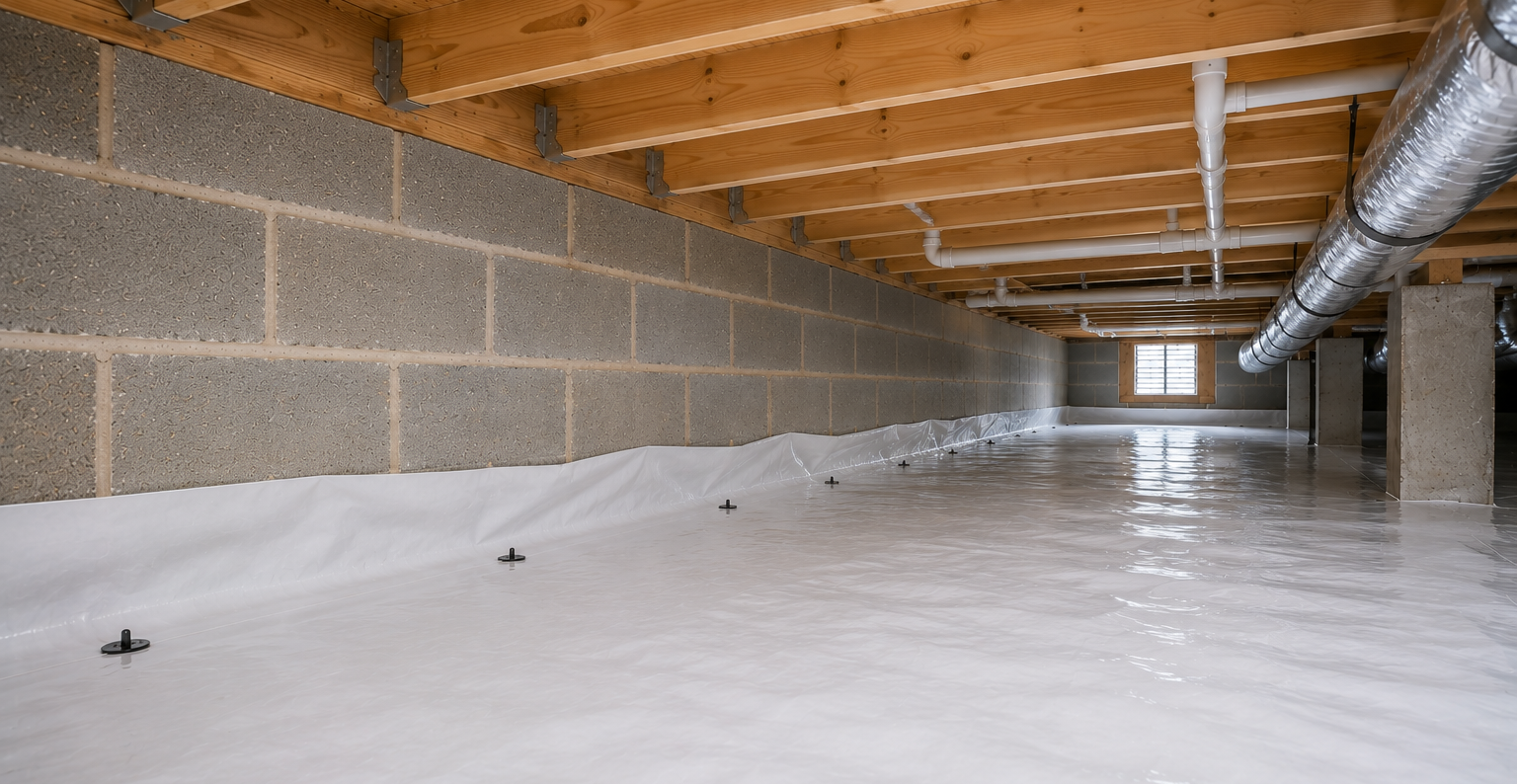
- $2,700 — 12 mil woven vapor barrier pinned across the ground
- $1,150 — Foundation air sealing and rodent exclusion
- $375 — New sealed crawl space access door
- $500 — Supply air inducer with in-home humidity and temperature monitor
That's a complete moisture control system, and the foundation walls stay exposed and inspectable.
What Full Encapsulation Adds: $13,000 More
- +$4,500 — Vapor barrier extended up the walls, sealed to the masonry, with piers wrapped
- +$5,000 — Foam board insulation on the foundation walls
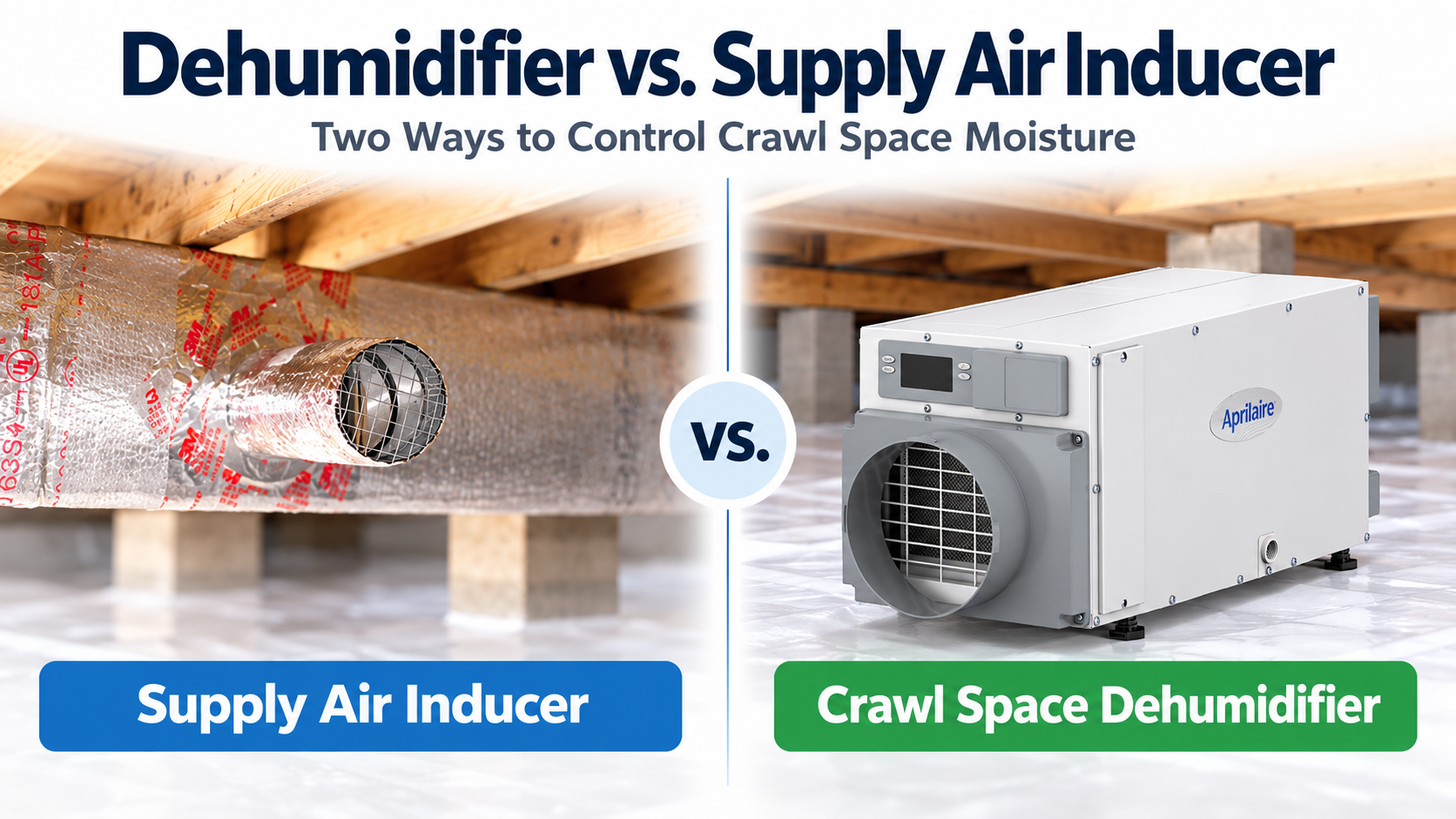
- +$3,500 — Dedicated dehumidifier in place of the supply air inducer
Full encapsulation total: $17,725
That's more than 3½ times the basic system for the same crawl space after the same cleanup.
Does the Wall Liner Earn Its Keep?
Research by Advanced Energy, with support from the U.S. Department of Energy, found that more completely sealed crawl spaces kept slightly lower air humidity.
But the more important measurement is wood moisture content: how much moisture is actually in the framing. That's a critical factor in the risk of mold and decay.
In Advanced Energy's Phase III research, August 2004 measurements showed:
- Pinned ground barrier, not sealed to the walls: About 11% wood moisture
- Wall-sealed with floor insulation: 10.7%
- Wall-sealed with foundation wall insulation: 10.4%
All three kept the framing dry, with very little difference between them.
Once the vents were sealed and conditioned air was supplied, the framing stayed dry without a wall-sealed liner.
Verdict on the extra $4,500: In a typical low coastal crawl space without significant water or soil gas problems, the data doesn't demonstrate a meaningful wood-moisture benefit that justifies the additional expense.
Does Wall Insulation Pay Off?
In mild coastal climates, insulating the walls of an already closed crawl space saves surprisingly little energy.
Estimates based on the Department of Energy's Oak Ridge National Laboratory Builder's Foundation Handbook put the savings for a 1,500-square-foot crawl space at about $3 a month, or $36 a year.
Against a $5,000 installation, that's a simple payback of nearly 140 years, and it usually doesn't make the floor noticeably warmer.
New construction may require a more elaborate assembly, but repairs to existing homes fall under the existing building code, which provides different compliance pathways from those used for new construction. The exact requirements depend on the work and local code interpretation.
Verdict on the extra $5,000: Based on these estimated savings, the economics are difficult to justify. Wall insulation can also reduce access to inspect the foundation walls.
Do You Need a Dehumidifier?
Dehumidifiers work.
They also cost more, use electricity, need maintenance, and eventually need repair or replacement.
Advanced Energy's multi-year field research, including homes in North Carolina and Louisiana, used conditioned supply air successfully in closed crawl spaces.
A supply air inducer brings a small amount of conditioned air from the home's HVAC system into the crawl space.
There's no separate refrigeration system and no condensate pump. It's simple, inexpensive, low-maintenance, and reliable when properly designed and installed.
If there's no suitable HVAC ductwork in the crawl space, a dehumidifier is often the logical choice.
But where supply air can do the job, there's no reason to automatically spend another $3,500.
The Cost Nobody Mentions: Repairs Years Later
Termites. Subterranean termites are a serious concern in the coastal Southeast.
Encapsulation installers usually leave an inspection gap at the top of the wall, but the masonry below stays hidden. Termites can travel behind liners and insulation and enter through cracks or mortar joints.
If activity is suspected, parts of the assembly may have to come off.
Rodents. With a simple system, a technician can inspect the exposed wall, find the opening, and seal it.
With full encapsulation, that opening may be hidden behind plastic and foam. Finding it can mean tearing out sections of the wall assembly and then paying to replace them.
The same goes for plumbing leaks, water intrusion, and foundation repairs.
You paid $9,500 to cover the walls, and now you may pay again to remove the covering, fix the problem, and put it back.
A crawl space isn't a finished living room. It's a service area that has to stay inspectable and repairable.
Keep It Simple
Kelly Johnson, who led Lockheed's Skunk Works and developed the U-2 and SR-71 Blackbird, gave us the KISS principle: Keep it simple, stupid.
He told his engineers their aircraft had to be repairable in the field with ordinary hand tools.
Reliability and repairability were part of performance, not a trade-off against it.
The same applies under your house.
A system that works on day one still has to be inspected, maintained, and repaired for the next 20 or 30 years.
My Take
I use a car analogy with homeowners.
Offered a free Ferrari or Honda Accord for a week, most people pick the Ferrari.
But if you had to keep one car for 10 years and fix it yourself every time it broke down, nearly everyone picks the Accord.
Crawl spaces work the same way.
In a low coastal crawl space, the sealed wall liner, the wall insulation, and usually the dehumidifier don't justify going from $5,000–$6,000 to $15,000–$20,000 or more.
Simpler costs less, and it's easier to maintain and repair.
Questions about your crawl space?
Call Patriot Crawl Space Repairs at 757-960-3231 or visit PatriotCrawlSpaceRepairs.com for more crawl space advice and information about our services.
Latest Crawl Space Articles